



Choosing a school while living overseas presents a unique opportunity to give your child more than just a solid academic foundation. It’s a chance to expand their worldview. A dual-language program, for instance, can help your child connect with your host country, maintain ties to your family’s heritage, or simply gain a valuable skill for an interconnected world. An American online school for children living abroad that offers a bilingual curriculum provides the cognitive benefits of dual-language learning while maintaining the familiarity and recognition of an American diploma. It’s an approach that builds a more agile mind and prepares your child to thrive as a global citizen.
Key Takeaways
- Verify Accreditation First: An online diploma’s worth is tied directly to its accreditation. Always confirm a school is recognized by a legitimate U.S. agency to guarantee its credits and diploma will be accepted by other institutions.
- Match the Program to Your Life: Flexibility means different things to different schools. Compare learning formats (like live, self-paced, or mixed classes) and time zone support to find a program that genuinely works with your family’s international schedule.
- Understand the Legal Rules: Your educational choice must comply with local laws. Research the homeschooling and online education regulations in your host country and your U.S. state of residence before enrolling to avoid any legal or logistical issues.
Why Choose an American Online School Abroad?
Moving your family to another country is an incredible adventure, but it also comes with a long list of questions, especially about your child’s education. How do you keep them on track? Will they adapt to a new school system? An American online school can be a fantastic solution that offers stability and quality education, no matter where you are in the world. It’s about giving your child a consistent, high-quality learning experience while your family embraces a new chapter abroad. Let’s look at a few of the biggest reasons families like yours make this choice.
Maintain Educational Continuity
One of the biggest worries for parents moving abroad is preventing disruption to their child’s education. The last thing you want is for your child to fall behind, lose credits, or have to repeat a grade. American online schools solve this problem by providing a seamless educational path. Your child can maintain steady progress in their studies, following a consistent curriculum with familiar standards. This continuity removes a major source of stress for both you and your child, allowing them to focus on learning and adjusting to their new surroundings without academic setbacks. It creates a stable anchor in a time of big changes.
Stick with a Familiar Curriculum
When you move, you’ll find that international schools offer various curricula, like the International Baccalaureate (IB) or the British system. While excellent, these can be a big adjustment. An American online school allows your child to stick with the educational framework they already know. The American curriculum is globally recognized, which makes future transitions, whether to another country or back to the United States, much smoother. Following established curriculum standards ensures that your child is receiving an education that aligns with what colleges and universities in the U.S. expect, keeping their future options wide open.
Learn on a Flexible Schedule
Life abroad doesn’t always fit into a neat 9-to-5 box. Between travel, exploring new cultures, and different time zones, your family needs an education that bends with you. Online school offers a flexible learning schedule that traditional schools simply can’t match. Unlike homeschooling, where you are the teacher, accredited online schools provide certified instructors, a structured curriculum, and official diplomas. This means your child gets the best of both worlds: the freedom to learn anytime, anywhere, and the support of a complete, professionally run school program. It’s education that fits your family’s life, not the other way around.
What is Accreditation? (And Why It’s Essential)
When you’re looking for an online school, the word “accreditation” will come up a lot, and for good reason. Think of it as a quality seal of approval. Accreditation is a formal process where an independent agency reviews a school to confirm it meets high standards for quality and effectiveness. For families living abroad, this is more than just a technicality; it’s your assurance that your child’s education will be recognized wherever you go.
An accredited school provides a stable and predictable academic path. This process removes the fear of your child having to repeat a grade or lose hard-earned credits if you move to a new country or return to the United States. It ensures the curriculum is sound, the teachers are qualified, and the school operates with integrity. When a school proudly displays its accreditation, it shows a commitment to excellence and accountability. This validation is fundamental for ensuring your child receives a legitimate education that opens doors to future opportunities, including college and university admissions around the world.
Regional vs. National: What’s the Difference?
In the United States, you’ll generally encounter two types of accreditation: regional and national. Regional accreditation is the most widely recognized and accepted form, especially by colleges and universities. There are several regional agencies, each responsible for schools in a specific part of the country. National accreditation is also valid, but it’s often associated with career, vocational, or technical schools. For a K-12 education that prepares your child for higher education, regional accreditation is typically the standard to look for.
These accrediting bodies create structured educational frameworks that schools use to offer a consistent, globally-recognized education. This system helps students develop a sense of global citizenship by exposing them to diverse perspectives and high academic standards. Reputable accrediting agencies like Cognia work with schools worldwide to ensure they meet these rigorous benchmarks.
Ensure Credits Transfer Smoothly
For families on the move, academic consistency is everything. The last thing you want is to discover that the credits your child earned online won’t transfer to their next school. Accreditation is the key to preventing this headache. When your online school is accredited by a recognized agency, other schools and universities are far more likely to accept its transcripts and diploma without question.
This provides a steady academic path for students and a clear route to universities in different countries. An accredited American High School Diploma holds weight globally, giving your child a competitive edge when applying for higher education. It offers peace of mind, knowing that your investment in their education is secure and portable, no matter where your journey takes you.
How to Check a School’s Accreditation
Verifying a school’s accreditation is a straightforward but essential step. Don’t just take a school’s word for it; a little research can confirm you’re making the right choice. First, visit the school’s website and look for an “About Us” or “Accreditation” page. The school should clearly state which agency has accredited it. Ideal School, for example, provides this information transparently for all families to review.
Next, go directly to the accrediting agency’s website and use their search tool to find the school in their directory. If the school is listed, you can be confident in its status. This simple check ensures the quality of the education and the transferability of credits. Choosing a school that is open about its accreditation status is a great sign that they are committed to providing a high-quality educational experience.
Exploring Your Options: Top American Online Schools
Once you know what you’re looking for, it’s time to see what’s out there. The world of online American schools is vast, but a few consistently stand out for their quality, flexibility, and support for families living abroad. Each school has a unique approach, so think about which one aligns best with your child’s learning style and your family’s goals. While this isn’t an exhaustive list, it covers some of the most respected programs available to families living internationally. Here are some of the top choices to get your research started.
Ideal School
If a bilingual education is high on your list, Ideal School is a fantastic place to start. It’s known as a top online private school for expat families specifically because it offers dual-language immersion in English and Spanish from day one. This isn’t just a language class; it’s a fully integrated learning experience. The school features live, interactive classes that help create a vibrant classroom community, even from a distance. With a focus on creating a comprehensive and culturally rich education, their Full Day Program provides a structured yet flexible environment for students to thrive academically and linguistically while living anywhere in the world.
K12 International Academy
For families who prioritize a traditional U.S. curriculum that’s recognized everywhere, K12 International Academy is a strong contender. They provide a full K-12 curriculum that meets American school standards, which can give you peace of mind about the quality of your child’s education. One of its key advantages is flexibility. Families can choose from various start dates throughout the year and students can learn at a pace that suits them best. This is a great option if you need an established, standards-aligned program that ensures your child is receiving a quality education that will be recognized if you ever move back to the United States or to another country.
International Virtual Learning Academy (IVLA)
Moving can be stressful, and IVLA aims to make the educational transition as smooth as possible for the whole family. This school is recognized for its highly supportive environment, which can be a huge relief for parents and students adjusting to a new life abroad. IVLA focuses on creating personalized learning plans tailored to each student’s individual needs and academic goals. They offer robust support systems, including one-on-one tutoring and dedicated academic advisors who help guide your family through the educational journey. This personalized approach helps ensure that students don’t just keep up with their studies during a move; they continue to grow and succeed without interruption.
Connections Academy
If your family travels frequently or you anticipate moving multiple times, Connections Academy offers a dependable and flexible solution. As a fully accredited online school, it allows students to learn from anywhere with an internet connection, providing true location independence. The program is designed to be adaptable, offering a flexible schedule that can work around different time zones and family commitments. With a wide variety of courses available, Connections Academy can meet the diverse needs and interests of different students, making it a popular and reliable choice for families who are constantly on the move and need an education that can travel with them without missing a beat.
Comparing Your Top School Choices
Once you’ve narrowed down your list of potential schools, it’s time to look closer at the details. Every online school has a unique approach, and finding the right one is about matching its offerings to your family’s needs and your child’s learning style. This isn’t just about ticking boxes on a checklist; it’s about envisioning your child’s daily life and ensuring the school you choose will help them thrive academically and personally.
Think of this as the final interview stage. You’ll want to compare everything from the curriculum and teaching philosophy to the practical details like cost and scheduling flexibility. A school might look perfect on paper, but how does it align with your values? Does it support the lifestyle you have abroad? Asking these targeted questions will help you move from a list of good options to the one that feels like the perfect fit for your family. Let’s walk through the key areas to compare.
Compare Curriculums and Cultural Fit
While you’re focusing on schools with an American curriculum, remember that the delivery and cultural context can vary significantly. Some programs stick strictly to a traditional U.S. framework, while others incorporate a more global perspective into their lessons. Look at the school’s curriculum standards to understand its educational philosophy. Does it encourage critical thinking and cross-cultural awareness?
Beyond academics, consider the school’s community. A great online school fosters a sense of belonging, even across continents. Ask about the diversity of the student body and the faculty. Finding a school with a welcoming, international environment can make a huge difference in your child’s experience and help them connect with peers from different backgrounds.
Understand Tuition and Associated Costs
The cost of a private online education can be a significant investment, so it’s important to have a clear picture of all expenses. Tuition is the main line item, but don’t forget to ask about other potential costs. Are there fees for technology, digital textbooks, lab materials, or standardized testing? Some schools bundle these into their tuition, while others charge for them separately.
Create a simple budget to compare the total cost of your top choices. While it’s tempting to go for the least expensive option, focus on the value each school provides. A slightly higher tuition might be worthwhile if it includes robust student support, experienced teachers, and a vibrant school community. Transparency in pricing is a good sign of a trustworthy institution.
Evaluate Program Flexibility and Learning Styles
One of the biggest advantages of online school is the ability to tailor education to your life. However, “flexible” can mean different things. Some programs rely on asynchronous learning, where students complete assignments on their own schedule. Others use synchronous learning with required live classes. Many schools, like Ideal School, offer mixed classes that combine both.
Consider what works best for your child. Does your student thrive with the structure of a live classroom, or do they prefer to work at their own pace? Think about your family’s routine, too. If you travel frequently or have an unconventional schedule, an asynchronous or mixed program might be the best fit, giving your child the freedom to learn from anywhere.
Check for Time Zone Support
This is a non-negotiable for families living abroad. A school based in the United States must be equipped to support students in different time zones. The last thing you want is for your child to attend mandatory classes in the middle of the night or struggle to get help from a teacher during your daytime hours.
Ask pointed questions during the admissions process. What are the hours for technical support? Are teachers available for one-on-one meetings that fit your schedule? A truly global school will have clear systems in place, such as offering multiple time slots for live classes or having staff available across a wide range of hours. This demonstrates their commitment to serving international families effectively.
Is a Bilingual Education Right for Your Family?
Choosing an online school while living abroad opens up a world of possibilities, and one of the most enriching is a bilingual education. It’s an opportunity to give your child more than just a new language; it’s a chance to expand their worldview and sharpen their mind. A dual-language program can help your child connect with your host country, maintain ties to your heritage, or simply gain a valuable skill for an interconnected world. If you’re wondering whether this path is the right fit, let’s explore what a
The Cognitive Benefits of Bilingual Learning
One of the most compelling reasons to choose a bilingual program is the profound impact it has on a child’s developing brain. Research consistently shows that bilingual individuals often have enhanced cognitive flexibility, which is the brain’s ability to adapt its thinking from one concept to another. This mental workout strengthens problem-solving skills and makes multitasking feel more natural. Think of it as cross-training for the mind. By constantly switching between two languages, your child is building a more agile and resilient brain. These are not just academic advantages; they are life skills that will serve them well in any future they choose.
How Dual-Language Programs Aid Cultural Integration
Language and culture are deeply intertwined. A dual-language education does more than teach vocabulary and grammar; it opens a door to new perspectives and ways of life. These programs are designed to foster cultural awareness and appreciation, helping your child develop empathy and strong social skills. For families living abroad, this is invaluable. It can help your child connect with the local community, make friends, and feel more at home in their new environment. By learning in a bilingual setting, children gain a genuine understanding of different cultures, preparing them to thrive in our globalized world and see its diversity as a source of strength.
What Makes a Great Bilingual Program?
Not all bilingual programs are created equal. A truly effective program is built on a few key pillars. First, look for a well-structured curriculum that gives equal weight to both languages, integrating them seamlessly across subjects. Second, the quality of the teachers is paramount. They should be fully proficient and certified to teach in both languages, capable of supporting your child’s linguistic and academic growth. Finally, the school should provide a supportive environment that celebrates cultural exchange. At Ideal School, our accredited programs are built on these principles, with experienced, bilingual teachers dedicated to creating a vibrant and inclusive learning community for every student.
Debunking Myths About Online School Abroad
Choosing an online school, especially while living in another country, can feel like a big leap. It’s natural to have questions and even a few worries. You might wonder if your child will have the same opportunities or if the experience will measure up to a traditional school. Let’s clear the air and look at some of the most common myths about online learning for families abroad. You might be surprised to find that today’s online schools are more dynamic and recognized than you think.
Myth: Colleges Don’t Recognize Online Diplomas
One of the biggest concerns for parents is whether a diploma from an online school will be accepted by colleges and universities. The good news is that the value of a diploma isn’t about the building where the learning happened; it’s about the school’s accreditation. Reputable, accredited online schools provide official transcripts and diplomas that are widely recognized by higher education institutions. This means your child can apply to college with the same confidence as any other student. The key is to choose a program with legitimate credentials, ensuring your child’s hard work is officially validated and their path to university is clear.
Myth: Online Learning is Socially Isolating
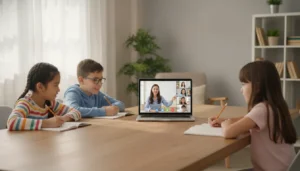
The image of a child learning alone in front of a screen is a persistent but outdated one. Modern online schools are built to foster connection and community. Many programs include live classes, group projects, and virtual clubs where students can interact, collaborate, and build friendships with peers from around the world. Furthermore, the flexibility of an online schedule often gives families more time to engage in local activities. Your child can join sports teams, art classes, or community groups in your host country, creating a rich and diverse social life that blends global connections with local experiences.
Myth: All Online Schools Offer the Same Experience
It’s easy to lump all online education into one category, but that couldn’t be further from the truth. The quality and style of online schools vary just as much as brick-and-mortar ones. A true online school provides a complete, structured education with a set curriculum and instruction from certified teachers, which is very different from a parent-led homeschool curriculum. You’ll find schools with different teaching philosophies, program structures (like full-day or asynchronous), and unique offerings like bilingual education. The best approach is to explore your options and find a school that aligns with your child’s learning style and your family’s goals.
Know the Rules: Legal Considerations for Enrollment
Before you enroll your child in an American online school from abroad, it’s important to understand the legal side of things. I know this isn’t the most exciting part of the process, but getting it right from the start will save you a lot of headaches later. The rules can vary quite a bit depending on where you live and your state of residence in the U.S. Taking the time to do your homework now ensures a smooth educational path for your child, letting you focus on the learning and growth ahead.
Check Your Host Country’s Homeschooling Laws
First things first, you need to get familiar with the educational laws in your current country of residence. Some countries have very specific regulations about schooling, and online education might not fit neatly into their existing framework. As one guide for families points out, “understanding the legal landscape is the first crucial step.” Your visa or residency status can also be tied to your child’s schooling arrangements, so it’s important to ensure your choice complies with local requirements. Start by checking with the ministry of education or an expatriate community forum in your host country to get clear, accurate information. This proactive step ensures your child’s education is fully recognized where you live.
Review Education Savings Accounts and State Requirements
Some U.S. families use education savings accounts (ESAs) or other state scholarship programs to help pay for approved education expenses, including eligible online schooling. Availability, eligibility, residency rules, application windows, and approved providers vary by state. If your family lives abroad, confirm whether you still meet the relevant state program’s residency and participation requirements before including ESA funding in your plan. For current guidance, review Arizona program information, Utah program information, North Carolina program information, or New Hampshire program information, and confirm that the school and program you choose are approved for the specific funding. If you are unsure which rules apply, contact the program administrator before enrolling. Once you have confirmed eligibility and program approval, review Ideal School’s tuition information or enrollment page to compare next steps.
How to Choose the Right American Online School
Selecting an online school is a significant decision, and finding the right fit goes beyond just looking at a course catalog. You’re choosing a partner in your child’s education, a community for them to grow in, and a system that needs to work for your entire family, especially when living abroad. The best program will align with your child’s learning style, your family’s schedule, and your long-term academic goals. It’s about finding an institution that understands the unique challenges and opportunities that come with an international lifestyle.
As you explore your options, think about what a truly supportive learning environment looks like. It should offer a robust, recognized curriculum and also provide the flexibility and personal attention your child deserves. The process involves asking pointed questions, learning to identify potential warning signs, and making a conscious effort to support your child’s social development. By taking a thoughtful and holistic approach, you can find an online school that not only delivers a great education but also enriches your child’s life and prepares them for a bright future. A school’s philosophy and mission can tell you a lot about whether it’s the right choice for your family, so take the time to understand what they stand for.
Key Questions to Ask Before You Enroll
Before you commit to a program, make sure you have clear answers to a few critical questions. First, is the school accredited by a recognized US agency? This is non-negotiable, as accreditation ensures that the credits your child earns will be accepted by other schools and universities. Next, ask about enrollment flexibility. Families living abroad often need a school that allows for mid-year starts or unconventional schedules. Look for programs that offer different learning formats, like asynchronous classes, that can adapt to your life. Finally, confirm that the school provides support across different time zones and offers personalized learning paths to help your child thrive, whether they need extra help or a greater academic challenge.
Spot the Red Flags in an Online Program
While there are many excellent online schools, there are also programs that don’t live up to their promises. A major red flag is a lack of transparency. If a school is vague about its accreditation or makes it difficult to find, proceed with caution. Another area to watch is cost. While quality education is an investment, be wary of programs with hidden fees or unclear pricing structures. A reputable institution will have a straightforward tuition page that clearly outlines all expenses. Also, remember to research your host country’s regulations on homeschooling and online education, as the laws can vary significantly from one place to another. A great school won’t work if it puts you on the wrong side of local requirements.
Prioritize Community and Social Growth
One of the most common concerns parents have about online education is the potential for social isolation. It’s a valid point, but it’s a challenge that can be managed with intention. A high-quality online school will build community directly into its programs through live classes, group projects, and virtual clubs where students can connect with peers from around the world. The Full-Day Program at Ideal School, for example, is designed to foster these connections. However, it’s also important for you to create opportunities for in-person interaction. Signing your child up for local sports, art classes, or other community activities will help them develop crucial social skills and build friendships outside of their virtual classroom.
Related Articles
- Accredited American Diploma: A Foreign Student’s Guide
- Bilingual School Online – Dual Language | Ideal School
- Accredited K-12 Online School Live Teaching Explained
- 12 Affordable Accredited Homeschool Programs
- Online Homeschool New Hampshire: A Complete Guide
Frequently Asked Questions
Will universities actually accept a diploma from an online high school? Absolutely, as long as the school is properly accredited. Colleges and universities care about the quality and legitimacy of the education, which is verified by accreditation, not whether the classes were held in a physical building. A diploma from a regionally accredited American online school carries the same weight as one from a traditional brick-and-mortar school, ensuring your child’s path to higher education remains open.
My child can be shy. Won’t online school make them feel more isolated? This is a common worry, but modern online schools are designed to be very interactive. Many programs use live video classes, breakout groups, and collaborative projects that encourage students to connect with their classmates and teachers. The flexibility of online learning can also free up time for your child to join local clubs, sports, or art classes, giving them a great mix of global online friendships and in-person community connections.
What if my child isn’t bilingual? Is a dual-language program still a good option? Yes, it can be a fantastic opportunity. Great bilingual programs are designed to accommodate students at all language levels, including absolute beginners. It’s less about prior knowledge and more about giving your child a chance to develop a valuable life skill. Learning a new language can sharpen their problem-solving abilities and help them connect more deeply with your host country’s culture, all within a supportive academic environment.
How can I be sure my child will stay engaged with a flexible online schedule? The key is finding a program structure that matches your child’s learning style. Some students do well with the independence of asynchronous classes, while others thrive on the routine of live, synchronous sessions. Many schools offer a mix of both. A quality online school provides a structured curriculum and certified teachers who actively monitor progress and offer support, which creates accountability that you don’t get from simply piecing together resources on your own.
What’s the difference between an online school and just homeschooling on my own? The main difference is support and structure. When you homeschool, you are responsible for choosing the curriculum, teaching the material, and handling all the record-keeping. An accredited online school provides a complete educational framework, including certified teachers, a proven curriculum, official grading and transcripts, and a recognized diploma. It gives you the flexibility of learning from home without the pressure of being the teacher.