



Living abroad gives your child a unique global perspective. Why shouldn’t their education reflect that? Instead of just trying to replicate a traditional classroom, the right online program can enhance their international experience. It connects them with peers from around the world and can even formalize their language skills through bilingual instruction. An accredited online school for American expats does more than just provide a portable education; it turns your family’s adventure into a powerful learning advantage. This guide will show you how to find a program that not only offers academic excellence but also enriches your child’s global citizenship.
Key Takeaways
- Make accreditation your top priority: Before considering anything else, confirm the school has a recognized accreditation. This is your guarantee that the curriculum is sound, the teachers are qualified, and your child’s diploma will be accepted by universities.
- Choose a format that fits your family’s life: The right online school should adapt to your schedule, not the other way around. Look for flexible options like asynchronous or mixed classes that work with your time zone and allow your child to pursue local activities.
- Evaluate the entire educational experience: A great program offers more than just academics. It provides a complete support system, including experienced teachers, opportunities for social connection with global peers, and valuable additions like a formal bilingual education.
Why Does Accreditation Matter for Your Family Abroad?
When you’re living overseas, choosing a school for your child can feel like a huge decision. You want to be sure their education is high-quality and that their diploma will be recognized wherever life takes you next. This is where accreditation comes in. It’s the single most important factor for ensuring your child receives a legitimate and valuable education online. Understanding what it is and why it’s so critical will give you the confidence you need to choose the right school for your family.
What is School Accreditation?
Think of accreditation as a school’s official seal of approval. It’s a voluntary process where a school invites an outside agency to conduct a thorough review of its programs, teachers, and student outcomes. This evaluation ensures the school meets a high standard of educational quality. An accredited school has proven that it provides a strong, effective education that prepares students for what comes next. For families living abroad, this is your assurance that you’re choosing a legitimate institution. These quality checks are a core part of what makes an accreditation process so valuable, giving you confidence that your child’s learning is in good hands, no matter where you are in the world.
Accreditation and Your Child’s Future: College & Beyond
Accreditation is more than just a sticker on a website; it’s your child’s passport to future opportunities. When it’s time to apply for college, admissions officers will check to see if the high school diploma comes from an accredited institution. A diploma from an accredited school is recognized by universities across the globe, which is essential for your child’s future plans. This ensures their hard work is valued, whether they apply to college back in the United States or elsewhere. An American High School Diploma from an accredited online school holds weight, preventing future roadblocks and opening doors to higher education and beyond.
Cognia Accreditation: The Gold Standard for Online Schools
Not all accrediting agencies are created equal. Cognia is a global leader in accreditation, recognized for its rigorous standards and focus on continuous improvement. When a school earns Cognia accreditation, it signals a deep commitment to providing an excellent education that truly prepares students for success. It means the school has been carefully evaluated on everything from its curriculum to its teacher quality. We are proud that Ideal School has earned this mark of quality. You can review our accreditation for yourself and see the standards we uphold to provide your child with a world-class education you can trust.
What Makes an Accredited Online School Great?
Accreditation is the non-negotiable foundation, but what builds a truly exceptional learning experience on top of that? When you’re living abroad, the best online schools offer more than just a diploma. They provide a stable, high-quality, and flexible educational environment that understands the unique needs of global families. It comes down to a few key features that separate the good from the great, ensuring your child receives an education that is both rigorous and supportive, no matter where you are in the world.
Curriculum and U.S. State Standards
A top-tier online school provides a consistent, comprehensive curriculum that aligns with U.S. academic standards. This is crucial for a seamless educational journey, especially if you plan to return to the United States. When a school’s curriculum standards are robust, you can be confident that your child is receiving an education on par with their peers in states like Arizona or North Carolina. This alignment makes transferring credits straightforward and ensures your child is prepared for the next step, whether it’s entering a traditional school or applying to university. Look for programs that offer a full K-12 curriculum with courses that are recognized and respected across the country.
Experienced, Certified Teachers
The heart of any great school is its faculty. In an online setting, the quality of the teachers is even more critical. The best programs employ experienced, certified teachers who are not only experts in their subjects but are also specially trained for virtual instruction. They know how to engage students through a screen, foster a sense of community, and provide personalized support. This level of expertise gives parents valuable insight and confidence in their child’s education. You’re not just getting a curriculum; you’re getting a dedicated educator who is a partner in your child’s learning.
A Schedule That Works for Your Time Zone
One of the biggest challenges for expat families is the time difference. A school that operates on a rigid, single-time-zone schedule simply won’t work. A great online school understands this and offers true flexibility. This might look like asynchronous classes that allow your child to learn at their own pace, or live sessions offered at various times to accommodate families around the globe. Programs with mixed classes can offer the best of both worlds: the structure of live interaction combined with the freedom of self-directed study, creating a schedule that fits your family’s life, not the other way around.
Bilingual Education and Language Support
Living abroad presents a wonderful opportunity for your child to become fluent in another language. A truly exceptional online school will support and formalize this experience. Instead of just being exposed to a new language, your child can receive structured, academic-level instruction that turns their environment into an educational advantage. A school with a dedicated Language Institute or a full bilingual program provides a consistent, accredited education that travels with you. This not only enriches your child’s learning but also gives them a valuable, lifelong skill that will open doors in their future academic and professional lives.
Which Program Format Is Right for Your Family?
One of the most significant advantages of online education is its incredible flexibility. Unlike a traditional school with a rigid bell schedule, online institutions can offer a variety of program formats designed to fit different lifestyles, learning preferences, and family needs. This isn’t about finding a one-size-fits-all solution; it’s about finding a tailor-made one. For families living abroad, this adaptability is not just a convenience, it’s a necessity. Your life doesn’t fit into a neat box, so why should your child’s education?
Choosing the right format can make all the difference in your child’s academic success and your family’s overall well-being. Whether you need the structure of a full school day, the freedom of a self-paced schedule, or something in between, the right program is out there. It means your child can receive a world-class education that works with your life, not against it. This allows you to build a learning experience that supports your child’s unique talents and accommodates your family’s adventures. Let’s explore some of the most common online programs to see which one aligns best with your family’s goals and dynamic lifestyle.
Full-Day Online Programs
A full-day online program is the most direct equivalent to a traditional school, offering a complete, structured educational experience delivered entirely online. It includes a full slate of classes, live instruction from certified teachers, and a consistent daily schedule that provides routine and stability. This format is an excellent choice for families who want the comprehensive curriculum and social structure of a full-time school but require the location independence that online learning provides. For expat families, a full-day program ensures a seamless, high-quality education from kindergarten through 12th grade, preventing any learning gaps as you move between countries.
Asynchronous Classes
If your family’s schedule is unpredictable, you’re juggling multiple time zones, or your child is a highly independent learner, asynchronous classes offer the ultimate flexibility. In this format, students access course materials, watch recorded lectures, and complete assignments on their own time. There are no mandatory live sessions, which empowers students to learn at their own pace. This is perfect for families who travel frequently or for students who are also pursuing demanding extracurriculars like sports or the arts. Asynchronous classes give your child control over their learning schedule, allowing them to pursue their education without being tied to a specific time of day.
Mixed Classes
Can’t decide between the structure of live classes and the flexibility of asynchronous learning? Mixed classes, also known as a hybrid or blended format, offer the best of both worlds. This model combines live, interactive sessions with teachers and peers with self-paced work that students complete on their own schedule. It provides the real-time engagement and support of a traditional classroom along with the freedom to manage a portion of the coursework independently. Mixed classes are ideal for students who thrive on social interaction but still need a degree of flexibility. This model also helps students develop both collaborative skills and independent time management.
Supplemental Homeschool Classes
For families who have a solid homeschool routine, supplemental classes can enrich the curriculum and fill in any gaps. These are individual, à la carte courses that you can add to your child’s existing education plan. For example, if you’re homeschooling in states like Arizona, Utah, or North Carolina, you might want to add an accredited Spanish or French course to create a bilingual experience. Or perhaps you need an advanced science class that’s beyond what you can teach at home. Supplemental homeschool classes allow you to customize your child’s education by adding specific, high-quality courses from an accredited provider without enrolling in a full-time program.
American High School Diploma Program
For expat families with older children, securing a recognized high school diploma is a top priority for future university plans. An American High School Diploma Program is designed to provide students with a complete, accredited U.S. curriculum that is accepted by universities worldwide. This is a critical advantage for students planning to attend college in the United States or any other country that values the American education system. Enrolling in a program that offers an accredited diploma ensures that your child’s hard work will be recognized, opening doors to higher education opportunities across the globe. It provides a clear and respected pathway from high school to university, no matter where you are in the world.
Common Myths About Online Schooling, Debunked
If you’re considering online school for the first time, it’s completely normal to have questions. The world of virtual education can feel new and different, and you want to be sure you’re making the best choice for your child’s future. Let’s walk through some of the most common concerns parents have and separate the myths from the reality of high-quality online learning.
Myth #1: “The Education Isn’t as Good”
It’s a common worry: can an online program truly match the academic rigor of a traditional school? The answer lies in one word: accreditation. Properly accredited online schools are held to incredibly high standards, often facing more regulation than many brick-and-mortar institutions. Organizations like Cognia evaluate everything from the curriculum and teacher qualifications to student performance. This ensures the education your child receives is not only valid but also consistent and thoughtfully designed. There’s no “winging it” when every lesson plan and learning outcome is documented and reviewed to meet strict educational criteria.
Myth #2: “My Child Won’t Make Friends”
The fear that online school means learning in isolation is one of the biggest myths out there. Today’s virtual schools are built around community and connection. Through live, interactive classes, group projects, and student clubs, children have plenty of opportunities to engage with their peers. For expat families, this creates a unique chance for their child to connect with classmates from around the globe, building a truly international network of friends. Plus, the flexibility of an online schedule often frees up more time for your child to join local sports teams, art classes, and other community activities right in your new home.
Myth #3: “The Diploma is Worthless”
This is a major concern for parents of high schoolers, and thankfully, it’s completely unfounded. A diploma from an accredited online school is recognized and respected by colleges and universities worldwide. In fact, for expat families, earning an American High School Diploma can be a significant advantage, opening doors to higher education in the United States and beyond. Universities across the U.S., from Arizona to New Hampshire, value the rigorous preparation that students from accredited online programs receive. This diploma is your child’s key to their next academic chapter, no matter where their journey takes them.
Myth #4: “It’s a One-Size-Fits-All Approach”
One of the greatest strengths of online education is its ability to adapt to the individual student. Far from being a rigid system, online schools often provide more personalization than traditional classrooms. Because students in global families may have different academic backgrounds, the ability to tailor coursework is essential. With options like asynchronous classes for self-paced learners or mixed programs that combine live instruction with flexible assignments, you can choose a format that fits your child’s learning style and your family’s schedule. This approach helps close any learning gaps and supports your child’s growth exactly where they are.
How Your Child Can Socialize in an Online School
One of the biggest questions parents have about online school is, “But what about socialization?” It’s a valid concern. We all want our children to build meaningful friendships and develop strong social skills. The great news is that online learning doesn’t mean learning in isolation. In fact, it opens up unique social avenues that you won’t find in a traditional brick-and-mortar school, especially for a family living abroad.
A quality online school is designed to foster connection, not just deliver information. It provides a different kind of social environment, one that combines virtual interaction with global friendships and the flexibility to engage in your local community. Many parents find their children thrive socially in this setting, forming deep connections with peers who share their unique life experiences. You can see what other families have to say by reading their testimonials. With the right approach, your child can build a rich and diverse social life that prepares them for a connected world.
Interactive Virtual Classrooms
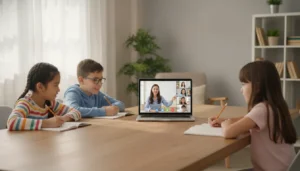
Modern online classrooms are a far cry from passively watching a video. They are dynamic, interactive spaces where students engage directly with teachers and classmates. Through live video sessions, your child can participate in discussions, ask questions, and collaborate on group projects in virtual breakout rooms. Many online schools also provide dedicated virtual spaces for students to connect outside of class time, much like a student lounge or common area. These platforms allow for a sense of community to form naturally. At Ideal School, our Full Day Program is built around this kind of active participation, ensuring students are not just learning together, but also building relationships.
Connecting with Peers Around the World
For many children living abroad, one of the most powerful social benefits of an online school is connecting with peers who understand their life. Instead of being the only one with an international background, your child will be in a class full of students from different countries and cultures. They can form friendships with others who know what it’s like to move, adapt to new places, and speak more than one language. This shared experience creates an immediate sense of belonging and can make your child feel more at home than they might in a local school. This global community is at the heart of our mission, which you can learn more about on our About Us page.
Balancing Online Learning with Local Activities
The flexibility of online education is a huge asset for your child’s social life. Without the rigid schedule and long days of a traditional school, your family has more time and energy to invest in local activities. You can sign your child up for sports teams in Arizona, art classes in Utah, or music lessons in North Carolina without worrying about conflicting school hours. This balance is key. It allows your child to form in-person friendships in your community while also connecting with their global classmates online. Our Asynchronous Classes offer the ultimate flexibility, empowering you to build a schedule that prioritizes both world-class education and local engagement.
What Does an Accredited Online School Cost?
Let’s talk about one of the most practical parts of this decision: the cost. When you’re looking for the right educational path for your child, the budget is always a major factor. The price of an accredited online school can vary quite a bit, and it’s usually a reflection of the program’s quality, the teachers’ credentials, and the depth of student support. For families living abroad, securing a stable, high-quality education is a top priority. It helps to think of tuition not just as a fee, but as an investment in your child’s future and a consistent learning environment, no matter your zip code. It’s all about finding that sweet spot where an excellent education meets a price point that works for your family.
What to Expect for Tuition
When you start researching, you’ll find that quality online schooling can be an investment. While some programs are inexpensive, good online schools can be very comprehensive, and their tuition often reflects that. The price tag is tied to the value you receive: a verified accreditation, a structured curriculum, and live instruction from certified teachers. Before you get sticker shock, it’s helpful to compare the cost to other options you might be considering, like local international schools, which can be significantly more expensive. When you look at an online school’s tuition, you’re seeing the price of a complete, portable educational solution designed to give your child a competitive edge.
Where Does Your Tuition Go?
So, what are you actually paying for? It’s so much more than just a login and password. Your tuition is what fuels the entire educational experience. A large portion goes toward hiring and supporting experienced, certified teachers who are not just subject matter experts but are also trained in the art of online instruction. It also funds a robust, accredited curriculum that meets high academic benchmarks, often aligning with curriculum standards in states like Arizona, Utah, and North Carolina. These schools offer a full education from Kindergarten to 12th grade completely online, which is a great choice for expat families because they solve many common problems. The fees also cover the technology platform, administrative support, and the rigorous process of maintaining accreditation, ensuring the diploma your child earns is recognized and respected.
Exploring Financial Aid and Discounts
Don’t let the initial cost discourage you from exploring a school that seems like a perfect fit. Many accredited online schools are committed to working with families and offer ways to make tuition more manageable. Always ask the admissions office about payment plans, which can help spread the cost out over several months. If you’re enrolling more than one child, see if they offer a sibling discount. The best thing you can do is have a direct conversation with the school’s admissions team about your family’s budget. You might find more flexibility than you expected. An online program can also be a more affordable choice than a traditional international school once you factor in the savings on things like transportation, uniforms, and other campus-related fees.
Your Search for the Best Accredited Online School
Finding the right online school can feel like a huge task, but knowing what to look for makes all the difference. Whether your family is living abroad or you’re seeking more flexible options in states like Arizona, Utah, North Carolina, or New Hampshire, the goal is to find a school that provides a stable, high-quality education your child can access from anywhere. It’s about choosing a learning environment that supports their academic growth and fits your family’s unique lifestyle.
Key Qualities to Demand
When you evaluate online schools, a few non-negotiables should be at the top of your list. First and foremost is accreditation. This is the official seal of approval that confirms a school meets high academic standards, ensuring the diploma your child earns is recognized by colleges and future employers. A great online program also offers flexibility, providing a consistent education that moves with you and works with your schedule. Finally, examine the curriculum and the teachers. The curriculum should be comprehensive and engaging, while the teachers should be certified and experienced in online instruction, ready to provide personalized support for your child.
How Ideal School Meets the Mark
Ideal School was built to provide a solution for globally mobile families and those seeking a different approach to learning. We offer a stable, bilingual education that goes wherever your family goes, so your child’s learning is never disrupted by a move. As a school with Cognia accreditation, we meet rigorous international standards for quality. Since 2018, we have been connecting students from over 20 countries in live, bilingual classrooms led by our experienced teachers. We understand that students often arrive with different skill levels, which is why our programs are designed to be flexible. We adjust coursework to match a student’s needs, helping to close any learning gaps and support their continued growth.
Your Step-by-Step Guide to Choosing the Right School
Finding the right school for your child is a big decision, especially when you’re living abroad. With so many options, it helps to have a clear roadmap. This step-by-step guide will walk you through the most important factors to consider, from accreditation to curriculum, so you can feel confident in your choice. Let’s break down how to find an online school that not only meets high academic standards but also fits your family’s unique lifestyle, whether you’re moving between places like Arizona and Utah or living in another country entirely. This process will help you find a learning environment where your child can truly thrive.
Step 1: Confirm the School’s Accreditation
First things first, let’s talk about accreditation. Think of it as a school’s official seal of approval. This is the most critical factor because it ensures the school meets rigorous educational standards. An accredited institution’s diploma, credits, and transcripts are recognized by colleges, universities, and other schools worldwide. Without it, you risk your child’s hard work not being formally acknowledged later on. For example, schools with Cognia accreditation have passed a thorough review of their programs and teaching quality. Before you go any further in your search, make sure any school you consider has its accreditation clearly stated and verifiable.
Step 2: Review the Curriculum
Once you’ve confirmed accreditation, your next step is to look closely at the curriculum. A great online school offers a comprehensive program that is both challenging and engaging. You’ll want to see a curriculum that aligns with recognized U.S. standards, ensuring a seamless transition if your family ever moves back to a state like North Carolina or New Hampshire. Look for a school that provides a complete K-12 pathway with a well-rounded education in core subjects, arts, and technology. The best programs are designed specifically for an online environment, using interactive tools to make learning dynamic. A school’s curriculum standards should be transparent and easy for you to review.
Step 3: Check for Flexibility and Support
One of the biggest advantages of online school for expat families is flexibility. Your child’s education shouldn’t be disrupted by changing time zones or travel schedules. Look for schools that offer different learning formats to suit your needs. For instance, asynchronous classes allow students to learn on their own schedule, while mixed programs combine self-paced work with live instruction. Beyond a flexible schedule, check the level of support available. Are teachers accessible for one-on-one help? Is there a strong support system for both students and parents? This combination of flexibility and robust support is what makes online learning successful for families on the move.
Step 4: Ask About Language and Cultural Support
For many expat families, maintaining a connection to their home language and culture is a priority. A bilingual program can be an incredible asset, allowing your child to become fluent in another language while strengthening their English skills. This isn’t just about learning vocabulary; it’s about fostering a global perspective. An online school that offers a true dual-language environment provides a stable, enriching education that traditional schools often can’t match. When you inquire, ask how the school integrates language and cultural learning into its core subjects. A quality Language Institute can give your child an educational experience that truly prepares them for a connected world.
Step 5: Compare Costs and Schedule a Talk
Finally, it’s time to talk about the investment. Tuition for quality online schools can vary, so it’s important to understand the costs and what they cover. While some see the price tag and hesitate, think of it as an investment in a stable, high-quality, and flexible education for your child. A transparent school will have its tuition information readily available and can explain where your money goes, from certified teachers to curriculum development and platform maintenance. The best way to get a clear picture is to schedule a talk with an admissions advisor. This gives you a chance to ask specific questions, discuss your family’s needs, and see if the school is the right fit.
Related Articles
- Accredited American Diploma: A Foreign Student’s Guide
- 6 Best Accredited Online High Schools for 2026
- Accredited Online Homeschooling Programs
- Accredited Online Schools: Top Advantages – Ideal School
- 12 Affordable Accredited Homeschool Programs
Frequently Asked Questions
Will universities really accept a diploma from an online school? Absolutely, as long as the diploma comes from a properly accredited institution. This is why accreditation is so important. Admissions offices at universities look for proof that a school meets high academic standards, and accreditation is that proof. An American High School Diploma from an accredited online school is recognized and valued by colleges in the United States and around the world, ensuring your child’s hard work opens doors to their future.
How can I tell if my child will do well in an online school environment? While independent and self-motivated students often thrive, a great online school is designed to support a wide range of learning styles. The key is choosing the right program format. If your child benefits from structure and routine, a full-day program with live classes is a great fit. If they are a self-starter who prefers to work at their own pace, asynchronous classes offer valuable freedom. The best programs also have dedicated teachers who provide personalized support to keep every student engaged and on track.
My child has fallen behind because we’ve moved so much. How can an online school help with learning gaps? This is a common challenge for families living abroad, and it’s an area where online schools excel. Unlike a traditional classroom that has to teach to the middle, a quality online program can tailor the experience to your child. Teachers can assess your child’s specific needs and adjust the coursework to help them catch up in certain areas while still moving ahead in others. This personalized approach provides the stability and focused support needed to close learning gaps and build academic confidence.
Besides virtual classes, how do online schools help children build real friendships? Online schools create a unique social environment. Your child will connect with peers from all over the world who share the experience of living internationally, forming a special kind of bond. Beyond that, the flexibility of online learning frees up significant time for local, in-person activities. Your child can join a neighborhood sports team, take art lessons, or participate in community events, allowing them to build a rich social life that includes both global online friends and local ones.
We need flexibility, but I also want my child to have live interaction with teachers. What’s the best option? You don’t have to choose one or the other. A mixed or hybrid program is designed for this exact situation. This format combines the structure of live, interactive classes with the freedom of self-paced assignments. Your child gets the benefit of real-time discussions with teachers and classmates, which builds community and provides direct support. They also have the flexibility to complete other coursework on a schedule that works for your family, giving you the perfect balance of structure and freedom.