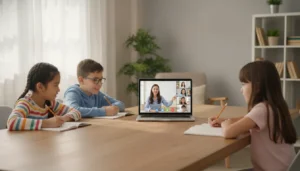


Your life abroad presents a unique chance for your child to become bilingual, a skill that offers lifelong cognitive and cultural benefits. While local schools are an option, you may also want to ensure your child maintains a strong connection to their native language and U.S. academic standards. You don’t have to choose between the two. The best modern programs are designed to deliver both. An online kindergarten for American children abroad can provide a rich, dual-language environment, combining an accredited American curriculum with immersive Spanish instruction. This approach gives your child a global education from home, fostering fluency and cultural understanding from an early age.
Key Takeaways
- Focus on accreditation and curriculum first: Make sure any school you consider is accredited to guarantee its credits are transferable, which is essential for families who move. A quality, U.S.-aligned curriculum provides a stable and recognized educational path for your child.
- Select a schedule that works for your family: The best online programs offer flexibility. Decide if your family needs the structure of live classes, the freedom of self-paced lessons, or a hybrid model that combines both to fit your life abroad.
- Create a well-rounded support system: Your child’s success depends on more than just academics. Actively build a community by finding local activities for social interaction and maintain open communication with your child’s certified teachers to ensure they are thriving.
How to Choose an Online Kindergarten Program Abroad
Choosing the right online kindergarten for your child while living abroad can feel like a huge decision, but it doesn’t have to be overwhelming. When you know what to look for, you can confidently find a program that fits your family’s unique lifestyle and sets your young learner up for success. Think of it as building a checklist. The right school will tick all the boxes, from official recognition of their curriculum to a schedule that actually works with your international time zone. By focusing on a few key areas, you can narrow down the options and find a school that feels like the perfect fit for your little one.
Accreditation and Curriculum
First things first: accreditation is non-negotiable. An accredited school has been reviewed and approved by a recognized educational agency, which means its curriculum, teachers, and grades meet high standards. This is crucial for your child’s future, ensuring that the credits they earn will be accepted by other schools if you move back to the U.S. or to another country. When you’re looking at a school, check to see if they are approved by one of the major recognized accrediting bodies. A strong, well-rounded curriculum is just as important. It should be aligned with U.S. standards to ensure your child is learning everything they need for a smooth transition into first grade, wherever that may be.
Bilingual Support
Living abroad offers a golden opportunity for your child to become bilingual, a skill that will benefit them for life. Many online programs offer dual-language immersion, allowing your child to learn in English and another language like Spanish. This is a fantastic way for them to maintain a strong connection to their native language while developing fluency in a new one. When exploring schools, ask about their bilingual programs. A great Language Institute will have native-speaking teachers and a curriculum designed to build true conversational skills, not just vocabulary lists. This approach helps create confident, globally-minded communicators from a young age.
Qualified Teachers and Support
An online school is only as good as its teachers. Look for programs that hire certified educators with experience in online instruction, especially for young learners. The best teachers know how to make learning fun and engaging, even through a screen. It’s also important to consider the school’s support system. Will there be someone you can contact easily if you have a question about an assignment or a technical issue, regardless of your time zone? Find out more about the school’s faculty and their qualifications. Having access to our teachers and a dedicated support team that understands the needs of families abroad can make all the difference in your online learning experience.
Flexible Scheduling
Your family’s life abroad probably doesn’t fit into a neat, nine-to-five box, and your child’s schooling shouldn’t have to, either. Flexibility is one of the biggest advantages of online learning. The best programs understand that families in different parts of the world need options. Look for schools that offer a variety of formats, such as live classes at different times of the day or self-paced learning that allows you to create a schedule that works for you. Many families find that mixed classes offering a combination of live instruction and independent work provide the perfect balance of structure and freedom. This allows your child to interact with teachers and peers while still having time for other activities.
Enrollment Flexibility
International moves rarely align perfectly with a traditional school calendar. That’s why it’s so important to find a school with a flexible enrollment policy. Look for programs that offer rolling admissions, which means you can enroll your child at any point during the year. This removes the stress of waiting for a new semester to begin and allows your child to start learning as soon as you’re settled. Before you sign up, you should also get a clear picture of the total cost. Review the school’s tuition page to understand what’s included, such as software or materials, so you can avoid any surprise expenses down the road. A transparent and accommodating enrollment process is a great sign of a supportive school.
Understanding Online Kindergarten Formats
Choosing an online kindergarten program can feel like a big decision, but the good news is there are several formats designed to fit your family’s unique lifestyle. Whether you need the structure of a traditional school day or the freedom to learn on your own schedule, there’s an option that will work for your young learner. Let’s walk through the most common formats so you can find the perfect fit for your family, no matter where you are in the world.
Full-Day Live Classes
Think of this as the online version of a traditional school day. In a full-day program, your child will log in for live, interactive classes with certified teachers and classmates. These programs follow a set schedule with a structured curriculum, providing a consistent routine that many young children thrive on. It’s an excellent choice if you want your child to have real-time social interaction and direct instruction every day. A full-day program offers a complete, accredited education right from your home, complete with official report cards that make future school transitions smoother. This format is ideal for families who want to replicate the supportive environment of a physical classroom.
Self-Paced (Asynchronous) Classes
If your family’s schedule is always changing or you love to travel, self-paced classes offer incredible freedom. With this asynchronous format, your child can access lessons, assignments, and learning materials anytime. Instead of attending live classes, they learn independently, which helps build responsibility and time management skills from an early age. This flexibility is a game-changer for families living abroad, as you never have to worry about conflicting time zones. Our asynchronous classes allow your child to progress at a comfortable speed while still receiving a high-quality, accredited education that aligns with U.S. standards.
Mixed (Live and Self-Paced) Options
Can’t decide between the structure of live classes and the freedom of a self-paced schedule? A mixed or hybrid program gives you the best of both. This format combines live, interactive sessions with independent, asynchronous work. For example, your child might attend a live morning meeting and a math lesson but complete reading and art projects on their own time. This balanced approach caters to different learning styles and gives families a blend of routine and flexibility. Mixed classes are a popular choice for families who want their children to build relationships with teachers and peers while still having the freedom to explore their world.
Supplemental Classes
Supplemental classes are individual courses you can add to your child’s existing education. They are a perfect way to enrich a homeschool curriculum, provide extra support in a specific subject, or introduce your child to a new language. For instance, if your child is enrolled in a local school but you want them to maintain their English literacy or learn Spanish, you can sign them up for a specific language arts or bilingual course. These à la carte options give you the power to customize your child’s learning journey. You can explore everything from core subjects to language immersion through our supplemental homeschool classes to fill any gaps and foster your child’s interests.
What Does a Top Online Kindergarten Program Offer?
When you’re choosing an online kindergarten, it helps to have a clear checklist of what makes a program truly exceptional. First and foremost, the school must have legitimate accreditation. This is your assurance that the education meets high standards and that the credits or diploma will be recognized, whether you plan to transition back to a school in Arizona or enroll in a different international system down the road. A quality program will be transparent about its accrediting bodies.
Beyond the paperwork, look at the curriculum itself. It should be engaging and interactive, designed to spark curiosity in young learners. A top program uses a mix of teaching methods, from live instruction to hands-on projects, that cater to different learning styles. The goal is to create a dynamic environment where your child feels excited to learn, not just parked in front of a screen. This is especially important for maintaining a connection to U.S. educational standards, which can be a comfort for families from states like Utah, North Carolina, or New Hampshire who may one day return.
Finally, a great online school is built on flexibility and community. It should offer various scheduling options to fit your family’s unique life abroad. Look for programs that provide opportunities for live interaction with both teachers and peers. These social connections are vital for a kindergartener’s development, helping them build friendships and feel like part of a supportive community, even from thousands of miles away. The best schools understand the challenges of expat life and have dedicated staff to support you every step of the way.
A Look at Ideal School
So, what does this look like in practice? At Ideal School, these qualities are the foundation of our approach. We provide a fully accredited education, ensuring your child’s learning journey is on a recognized and respected path. Our curriculum is designed to be both rigorous and engaging, fostering bilingualism and global citizenship from day one.
We understand that one size doesn’t fit all, which is why we offer a range of flexible programs, including full-day live classes, self-paced learning, and mixed options. This allows you to build a schedule that works for your family. Our certified teachers are experts in online education and are dedicated to creating a nurturing and interactive classroom where every child can thrive. We combine high academic standards with the personalized support your family needs to succeed.
Understanding Online Kindergarten Costs
Figuring out the cost of online kindergarten can feel like a big task, but it’s really about understanding what you’re investing in. The price often reflects the quality of the program, the level of teacher interaction, and the resources provided for your child. While public online schools in certain states like Arizona or Utah are tuition-free for residents, private online schools offer distinct advantages, such as bilingual education, smaller class sizes, and a globally-focused curriculum that you won’t find elsewhere.
When you’re looking at different programs, think of the tuition as an all-in-one package for your child’s foundational learning. It covers the expertise of certified teachers, a carefully designed curriculum, and a supportive school community. Many private institutions, like Ideal School, provide clear and transparent tuition structures so you know exactly what you’re paying for. The goal is to find a program that fits your family’s budget while delivering an educational experience that helps your child thrive, no matter where you are in the world.
Breaking Down Tuition Fees
When you start comparing online kindergartens, you’ll notice that tuition can vary quite a bit. Private online schools typically range from around $2,000 to over $10,000 for the school year. This cost covers the core educational experience, including instruction from certified teachers, access to the school’s learning platform, and a structured curriculum. The price often depends on the program’s features, such as live class frequency, teacher-to-student ratio, and whether it offers specialized instruction like bilingual learning. It’s helpful to view tuition not just as a price tag but as a reflection of the program’s quality and the personalized attention your child will receive.
Payment Plans and Financial Aid
Most private schools understand that tuition is a significant investment and offer ways to make it more manageable. Don’t hesitate to ask the admissions office about flexible payment plans, which can break down the annual cost into more affordable monthly or quarterly installments. Some schools also offer scholarships based on merit or financial need. Depending on your state of residence, you may also be eligible for state-funded programs like Education Savings Accounts (ESAs), which are available in states like Arizona, Utah, and North Carolina, that can help cover private school tuition. Exploring these options can make a world-class education more accessible for your family.
Watch Out for Hidden Costs
While tuition covers the main educational components, it’s smart to budget for a few extra expenses. First, you’ll need the right technology: a reliable computer or tablet and a stable internet connection. Some schools may also require specific software. Beyond tech, think about supplementary materials. While many resources are digital, you might need to purchase items like workbooks, art supplies, or science kits, which could cost between $50 and $300 for the year. To avoid surprises, it’s always a good idea to ask what’s included in the tuition and what you’ll need to provide. Reviewing a school’s program details can also give you a clearer picture of any additional materials required.
Why Accreditation Matters for Expat Families
When you’re living abroad, choosing an online school for your child can feel like a huge decision. One of the most important factors to look for is accreditation. Think of it as a seal of quality that confirms a school meets high academic standards. For expat families, this isn’t just a nice-to-have; it’s essential. Accreditation ensures that the diploma, credits, and transcripts your child earns are recognized and respected by other schools and universities around the world. Without it, you risk your child’s academic progress not being officially acknowledged, which can create major hurdles down the road.
This official recognition gives you peace of mind. It means that your child’s hard work in their online kindergarten program will be valued, whether you move to another country or return to the United States. An accredited program follows a vetted educational structure, so you can be confident your child is receiving a quality education that will prepare them for their next academic step. At Ideal School, we are proud to provide a fully accredited education, giving families like yours the assurance they need. This commitment to quality means our curriculum, teachers, and support systems have all been thoroughly reviewed and approved by an independent, trusted authority.
Ensuring Smooth School Transitions
One of the biggest worries for families who move frequently is how their child’s education will transfer. Enrolling your child in an accredited online school can make these transitions much smoother. When a school is accredited, its academic records are generally accepted without question. This means if you move back to the U.S. and need to enroll your child in a local school in a state like Arizona or Utah, the process is straightforward.
Without accreditation, you might face challenges. A new school could question the validity of your child’s learning and may even require placement tests or repeating a grade. An accredited transcript removes that uncertainty. It serves as proof that your child has completed a legitimate educational program, allowing them to transition into their new school at the appropriate grade level.
Key Accrediting Bodies to Know
As you research online schools, you’ll see different accrediting agencies mentioned. It’s helpful to know which ones are widely respected. Organizations like Cognia are among the most recognized in the United States and internationally. These agencies perform rigorous evaluations of schools to ensure they meet high standards for everything from curriculum and teacher qualifications to student support services.
When a school is approved by a major accrediting body, it signals that it is committed to educational excellence. This isn’t just about paperwork; it’s about a continuous process of improvement and accountability. Knowing that a school has earned this distinction can give you confidence in your choice. Ideal School, for example, is accredited by Cognia, which validates the quality and integrity of our programs for families across the globe.
What to Expect from a U.S.-Aligned Curriculum
When you’re living abroad, choosing an online kindergarten with a U.S.-aligned curriculum provides a familiar and high-quality educational foundation for your child. It ensures the learning material meets rigorous academic benchmarks, similar to what they would experience in a public or private school in the United States. This alignment is about more than just checking boxes; it’s about providing a seamless educational path. Should your family ever move back to the U.S., your child will be prepared to transition smoothly into their next grade level without academic gaps. It offers peace of mind, knowing their education is portable, consistent, and recognized.
U.S. State Standard Alignment
A curriculum aligned with U.S. state standards means the online school provides a complete, certified education with licensed teachers and a structured learning plan. Unlike some forms of homeschooling where parents design the curriculum, an accredited online school manages the instruction, grading, and official records. This ensures your child is meeting specific learning goals for their age group. For instance, our curriculum standards are designed to meet or exceed the requirements found in states like Arizona, Utah, North Carolina, and New Hampshire. This alignment is a key part of what makes an online school’s diploma or report card credible and valuable for your child’s future academic steps.
Core Kindergarten Subjects
An accredited online kindergarten program covers all the essential subjects your child needs to build a strong academic foundation. You can expect a curriculum focused on early literacy, where your young learner will practice phonics, sight words, and begin to read and write simple sentences. In math, they will explore numbers, counting, basic addition, and shapes. Science lessons introduce them to the world around them through observation and simple experiments, while social studies helps them understand concepts like community and friendship. Our full-day program integrates these core subjects into engaging, interactive lessons that prepare your child for first grade and beyond.
Bilingual Learning Opportunities
One of the most exciting aspects of a modern online curriculum is the chance for your child to become bilingual. Learning a second language at a young age offers incredible cognitive benefits and opens your child’s mind to new cultures and perspectives. A great program creates an immersive environment where language learning is woven into daily instruction, not just taught as a separate subject. This approach helps children absorb a new language naturally. By participating in a dual-language setting, your child develops valuable communication skills and a global mindset, preparing them to connect with people from different backgrounds. Our Language Institute is built on this very principle.
Common Challenges of Online Kindergarten Abroad
Moving your family to a new country is an incredible adventure, but it comes with its own set of questions, especially about your child’s education. While online kindergarten offers amazing flexibility for expat families, it’s smart to be aware of a few common hurdles. Thinking through these points ahead of time will help you create a smooth and positive learning experience for your young student from anywhere in the world. Let’s walk through some of the typical challenges and how you can prepare for them, ensuring your child’s educational journey is a success.
Tech and Internet Access
A stable internet connection is the foundation of any online learning experience. Before you enroll, it’s a good idea to check your internet speed and reliability. Beyond that, it’s important to know that some countries have restrictions that can block certain educational websites or tools. You’ll want to confirm that your chosen program’s platform is accessible from your new home. A quick chat with the school’s admissions team can usually clear this up. This simple step ensures your child won’t face any technical interruptions when class starts and helps you set up your home for success.
Time Zone and Scheduling Conflicts
One of the biggest questions for families living abroad is, “How will we manage the time difference?” Trying to match a school schedule that’s half a world away can be tough on a young child. This is where the format of the online program really matters. Look for schools that offer asynchronous (self-paced) learning or mixed classes. These options allow your child to complete lessons on a schedule that works for your family, not the other way around. This flexibility means you can fit schoolwork around your life, whether you’re exploring your new city in the morning or connecting with family back home in the evening.
Local Rules and Regulations
Every country has its own approach to education, and it’s important to understand the local rules for homeschooling and online schooling. Before you commit to a program, take some time to research the educational laws in your new country of residence. Some nations have specific requirements for families who choose to educate their children at home. Understanding these regulations from the start will help you make informed decisions and ensure you’re meeting all the local requirements. This bit of homework upfront can prevent any surprises down the road and give you peace of mind as you begin your online schooling journey.
Keeping Young Learners Engaged
When your child is in kindergarten, social interaction is just as important as academics. A common concern for parents is ensuring their child has opportunities to make friends and develop social skills. While a quality online program provides the academic structure, you can focus on creating social outlets. Signing your child up for local activities, sports, or art classes is a fantastic way for them to meet peers. Additionally, look for online schools that foster a sense of community. Programs with qualified, caring teachers who encourage student interaction can make a world of difference in helping your child feel connected and excited to learn.
How to Succeed with Online Kindergarten Abroad
Starting online kindergarten abroad is an exciting chapter, and with a little planning, you can create an environment where your young learner thrives. Success isn’t just about logging in for classes; it’s about building a balanced routine that blends structured learning with real-world exploration and social connection. Think of yourself as the architect of your child’s early education experience. By being intentional with scheduling, community building, and engagement, you can make online kindergarten a positive and enriching foundation for their academic journey, no matter where in the world you call home. The following strategies will help you create a supportive framework for a successful and happy year of learning.
Embrace Flexible Scheduling
One of the greatest advantages of online school is the freedom it offers. You can design a schedule that fits your family’s lifestyle, not the other way around. Online programs provide a steady, high-quality education that moves with you, ensuring your child has academic consistency even if your family relocates. Use this flexibility to your advantage. You can plan schoolwork around museum visits, trips to the local market, or simply a beautiful afternoon at the park. If your child is more focused in the morning, you can front-load their lessons. This adaptability allows you to create a learning rhythm that works for your child and your new life abroad, making education a seamless part of your global adventure. Many families find that asynchronous classes offer the perfect balance of structure and freedom.
Find Your Community
While your child’s school may be virtual, their life is happening in a real-world community. A common concern for parents is ensuring their child has plenty of social interaction, and it’s wise to be proactive. Make a point to sign your kindergartener up for local activities where they can meet and play with other children their age. Look into local libraries for story hours, find a neighborhood sports team, or enroll them in art or music classes. Connecting with other expatriate families can also provide a wonderful support system for both you and your child. Building these local connections helps your child feel grounded in their new environment and provides crucial opportunities for them to practice their social skills in a fun, low-pressure setting.
Monitor and Adjust
As a parent, you are your child’s most important educational partner. Staying engaged with their progress is key to their success in an online setting. Regularly check in to see how your child is doing with their lessons. This helps you confirm they are meeting their learning goals and identify any areas where they might need a little extra support. This doesn’t mean hovering over their shoulder, but rather creating a simple routine to review their work together and talk about their day. Maintaining open communication with your child’s instructor is also vital. Certified teachers are there to help, and regular check-ins can help you work together to ensure your child is thriving.
Create Social Opportunities
Modern online schools are designed to be interactive and collaborative, not isolating. Look for and encourage your child to participate in the social opportunities built into their program. Many top online schools offer live classes, group projects, and virtual clubs that allow students to connect with their peers. These sessions are more than just instructional; they are a space for your child to build friendships, practice communication, and learn to work as part of a team. When choosing a program, ask about these features. Opting for a format that includes live interaction, like mixed classes, can provide a great blend of independent work and valuable peer-to-peer engagement.
Essential Support for Thriving Young Learners
Choosing an online program is about more than just academics. For your young learner to truly flourish, they need a strong support system. This includes dedicated teachers, resources that empower you as a parent, and opportunities for social connection. A great online school understands this and builds these pillars directly into its structure, ensuring your child receives a well-rounded and nurturing education, no matter where you are in the world.
Access to Certified Teachers
One of the biggest distinctions between a formal online school and simple homeschooling is access to certified teachers. You want educators who are not only experts in their subject matter but are also trained to teach in a virtual environment. These are real teachers who provide a full, certified education over the internet, complete with a set curriculum, official report cards, and diplomas. They lead live classes, offer one-on-one support, and provide the professional guidance your child deserves. When you’re exploring programs, look for information about their teachers and their qualifications. This ensures your child is receiving instruction from professionals who can create an engaging and effective online classroom.
Resources for Parents
As a parent, you are a key partner in your child’s online education. The best programs recognize this and provide you with robust resources to help you support your learner. This goes beyond just a login to a student portal. Look for schools that offer clear communication channels, progress-tracking tools, and access to the curriculum so you always know what your child is learning. A well-structured program with clear curriculum standards removes the pressure of designing lessons yourself. Instead of spending hours searching for educational websites and apps, you can focus your energy on encouraging your child and celebrating their progress, confident that the educational framework is solid.
Peer Interaction and Social Growth
It’s completely normal to wonder how your child will make friends in an online setting. While online school offers incredible flexibility, social development is still a vital piece of the puzzle. Top-tier programs intentionally create opportunities for peer interaction through live classes, small group projects, and virtual student clubs. These sessions help children build a sense of community and learn to collaborate with classmates from around the globe. At the same time, it’s a great idea to sign your child up for local activities, like sports or art classes. This combination allows your child to enjoy the benefits of a flexible, global education while also building in-person friendships within your local community.
Related Articles
- NH Virtual K-12 School with Live Classes: A Guide
- Exploring the Advantages of Online Homeschooling: Flexibility – Ideal School
- Traditional to Online Homeschooling: A Step-by-Step Guide – Ideal School
- Virtual Education for Kids: Benefits & Safety | Ideal School
- 10 Best Homeschool Programs for Elementary Students
Frequently Asked Questions
Will my child’s online kindergarten education be recognized if we move back to the U.S.? Yes, as long as you choose an accredited school. Accreditation is a formal review process that confirms a school meets high academic standards. When a school is accredited by a recognized body like Cognia, its credits and records are accepted by other schools, including those in states like Arizona and North Carolina. This ensures your child can transition smoothly to the next grade level without needing placement tests or repeating a year.
How can my child make friends and develop social skills in an online program? This is a common and important question. A great online program builds social interaction directly into its structure. Look for schools that offer live classes, small group projects, and virtual clubs where students can connect and collaborate. You can also supplement this by enrolling your child in local activities like sports, art classes, or library story times. This combination gives your child valuable peer interaction both online and in your new community.
What if our family’s schedule doesn’t work with U.S. school hours? This is exactly where the flexibility of online learning shines. You are not locked into a single, rigid schedule. Many schools offer different formats to solve this problem. You can choose a self-paced (asynchronous) program where your child can access lessons anytime, or a mixed program that combines some live instruction with independent work. These options allow you to build a school schedule that fits your family’s unique rhythm and time zone.
What is the difference between a formal online school and just homeschooling on my own? The main difference is the level of support and official structure. When you enroll in an accredited online school, you get a complete educational package: a proven curriculum, instruction from certified teachers, official grading, and recognized report cards. With traditional homeschooling, you are responsible for designing the curriculum and managing all instruction and record-keeping yourself. A formal program provides the framework and professional guidance, so you can focus on supporting your child’s learning.
How much should I budget for online kindergarten beyond the tuition fee? While tuition covers the core instruction, it’s wise to plan for a few additional costs. You will need a reliable computer or tablet and a stable internet connection. Some programs may also have specific software requirements. It’s also a good idea to set aside a small budget, perhaps a few hundred dollars for the year, for physical learning materials like workbooks, art supplies, or hands-on science kits that complement the digital curriculum. Asking the school for a list of required supplies upfront can help you plan.

Written by
Eric C. Franzen
Eric C. Franzen is co-founder and owner of Ideal School, with 20+ years of experience as an educational leader and entrepreneur. He holds a BA in Education from the University of Washington and an MA in Educational Administration from Seattle Pacific University.
View LinkedIn Profile →