

Giving your child the ability to speak a second language is one of the most powerful gifts you can provide. It goes far beyond simply learning vocabulary; it enhances cognitive skills, improves problem-solving abilities, and fosters a deep, genuine appreciation for other cultures. The most effective way to achieve true fluency is through immersion, where learning happens naturally as part of every school subject. For families living abroad, a Spanish immersion online school for expat children offers the perfect solution. It combines the proven benefits of a bilingual education with the flexibility and stability your family needs to build a connected, global life.
Key Takeaways
- Immersion teaches subjects in Spanish, not just the language: A true immersion program uses Spanish to teach math, science, and history. This approach helps children develop fluency naturally while also strengthening their problem-solving skills and cultural awareness.
- Quality is proven by accreditation and teachers: When choosing a school, look for official accreditation to ensure high academic standards. Also, confirm the program employs certified, native-speaking teachers who provide an authentic and effective learning experience.
- Flexibility and home support are key to success: The best online programs offer flexible formats (like live, asynchronous, or mixed classes) to fit your family’s schedule. Your support at home, combined with the right program, creates a strong foundation for your child’s bilingual journey.
What is Spanish Immersion Education?
If you’ve ever dreamed of your child confidently chatting in Spanish or having a deep appreciation for different cultures, you’ve likely come across the term “Spanish immersion.” But what does it really mean? Simply put, Spanish immersion education is an approach where students learn academic subjects in Spanish. Instead of having a separate “Spanish class,” subjects like math, history, and science are taught in the Spanish language.
This method creates a natural and immersive environment where language learning happens organically, much like how a child learns their first language. It’s less about memorizing vocabulary lists and more about using Spanish to communicate, learn, and solve problems. The goal is to help children develop strong language skills while also enhancing their critical thinking and gaining a genuine appreciation for other cultures. It’s a powerful way to introduce your child to bilingualism from an early age.
How is it different from traditional language classes?
The biggest difference between immersion and traditional classes is the amount of exposure and the context. A traditional class teaches Spanish as a subject for maybe an hour a day or a few times a week. An immersion program, on the other hand, uses Spanish as the medium for all instruction. Think of it as the difference between visiting a country and living there. In a true immersion setting, most of the school day is conducted in Spanish. This approach is far more effective at developing fluency because students are constantly hearing, speaking, and thinking in the target language, making it a part of their daily academic life.
Why choose a dual-language program?
Choosing a dual-language program is about giving your child more than just a second language; it’s about providing a set of cognitive and cultural tools for life. These programs are designed to achieve biliteracy, which is the ability to speak, listen, read, and write well in two languages. Research consistently shows that learning a second language offers strong academic and developmental advantages. Bilingual students often demonstrate improved problem-solving skills, creativity, and mental flexibility. Furthermore, it fosters a deep cultural understanding and empathy, preparing them to connect with people from different backgrounds in our increasingly global world.
What are the benefits of Spanish immersion?
Choosing a Spanish immersion program is about so much more than just learning vocabulary and grammar. It’s an investment in your child’s entire way of thinking and seeing the world. A dual-language education gives children a powerful cognitive and cultural toolkit that they will carry with them for life. From building a stronger, more flexible brain to opening up a lifetime of personal and professional opportunities, the advantages are truly profound. Let’s look at some of the incredible ways a bilingual education can help your child flourish.
Sharpen cognitive skills
Learning in two languages is like a constant workout for the brain. Studies show that bilingual children often develop enhanced cognitive abilities that benefit them across all areas of learning. This mental exercise helps them become better problem-solvers, more creative thinkers, and stronger decision-makers. Because their brains are always working to process information in two languages, they can become better at focusing their attention and filtering out distractions. This improved concentration and mental flexibility are skills that support academic success not just in language classes, but in math and science, too. A well-designed bilingual curriculum is structured to build these cognitive skills from day one.
Achieve native-like fluency
One of the most exciting benefits of starting language immersion early is the ability to achieve true, native-like fluency. Young learners have a remarkable capacity to absorb new sounds and structures, allowing them to develop an authentic accent without the struggles many adults face. If you’re worried that learning a second language might cause confusion or delays, research shows the opposite is true. Children are fully capable of learning two languages simultaneously. In fact, this process can even strengthen their primary language skills. With guidance from qualified, native-speaking teachers, your child can build a strong and lasting foundation in Spanish, speaking with confidence and ease.
Foster cultural adaptability
A Spanish immersion education is a passport to a new culture. As children learn the language, they also gain a genuine appreciation for diverse perspectives, traditions, and ways of life. This exposure helps them develop empathy and the ability to connect with people from different backgrounds. For families living abroad, this is more than a skill; it’s a way of life that helps children feel at home anywhere in the world. By engaging with stories, holidays, and customs from Spanish-speaking cultures, students learn to see the world through a wider lens. They become part of a global community that values connection and understanding, preparing them to be compassionate and open-minded global citizens.
Open doors to future opportunities
Being bilingual is a powerful asset in an interconnected world. It can give your child a significant advantage in their future academic and professional pursuits. From standing out on college applications to qualifying for unique career paths, fluency in Spanish opens doors that might otherwise remain closed. Employers increasingly seek out candidates who can communicate with diverse populations and operate in multicultural environments. Beyond the resume, the cognitive skills gained through immersion, like multitasking and problem-solving, are highly valued in any field. An American High School Diploma earned in a bilingual program is a particularly powerful combination, signaling to universities and employers that your child is prepared for any challenge.
What does an online Spanish immersion school look like?
If you’re picturing a simple video call for a language lesson, you’ll be happy to know that a true online immersion school is so much more. It’s a complete academic environment where Spanish is the medium of instruction, not just the subject. Instead of learning Spanish for an hour a day, your child learns math, science, history, and art in Spanish. This approach creates a space where the language becomes a natural tool for communication and learning.
The structure of an online immersion school is designed for deep, meaningful language acquisition. It combines expert instruction with a curriculum that weaves language and culture together. From the moment class begins, students are greeted, taught, and guided in Spanish. This consistent exposure helps them start thinking in the new language, moving them past simple translation and toward genuine fluency. The best programs offer a mix of learning formats and a supportive global community to make the online experience feel connected and engaging.
A day in the life of an online student
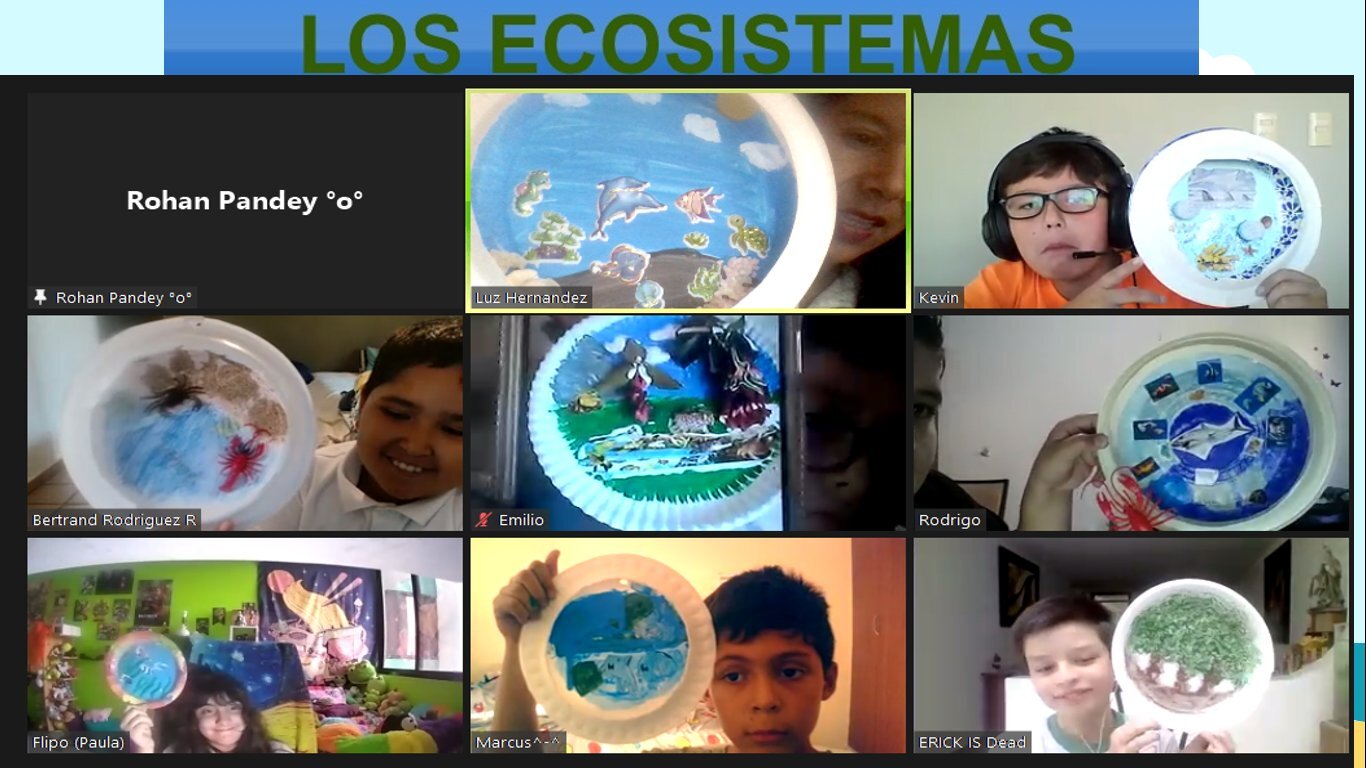
Imagine your child starting their school day with a cheerful “buenos días” from their teacher and classmates. In an online immersion program, Spanish is integrated into every part of the day. When it’s time for science, they’ll discuss the water cycle using Spanish vocabulary. During history, they might learn about ancient civilizations through Spanish texts and discussions. This method makes learning the language feel as natural as learning their native tongue.
The goal is to create a virtual classroom where Spanish is the primary language for all activities. This consistent use helps children build confidence and fluency without feeling like they’re just memorizing words for a test. A full-day program provides this comprehensive exposure, turning every lesson into an opportunity to practice and absorb the language in a meaningful context.
Live classes vs. flexible learning
One of the biggest advantages of online education is its flexibility. Spanish immersion schools offer different formats to fit your family’s needs. Live, or synchronous, classes happen in real time, allowing your child to interact directly with teachers and peers. This is great for conversational practice and building a sense of community. It’s the closest you can get to a traditional classroom experience, just from the comfort of home.
On the other hand, asynchronous classes offer ultimate flexibility. Your child can complete lessons and assignments on their own schedule, which is perfect for families in different time zones or with busy lives. Many schools also offer mixed programs that combine the benefits of both, blending live instruction with self-paced work. This allows you to create a balanced schedule that works for your child’s learning style.
Weaving culture into the curriculum
A great immersion program teaches more than just vocabulary and grammar; it brings the culture of the Spanish-speaking world to life. Instead of just learning the word for “holiday,” students explore the traditions of Día de los Muertos in Mexico or Las Fallas in Spain. This cultural context makes the language more vibrant and memorable. It helps your child understand the “why” behind the words they’re learning.
This is where qualified, native-speaking teachers make all the difference. They share firsthand knowledge of cultural nuances, traditions, and perspectives that you can’t get from a textbook. By weaving music, art, history, and social studies from Spanish-speaking countries into the curriculum, they create a rich and authentic learning experience. This approach helps your child develop not just as a bilingual speaker, but as a global citizen.
What makes a great online immersion program?
When you’re looking for an online immersion school, it’s easy to feel overwhelmed by the options. But not all programs are created equal. A great program goes far beyond simple video lessons. It creates a vibrant, supportive, and effective learning environment. To find the right fit for your family, you’ll want to look for a few key components that separate the best schools from the rest. These elements work together to ensure your child doesn’t just learn a language but truly lives it.
Qualified, native-speaking teachers
The heart of any immersion program is its teachers. For your child to achieve fluency, they need to learn from educators who are not only certified but are also native speakers of the target language. Native-speaking teachers provide authentic pronunciation, natural conversational rhythms, and a deep understanding of cultural nuances that a non-native speaker simply can’t replicate. This is the difference between a true immersion experience and a language enrichment class. When you’re evaluating a school, ask about the faculty’s background and qualifications. A top-tier program will be proud to introduce you to our teachers and their credentials.
Accredited, bilingual curriculum
A great program is built on a strong academic foundation. Look for a school with an accredited, bilingual curriculum. Accreditation from a recognized body like Cognia is your assurance that the school meets rigorous educational standards. It means the curriculum isn’t just thrown together; it’s a carefully designed pathway where subjects like math, science, and history are taught in both languages. This integrated approach reinforces language skills throughout the school day and ensures your child receives a comprehensive education that’s on par with traditional schools. A school’s commitment to high curriculum standards is a clear sign of its quality and dedication to student success.
Small classes and personal support
In an online setting, personal connection is everything. The best immersion schools prioritize small class sizes to foster meaningful interaction between students and teachers. When a teacher has fewer students, they can provide the individual attention and personalized feedback your child needs to build confidence and master new concepts. This is especially important for language learning, where active participation is key. A supportive environment where children feel seen, heard, and encouraged to take risks is essential for them to thrive. You can often get a feel for this by reading testimonials from other families.
Technology that enhances immersion
The right technology can transform an online classroom from a passive viewing experience into an interactive learning adventure. A great online school uses digital tools that are designed to enhance immersion, not just deliver content. This includes features like interactive whiteboards for collaborative problem-solving, breakout rooms for small group practice, and engaging multimedia resources that bring lessons to life. The platform should be intuitive and reliable, allowing your child to focus on learning without technical frustration. The goal is for technology to be a seamless bridge that connects your child with their teacher and classmates in a dynamic, full-day program.
Find the right program for your family
Choosing the right educational path for your child is a big decision, especially when you’re living abroad. The beauty of online immersion school is its flexibility. Whether your family needs a full-time academic structure or just a way to enrich your current homeschool plan, there’s a program designed to fit your life. The best choice depends on your child’s learning style, your family’s schedule, and your overall educational goals. Let’s look at the most common formats to help you find the perfect match for your family’s needs.
Full-day online school
A full-day online school offers a complete, structured academic experience, just like a traditional brick-and-mortar school. From morning bells to afternoon sign-offs, your child will attend live classes and follow a set schedule, all while learning core subjects in a Spanish immersion environment. This structured program helps children develop stronger working memory and better problem-solving skills. It’s an excellent option for families who want a comprehensive replacement for traditional schooling and are looking for deep, consistent language immersion. Ideal School’s Full Day Program provides this immersive, accredited education from the comfort of your home, ensuring your child receives a world-class bilingual education no matter where you are.
Asynchronous classes for ultimate flexibility
If your family’s schedule is unpredictable due to work, travel, or different time zones, asynchronous classes offer incredible freedom. With this model, lessons are pre-recorded, and assignments can be completed whenever it works best for your child. This flexibility doesn’t mean sacrificing quality. A great asynchronous program focuses on relevant, everyday Spanish phrases, not just vocabulary lists, allowing your child to communicate more fully and quickly. This approach is perfect for self-motivated learners and families who need to fit education around their unique lifestyle. You can explore asynchronous classes that allow your child to learn at their own pace while still making meaningful progress toward fluency.
Mixed programs for a balanced approach
Can’t decide between the structure of live classes and the freedom of a flexible schedule? A mixed program, sometimes called a hybrid model, gives you the best of both worlds. These programs combine live, interactive sessions with asynchronous assignments that your child can complete on their own time. This balanced approach provides the social connection and direct teacher support of live learning while still offering the flexibility that many expat families need. Students are often placed in groups based on their age and Spanish level, ensuring they get the right support. Our Mixed Classes are a popular choice for families who want a well-rounded and adaptable educational experience.
Supplemental homeschool classes
For families who already have a homeschool curriculum they love, supplemental classes are a fantastic way to add Spanish immersion to the mix. You don’t have to enroll in a full-time program to give your child the benefits of bilingualism. Instead, you can choose specific courses to enrich their education. This is an ideal solution for parents who want to maintain an active role in their child’s learning while getting expert support in language instruction. By adding a Spanish class, you can enhance their cognitive development and open up new cultural perspectives. Our supplemental homeschool classes are designed to integrate smoothly with your existing educational plan.
How to choose the right online immersion school
Finding the right online school for your child can feel like a huge decision, but you can simplify the process by focusing on a few key areas. When you know what to look for, you can confidently compare programs and find one that aligns with your family’s goals and your child’s needs. Let’s walk through the essential steps to choosing a high-quality online Spanish immersion school.
Start with accreditation
Your first step should always be to check for accreditation. Think of it as a seal of approval from a respected educational authority. Accreditation ensures the school meets high standards for its curriculum, teachers, and student support. It also means the credits and diploma your child earns will be recognized by universities and employers worldwide. This is crucial whether you’re planning to stay abroad or eventually return to a state like Arizona, Utah, North Carolina, or New Hampshire. A quality program will be proud to share its accreditation status, as it demonstrates a serious commitment to education.
Evaluate the teaching model
Not all immersion programs are created equal. A true immersion school conducts the majority of instruction in the target language. Many use a 90/10 model, where about 90% of the day is in Spanish, with the remaining 10% in English for specific subjects or to clarify complex ideas. Ask schools to explain their teaching model and how much time is spent in each language. Also, find out if they offer different formats, like a full-day program for complete immersion or a mixed approach that blends live and self-paced learning. This will help you understand if the program’s intensity matches your goals for fluency.
Consider your child’s learning style
You know your child best. Do they thrive with structure and social interaction, or are they a self-motivated learner who prefers to work at their own pace? The best online schools offer options to fit different personalities. A synchronous, or live, class schedule is great for children who enjoy real-time collaboration with teachers and peers. On the other hand, asynchronous classes provide the ultimate flexibility for families with busy or unpredictable schedules. An active partnership between you and the school will help your child succeed, so choose a program that complements their natural learning tendencies.
Read reviews and try a class
Before you commit, do some final research to get a feel for the school community. Look for parent testimonials and reviews to see what other families are saying about their experiences. A transparent school will make this information easy to find and will be open about its tuition and policies. The best way to gauge a fit is to experience the classroom firsthand. Ask if your child can sit in on a trial class. This allows you to observe the teachers, see how students engage with the material, and decide if the environment feels happy and supportive for your own child.
Common challenges and how to solve them
Choosing a Spanish immersion program is an exciting step, but it’s natural to have questions about the practical side of things. Like any educational path, online immersion comes with its own set of unique challenges. The good news is that with the right approach and the right school, these hurdles are easy to clear. Let’s walk through some common concerns and find straightforward solutions to help your family thrive in a bilingual environment.
Bridging language gaps
Many parents worry that focusing on Spanish will cause their child’s English skills to slip. It’s a valid concern, but a well-structured immersion program is designed to prevent this. True immersion isn’t about replacing one language with another; it’s about adding a new one. Programs often use a model where the majority of instruction is in Spanish, with English used for clarity. This creates a rich, bilingual setting. As a parent, you can play an active role by continuing to read and speak with your child in English at home. This partnership between home and school ensures your child develops strong skills in both languages, becoming truly bilingual, not just a Spanish speaker.
Managing screen time and engagement
The thought of more screen time can be daunting, but not all screen time is created equal. Unlike passive video watching, online immersion classes are active, social, and mentally stimulating. The best programs create engagement through small class sizes and live instruction from carefully vetted, native-speaking teachers. At Ideal School, our experienced teachers are trained to make learning dynamic and interactive, so your child is a participant, not a spectator. They build a personal connection with each student, turning screen time into a valuable tool for natural and confident language acquisition. It’s about quality and connection, not just the clock.
Handling time zones and schedules
One of the biggest advantages of online learning is its flexibility, which is a lifesaver for expat families living across different time zones. You don’t have to rearrange your life to fit a rigid school schedule. Look for a school that offers different learning models to suit your family’s needs. For instance, asynchronous classes allow your child to complete lessons on their own time, which is perfect for families on the move or in tricky time zones. Alternatively, mixed programs combine the flexibility of independent work with the community of live sessions, giving you the best of both worlds.
Keeping motivation high
Learning a new language is a marathon, not a sprint, and every child’s motivation will ebb and flow. When things get challenging, it helps to gently remind them of the amazing long-term benefits. Studies show that learning a second language offers powerful academic and developmental advantages. It also improves their overall communication skills and opens their minds to new cultures. You can also keep them inspired by connecting with other families in the program for virtual practice sessions or sharing stories from students who have found success. Seeing the real-world results can be a powerful motivator to keep going.
How to support your child’s learning at home
Your child’s success in an online immersion program is a partnership between the school and your family. While our teachers handle the formal instruction, your support at home can make a world of difference in your child’s confidence and progress. Creating a positive environment for learning doesn’t require you to be a Spanish teacher; it’s about encouraging curiosity and providing consistent support. By being an active participant in their education, you help reinforce the lessons from their virtual classroom and show them that learning is a valuable, lifelong activity. The following steps are simple, practical ways you can champion your child’s bilingual journey right from your own home.
Create a language-rich home
When your child is in a Spanish immersion program, one of the best things you can do is to continue building a strong foundation in your family’s native language. Experts agree that parents should provide experiences that help develop their children’s first-language skills. This means filling your home with rich conversation, reading books together, and watching movies in your primary language. This practice doesn’t detract from their Spanish learning; it strengthens their overall linguistic abilities. A solid grasp of one language provides a framework for understanding the structure of another, making it easier for them to master both. Our curriculum standards are designed to build on this dual-language strength.
Find helpful apps and resources
Just as you would carefully vet a school, it’s important to choose high-quality supplemental resources. The best programs and tools feature native-speaking instructors, a structured curriculum, and an authentic cultural feel. Look for apps, YouTube channels, and streaming shows that are made for native Spanish-speaking children. This exposes your child to the language as it’s naturally spoken, complete with cultural nuances and colloquialisms. These resources are excellent for passive learning and can fill downtime with fun, educational content. If you’re looking for more structured support, our Language Institute offers additional classes to complement your child’s learning.
Connect with other families for practice
Language is all about connection, and practicing with peers is a powerful motivator. When children learning Spanish interact with native Spanish speakers, everyone benefits. This creates a collaborative environment where language exchange happens naturally. Encourage your child to connect with classmates for virtual study sessions or playdates. You can also look for online groups or local community meetups for other families on a bilingual journey. Hearing from other parents and seeing how other children thrive can be incredibly encouraging. These connections, whether with families in Arizona or across the globe, reinforce the idea that Spanish is a living language used by a vibrant, worldwide community, just like the one you’ll find in our parent testimonials.
Discover Ideal School: A Global Community for Your Child
Finding an online school that feels like a real community can be a challenge, especially when you’re living abroad. You want a program that not only delivers academic excellence but also provides a sense of belonging for your child. At Ideal School, we’ve built a global learning environment where students from diverse backgrounds come together. We combine a fully accredited, bilingual curriculum with the flexibility your family needs to thrive, no matter where you are in the world.
Our approach is centered on creating a supportive and engaging space for every student. We believe that learning a new language is about more than just grammar and vocabulary; it’s about connecting with new cultures and perspectives. Whether your child is just starting their educational journey in kindergarten or preparing for college with an American high school diploma, our programs are designed to meet them where they are and guide them toward fluency and cultural understanding.
Our accreditation and curriculum
One of the biggest questions for any parent is whether an online school will be recognized and respected. We get it. That’s why we’re proud that our accreditation from Cognia, a globally recognized organization, ensures your child receives a world-class education that meets rigorous standards. This means a diploma from Ideal School is valued by universities and employers worldwide. Our curriculum is designed to do more than teach subjects in two languages; it helps students develop cultural appreciation and a deeper knowledge of global issues. We focus on creating well-rounded, curious, and compassionate global citizens.
Flexible K-12 programs
Expat life doesn’t always fit into a traditional school day. With changing time zones and family commitments, you need an educational partner that understands flexibility. We offer several K-12 programs to fit your family’s unique schedule and learning preferences. You can choose from our full-day live classes, fully asynchronous courses that allow for self-paced learning, or a mixed program that combines the best of both. For families who homeschool, our supplemental classes are a great way to add Spanish immersion to your existing curriculum. This flexibility ensures that a high-quality bilingual education is always within reach.
Enrolling in Arizona, Utah, North Carolina, and New Hampshire
For families residing in or returning to the United States, Ideal School offers a seamless transition into a high-quality bilingual program. We welcome students from states like Arizona, Utah, North Carolina, and New Hampshire, providing a fully accredited online option that aligns with educational standards. Parents who want their children to benefit from a Spanish immersion model can feel confident choosing our programs. We encourage you to become well-informed about how our curriculum can fit your child’s needs. You can learn more about our school and what makes our community special by exploring our mission and vision.
Related Articles
- The Ultimate AZ Dual Language Immersion Online School Guide
- Why Online School Is a Good Choice for Dual Language Learners | Ideal School
- Best Spanish Immersion Online School in New Hampshire
- Bilingual School Online – Dual Language | Ideal School
- Bilingual Elementary School – Dual Language | Ideal School
Frequently Asked Questions
Will my child fall behind in English if they are in a Spanish immersion program? This is a very common and understandable concern. The goal of a quality immersion program is not to replace English but to add Spanish, creating a truly bilingual student. Research shows that a strong foundation in a primary language actually helps with learning a second one. A well-designed curriculum ensures that skills transfer between languages. Your role at home is simple: continue to read, speak, and engage with your child in English. This partnership ensures they become strong in both languages.
Do I need to speak Spanish myself to support my child? Not at all. You don’t have to be a Spanish expert to be your child’s biggest supporter. Your role is to foster a positive and encouraging learning environment. The most important thing you can do is to continue building a rich language environment in your home’s primary language. By focusing on strong first-language skills, you give your child the foundation they need to succeed in a bilingual program. Your enthusiasm and support are what matter most.
How can an online school create a truly immersive experience? A great online immersion school is much more than just a language lesson over video chat. It’s a complete academic environment where subjects like math and science are taught in Spanish by native-speaking teachers. This creates a space where the language is a natural tool for learning and communication. Through small classes, interactive technology, and a curriculum that weaves in culture, students are actively participating and connecting, not just watching a screen.
What is accreditation, and why does it matter so much? Think of accreditation as a seal of quality from a respected educational authority. It confirms that a school meets high standards for its teachers, curriculum, and student support. For your family, this is a crucial guarantee. It means the credits your child earns are valid and that their diploma will be recognized by universities and employers, which is especially important if you plan to move or return to states like Arizona, Utah, North Carolina, or New Hampshire.
How do I choose between a full-day, asynchronous, or mixed program? The best program is the one that fits your child’s learning style and your family’s schedule. A full-day program offers a structured, comprehensive school day with live classes, which is great for deep immersion and social interaction. Asynchronous classes provide maximum flexibility, allowing your child to learn on their own schedule. A mixed program offers a balance of both, combining live sessions with self-paced work. Consider your daily routine and how your child learns best to find the perfect match.

Written by
Eric C. Franzen
Eric C. Franzen is co-founder and owner of Ideal School, with 20+ years of experience as an educational leader and entrepreneur. He holds a BA in Education from the University of Washington and an MA in Educational Administration from Seattle Pacific University.
View LinkedIn Profile →