

Choosing a school is about more than just the next grade level; it’s about building a foundation for your child’s entire life. The skills that lead to success in college and careers are changing, with a growing emphasis on adaptability, cross-cultural communication, and creative thinking. A bilingual education is one of the most effective ways to develop these exact abilities. When you choose an accredited online dual language school k-12, you are investing in a program designed to foster these essential skills. Your child won’t just learn a second language; they will gain a competitive edge that makes their college applications and future résumés stand out.
Key Takeaways
- Prioritize accredited schools to guarantee quality: Always verify a school’s accreditation through a recognized body like Cognia. This step ensures the curriculum is sound, credits will transfer, and the diploma holds real value for college and beyond.
- Look beyond fluency for long-term advantages: A dual language education strengthens critical thinking and problem-solving skills. It also fosters cultural understanding, giving your child a significant edge in college applications and the future job market.
- Find the right fit through research and flexibility: Look for a school that offers program options, like full-day or supplemental classes, that match your family’s schedule. Dig into parent testimonials and virtual events to get a true feel for the school’s community and support system.
What Is an Accredited Online Dual Language School?
When you’re exploring educational paths, you might see the term “accredited online dual language school.” What does that actually mean for your child? It’s a school that offers a high-quality, two-language education online and has been officially recognized for meeting rigorous standards. This combination blends the cognitive benefits of bilingualism with the flexibility of remote learning. Let’s break down what these schools offer, why that “accreditation” stamp of approval is so important, and how the online model brings a global classroom right into your home.
What is dual language education?
Dual language education is an academic program where students who are native English speakers learn alongside students who are native speakers of another language, like Spanish. The goal is to help every child become fluent in two languages. This isn’t just about learning vocabulary in a separate language class. Instead, core subjects like math, science, and history are taught in both languages. This immersive approach helps students develop deep language skills, achieve academic success in two languages, and build a genuine appreciation for other cultures. It’s a powerful way to prepare your child for an interconnected world.
Why does accreditation matter?
Think of accreditation as a seal of quality for a school. It’s a voluntary process where an institution is reviewed by an independent organization to ensure it meets high standards of educational excellence. For parents, this provides peace of mind. Accreditation confirms that the school’s curriculum is solid, its teachers are qualified, and its diplomas are recognized by colleges and other schools. When a school is accredited, you can trust that the credits your child earns will transfer and that their high school diploma will be respected. It’s a critical factor that separates a legitimate, high-quality educational program from one that might not prepare your child for future success.
How do online dual language programs work?
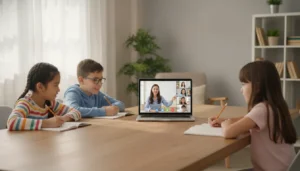
Online dual language programs bring the immersive classroom experience to you, no matter where you live. Whether your family is in Arizona or North Carolina, your child can join live, interactive classes taught by qualified teachers in both English and a second language. Students learn alongside peers from different backgrounds, creating a truly global community from the comfort of home. These programs use digital tools to make learning engaging and effective. Depending on the school, you might find different formats, from a full-day schedule that mirrors a traditional school day to more flexible options that blend live instruction with independent work. This structure allows students to develop fluency while enjoying the convenience of online learning.
What Are the Benefits of a Dual Language Education?
Choosing the right educational path for your child is one of the most significant decisions you’ll make as a parent. You want to give them every advantage, not just for today, but for their entire future. A dual language education offers exactly that, going far beyond simply teaching them to speak a second language. It’s a powerful tool that shapes how they think, how they see the world, and how they approach future opportunities. When children learn in two languages, their brains develop in unique ways, building stronger pathways for problem-solving and creative thinking. This isn’t just about memorizing vocabulary; it’s about developing a more flexible and agile mind.
This approach also opens up their world. In an increasingly connected global society, understanding different cultures is no longer a soft skill, it’s a necessity. A bilingual curriculum naturally exposes students to diverse perspectives, fostering empathy and a sense of global citizenship from an early age. This cultural fluency prepares them to collaborate with people from all backgrounds. Furthermore, these benefits translate directly into tangible, long-term success. From standing out on college applications to having a competitive edge in the job market, bilingualism is a skill that pays dividends throughout life. It’s an investment in a more adaptable, culturally aware, and academically prepared child.
Cognitive and academic advantages
One of the most compelling reasons to choose a dual language program is the profound impact it has on a child’s cognitive development. Learning to process information in two languages is like a workout for the brain, strengthening key mental muscles. Research shows that bilingual students often have enhanced problem-solving, critical thinking, and creativity skills. This mental flexibility allows them to approach challenges from multiple angles and think more abstractly. These cognitive gains often lead to impressive academic results, with studies showing that students in dual language programs frequently outperform their peers on standardized tests. It’s a clear indicator that learning in two languages strengthens a student’s overall academic foundation.
Cultural competency and global awareness
A dual language education does more than build a better brain; it builds a bigger heart. By learning a second language, students gain a window into another culture, its traditions, and its ways of thinking. This experience fosters a deep and genuine appreciation for diversity. In programs like ours, children learn alongside peers from different backgrounds, encouraging them to develop a global mindset and the cultural sensitivity needed to thrive in our interconnected world. They learn to communicate across cultural lines, building empathy and understanding. This isn’t just about being a good global citizen; it’s about preparing them for a future where cross-cultural collaboration is the norm.
College and career readiness
The advantages of a dual language education extend well into your child’s future academic and professional life. Bilingualism is a highly sought-after skill that makes a college application or résumé stand out. Research shows that students from dual language programs tend to have higher graduation rates and are more likely to pursue higher education. They enter college and the workforce with a distinct edge. An accredited American High School Diploma earned in a bilingual environment signals to universities and employers that a student is not only academically proficient but also adaptable, resilient, and globally aware, equipping them with the skills needed in a competitive job market.
How Do Accredited Schools Meet Education Standards?
When you see that a school is accredited, it’s more than just a seal of approval. It’s a sign that the school is committed to providing a high-quality education that meets established benchmarks. This process isn’t a one-time checkup; it’s an ongoing commitment to excellence. Accredited schools voluntarily open their doors to outside experts who review everything from teacher qualifications to student support services.
This external review process holds the school accountable for its promises. For parents, this means peace of mind. You can be confident that the curriculum is robust, the teachers are qualified, and the diploma your child earns will be recognized by colleges and employers. Whether your family is in Arizona or North Carolina, choosing an accredited institution like Ideal School means you’re selecting a program dedicated to maintaining high academic standards. It’s about ensuring your child receives an education that is not only enriching but also valid and respected.
Aligning with curriculum standards
Accreditation is fundamentally about academic quality. Accrediting bodies perform a deep review of a school’s curriculum to ensure it is comprehensive, challenging, and well-rounded. They check that the school’s educational programs are thoughtfully designed and effectively delivered. This process confirms that the school provides a consistent and reliable learning experience for every student. For an online dual language school, this means verifying that both language components are strong and that subjects like math, science, and history meet rigorous curriculum standards. The goal is to make sure students are not just becoming bilingual but are also receiving a top-tier education across all subjects.
The role of accrediting bodies like Cognia
Accrediting bodies, such as Cognia, act as independent partners in a school’s pursuit of quality. They provide a detailed framework that schools use to assess their own practices and identify areas for improvement. Think of them as a critical friend who offers an objective perspective on what’s working well and what could be better. This is a voluntary quality assurance process that shows a school is truly committed to educational excellence. By participating in this process, schools demonstrate transparency and a dedication to continuous growth. Ideal School’s accreditation through Cognia signifies that we meet high standards for everything from our educational programs to our operational effectiveness.
Ensuring credit and diploma recognition
One of the most practical benefits of accreditation is that it ensures your child’s hard work is recognized. When a school is accredited, its coursework and credits are considered valid by other educational institutions. This is incredibly important if your child ever needs to transfer to another school or, down the road, applies to college. Universities and colleges look for applicants who have graduated from accredited high schools. An accredited diploma opens doors. It confirms that a student has completed a legitimate and rigorous course of study. This recognition is crucial for pursuing higher education and future career opportunities. For students in our American High School Diploma Program, accreditation guarantees their diploma holds the same weight as one from a traditional, accredited brick-and-mortar school.
How to Evaluate an Online School’s Accreditation
Once you find a school that says it’s accredited, your research isn’t quite done. Think of accreditation as a seal of quality, but it’s your job to check who awarded that seal and what it really means for your child’s education. A credible accreditation is a strong indicator that a school is committed to high standards, from its curriculum to its teachers. Taking a closer look at a few key areas will give you the confidence that you’re choosing a program that will genuinely support your child’s growth, both academically and personally. Here’s what to focus on.
Verify the accrediting agency
First things first, find out which organization accredited the school. Not all accrediting agencies are created equal. You want to see a name that is nationally or internationally recognized for its rigorous standards. Reputable agencies conduct thorough reviews of a school’s programs, policies, and overall educational quality. For example, Ideal School holds accreditation from Cognia, a highly respected non-profit organization that accredits schools across the globe. Verifying the agency ensures the school isn’t just meeting a checklist but is truly dedicated to providing an excellent and effective learning experience for students in places like Arizona and Utah.
Review teacher qualifications
An accredited school is held accountable for the quality of its staff. This means you should expect to find highly qualified, certified, and experienced educators. When evaluating a school, look for information about its faculty. Do the teachers have degrees in the subjects they teach? What is their experience with online instruction and bilingual education? A great school will be proud of its team and make this information easy to find. At Ideal School, we believe exceptional teachers are the heart of our programs, which is why we hire certified educators who are experts in their fields and passionate about bilingual learning. You can learn more about our teachers and their impressive backgrounds on our website.
Assess the learning platform and resources
A school’s accreditation also speaks to the quality of its learning environment. For an online school, this means the digital platform and educational resources. The technology should be reliable, easy to use, and designed to support interactive learning. Look for a platform that facilitates live classes, collaboration with peers, and easy access to assignments and materials. Beyond the tech, consider the resources available. Does the school provide access to digital libraries, language-learning tools, and other materials that enrich the curriculum? These elements are crucial for a dynamic and effective education, especially for families in states like North Carolina and New Hampshire seeking flexible online options.
Look for student support and community
A great education goes beyond academics. It also involves strong support systems and a sense of community. An accredited school understands this and typically has robust structures in place to help students thrive. Check what kind of support the school offers. Is there academic advising, one-on-one tutoring, or technical help available? A strong support network ensures that if your child needs extra help, they can get it. Also, look for opportunities for social interaction, like virtual clubs, group projects, and school-wide events. These activities help build a vibrant school community where students can connect with peers and feel like they belong.
Common Myths About Online Dual Language Education
When you’re exploring a new educational path for your child, it’s natural to have questions. Online dual language learning is an incredible opportunity, but it’s also surrounded by a few common misconceptions. Let’s clear the air and look at some of the most frequent myths so you can make your decision with confidence. Understanding the reality behind these programs can help you see the true value they offer to students in places like Arizona, Utah, and across the country.
Concerns about academic rigor
A primary worry for many parents is that a dual language program might compromise core academic subjects. The fear is that learning in two languages will slow down progress in math, science, or literature. However, a well-structured program does the opposite. Research shows that learning two languages doesn’t cause delays and can offer significant cognitive benefits. Accredited online schools follow high curriculum standards to ensure students achieve mastery in all subjects while also becoming bilingual. The goal isn’t to sacrifice one skill for another; it’s to integrate language learning into a robust, comprehensive education that challenges and supports your child.
Myths about language requirements
Many parents believe they need to be fluent in the second language to support their child in a dual language program. This is simply not true. While your encouragement is essential, your fluency is not. The school’s job is to create an immersive and effective learning environment where language acquisition happens naturally through instruction and interaction with teachers and peers. Your role is to foster a positive attitude toward learning and stay engaged with the school community. A quality program will partner with you, providing the tools and communication you need to follow your child’s progress, regardless of the languages spoken in your home.
Fears about social interaction
The idea of online school can bring up concerns about social development. Will my child feel isolated? How will they make friends? Reputable online schools are designed to build a strong sense of community. Through live, interactive classes, group projects, and virtual clubs, students have many opportunities to connect with their classmates from around the world. Learning a second language also enhances social skills by building empathy and cross-cultural understanding. A full-day program provides the structure and daily touchpoints that help children form meaningful friendships and feel like part of a vibrant school community, whether they live in North Carolina or New Hampshire.
Questions about parent involvement
If you don’t speak the second language, you might wonder how you can help with homework or stay involved in your child’s education. This is a valid question, and the answer lies in the school’s structure and communication. A great online dual language school is built to support families from all backgrounds. Teachers provide clear instructions, and communication with parents happens in your preferred language. Your involvement isn’t about translating assignments; it’s about creating a supportive learning space at home, celebrating your child’s effort, and staying connected with their teachers. You can see how other parents feel about their experience by reading testimonials from the school’s community.
What Program Options Can You Choose From?
One of the best parts about online learning is the flexibility it offers. The top accredited dual language schools understand that no two families are alike, which is why they provide a variety of program structures. Whether you’re looking for a full-time school replacement, a supplement to your homeschooling routine, or a self-paced learning environment, there’s an option that can fit your family’s unique lifestyle and your child’s educational needs. Let’s look at some of the most common program types you’ll find.
Full-day comprehensive programs
If you’re looking for a complete, structured school experience, a full-day program is an excellent choice. These programs offer a comprehensive curriculum that covers all core subjects, just like a traditional brick-and-mortar school. They are designed to provide a balanced education for both native English and Spanish speakers, creating an immersive bilingual environment from day one. This all-in-one approach is perfect for parents who want a clear, consistent schedule and the peace of mind that comes with a complete full-day program managed by qualified educators. It’s a straightforward way to ensure your child receives a well-rounded, dual-language education without any gaps.
Asynchronous and mixed learning formats
For families needing more flexibility, asynchronous and mixed learning formats are a game-changer. Asynchronous learning allows students to complete coursework on their own schedule, which is ideal for children who thrive with more independence or have commitments like sports or arts. Mixed classes combine this self-paced work with live, interactive sessions, offering the best of both worlds. This hybrid model provides the structure of real-time instruction with the freedom to learn at a comfortable pace. It’s a popular choice for families across the country, from Utah to North Carolina, who need an education that fits their dynamic lives, not the other way around.
Supplemental homeschool classes
Are you already homeschooling but want to add a bilingual component to your curriculum? Supplemental classes are designed just for you. These a la carte courses allow you to enrich your child’s education with specific subjects, like Spanish language arts or a science class taught in both English and Spanish. It’s a fantastic way to enhance your existing homeschool plan while ensuring your child benefits from instruction by certified teachers. For homeschooling families in states like New Hampshire or Arizona, these supplemental homeschool classes can provide valuable resources and expert guidance without requiring you to give up the curriculum you’ve carefully built.
American High School Diploma programs
When it comes to high school, the end goal is preparing your child for what comes next. That’s why choosing a school that offers a recognized diploma is so important. Accredited online dual language schools provide American High School Diploma programs that are accepted by colleges, universities, and employers worldwide. Enrolling in one of these programs ensures that your child’s hard work translates into a credential that opens doors to higher education and career opportunities. It gives you confidence that their bilingual education is not only enriching but also a solid foundation for their future success, wherever their path may lead.
Understanding Enrollment and Tuition
Once you’ve narrowed down your list of potential schools, the next step is to get a clear picture of the practical details, like how to apply and what the financial commitment looks like. Every school handles this differently, so it’s worth taking the time to understand the specifics for each one you’re considering. This will help you plan ahead and find a program that fits your family’s budget and timeline.
The application process
One of the great things about many online schools is their flexibility. Unlike traditional schools with rigid deadlines, you’ll find that many programs offer rolling admissions. For instance, at Ideal School, enrollment is open year-round, making it accessible for families in Arizona, Utah, North Carolina, New Hampshire, and beyond. This means you can start the application process whenever it makes sense for your family, whether that’s in the middle of a traditional school year or during the summer break. Look for a straightforward application on the school’s website, which usually involves submitting some basic information and your child’s academic records.
Tuition costs and payment options
The cost of an online dual language education can vary quite a bit from one school to another. It’s important to get a clear breakdown of all the fees involved so you can budget accordingly. For instance, the average annual tuition at Ideal School is between $5,000 and $6,000 USD. When you research different schools, you’ll find a range of price points. Some private online schools also offer discounts for things like paying in full or enrolling multiple children. Don’t hesitate to ask admissions counselors about flexible payment plans, as many schools offer them to help families manage the cost over time.
Financial aid and scholarships
Paying for a quality education can feel like a big hurdle, but many schools offer resources to make it more manageable. When you’re exploring your options, be sure to ask about financial aid and scholarship opportunities. Many schools have programs designed to ease the financial burden for families. Ideal School, for example, offers financial aid and flexible payment plans to make its programs more accessible. It’s also a good idea to research programs specific to your state. Some states have initiatives that can help cover the cost of private or online schooling, making a world-class education a realistic option for more families.
How to Research and Compare Dual Language Schools
Once you have a shortlist of potential schools, it’s time to put on your detective hat. Comparing online dual language programs involves looking beyond the homepage and digging into the details that matter most for your child’s success. A systematic approach will help you gather the right information and make a choice you feel confident about. The key is to know what to look for and where to find it.
Using official accreditation databases
Your first step should always be to confirm a school’s accreditation. Think of accreditation as a seal of approval from a respected educational authority, verifying that the school meets high standards for its curriculum, teachers, and student support. For K-12 online schools, this is crucial. You can typically find a school’s accrediting body on its website. For example, Ideal School is accredited by Cognia, a global leader in school accreditation. Don’t just take the school’s word for it; visit the accrediting agency’s official website and use their directory to search for the school. This simple check ensures any credits or diplomas your child earns will be widely recognized.
Finding school quality assessment tools
Accreditation confirms a school meets the bar, but you also want to know how high it sets that bar. This is where you assess the quality of the education itself. Start by reviewing the school’s curriculum standards. A great school will be transparent about what your child will learn and how it aligns with state or national guidelines, which is especially important for families in places like Arizona or New Hampshire. Look into the qualifications of the teachers. Are they certified? Do they have experience in online and bilingual instruction? The school’s website should have a section dedicated to its educators, giving you a sense of their expertise and passion.
Connecting with parent networks and forums
Official information is essential, but hearing from current families gives you a true sense of the school’s community and day-to-day experience. The best way to get this insight is by connecting with other parents. Start by reading through the school’s testimonials and reviews. Many schools also host virtual open houses or information sessions where you can ask questions and sometimes even speak with current parents. You can also search for online parent forums or social media groups dedicated to homeschooling or online education in your area, whether you’re in Utah or North Carolina, to find candid discussions about different programs.
How to Find Real Feedback From Other Parents
A school’s website and brochure give you the official story, but hearing from current families gives you the real one. Getting firsthand accounts from other parents is one of the best ways to understand what a school is truly like day-to-day. Their experiences can help you picture your own child in that learning environment and decide if it’s the right match for your family’s needs and values.
Reading testimonials and reviews
Testimonials are your first stop for authentic feedback. They provide a direct window into the school’s environment, the quality of the teaching, and overall satisfaction from families currently enrolled. Look past the one-line praises and search for detailed stories that explain why a parent is happy with their choice. Does their experience align with what you’re looking for? A school that proudly shares parent feedback shows that it values its community’s voice and is confident in the educational experience it provides. It’s a great sign of transparency and a strong school-family partnership.
Attending virtual events and info sessions
To get a more interactive feel for a school, join a virtual open house or information session. These events are a fantastic opportunity to move beyond written reviews and engage directly with school staff, teachers, and sometimes even current parents. Come prepared with your questions about the curriculum, teacher accessibility, and how the dual language program works in practice. This direct conversation allows you to gauge the school’s culture and the passion of its educators. It’s an invaluable way to get a sense of the community you and your child would be joining.
Evaluating parent satisfaction
A truly great school has a happy and engaged parent community. Look for signs that the school actively listens to and values parent input. A school that consistently seeks and showcases feedback demonstrates a commitment to transparency and continuous improvement. When you see a pattern of positive experiences shared across different platforms, it’s a strong indicator that parents are genuinely satisfied. This shows the school is more than just an academic institution; it’s a supportive global community where families feel heard and respected, whether they live in Arizona, New Hampshire, or anywhere else.
Why Choose Ideal School for Your Child’s Education?
Choosing the right school is one of the most important decisions you’ll make for your child. You’re looking for a place that not only delivers a top-tier education but also aligns with your family’s values and lifestyle. Ideal School was created to meet that need, offering a unique combination of accredited academics, true bilingual immersion, and the flexibility modern families require. We provide a supportive and engaging environment where students don’t just learn a new language; they learn in a new language, preparing them to become confident, culturally aware global citizens. Let’s look at what makes our approach special.
Our comprehensive K-12 bilingual curriculum
At Ideal School, we offer the world’s only online two-way dual-language immersion program. This isn’t just a Spanish class added to a standard curriculum. Instead, your child will learn core subjects like math, science, and history in both English and Spanish from day one. This method helps students achieve true fluency and biliteracy, allowing them to think and express complex ideas in two languages. Our K-12 program is built on rigorous curriculum standards, ensuring a seamless and high-quality educational journey from kindergarten through their high school graduation. This consistent, immersive environment is key to developing deep linguistic skills and a lasting love for learning.
Flexible programs for every family’s needs
We understand that no two families are alike. That’s why we’ve designed a variety of programs to fit your specific needs. Whether you’re a family in Arizona looking for a full-time school, a parent in Utah seeking supplemental classes for your homeschooler, or you simply want your child to benefit from our language institute, we have a solution. Our options include a full-day program, asynchronous classes for self-paced learning, and mixed classes that blend live instruction with independent work. This flexibility empowers you to build an educational plan that works for your child’s learning style and your family’s schedule, without compromising on quality.
Our Cognia accreditation and global community
Your child’s education is an investment in their future, and you need to know their diploma will be recognized. Ideal School is fully accredited by Cognia, a global leader in educational accreditation. This seal of approval means we meet the highest standards of academic excellence, and it ensures that the credits your child earns are accepted by schools and universities worldwide. For families in states like North Carolina and New Hampshire, our accreditation provides peace of mind. Beyond academics, our students join a vibrant global community, connecting with classmates from over 20 different countries. This daily interaction fosters cultural understanding, broadens perspectives, and prepares students for a connected world.
Frequently Asked Questions
Do I need to be bilingual to support my child in a dual language program? Not at all. While your encouragement is key, your fluency isn’t a requirement for your child’s success. A quality program is designed to be fully immersive, with expert teachers guiding your child through their language journey. Your role is to provide a supportive learning environment at home and stay connected with the school, which will communicate with you in your preferred language.
How can I be sure my child’s diploma from an online school will be accepted by colleges? This is where accreditation is so important. When a school is accredited by a reputable organization like Cognia, it signals to colleges and universities that the school meets high academic standards. An accredited American High School Diploma from an online institution is recognized and holds the same value as one from a traditional brick-and-mortar school, ensuring your child’s hard work opens doors to their future.
Will my child be able to make friends and have a real social life in an online school? Yes, absolutely. Reputable online schools prioritize building a strong and interactive community. Through live classes, collaborative group projects, and virtual school clubs, students have many opportunities to connect with their peers. In a dual language program, they also form friendships with classmates from diverse backgrounds, which helps them develop valuable cross-cultural communication skills.
What if my child needs a more flexible schedule than a traditional school day? Many online schools are designed specifically for that kind of flexibility. Beyond a structured full-day program, you can often find options like asynchronous classes, which allow students to learn on their own schedule. There are also mixed formats that combine the freedom of independent work with the structure of live, interactive sessions, giving your family the ability to choose what works best.
How are core subjects like math and science taught in two languages without causing confusion? A well-designed dual language curriculum doesn’t just translate lessons; it integrates language into the learning process. Concepts are taught and reinforced in both languages, which actually deepens a student’s understanding and strengthens their critical thinking skills. This immersive method has been shown to enhance academic performance across all subjects while students naturally become fluent.

Written by
Eric C. Franzen
Eric C. Franzen is co-founder and owner of Ideal School, with 20+ years of experience as an educational leader and entrepreneur. He holds a BA in Education from the University of Washington and an MA in Educational Administration from Seattle Pacific University.
View LinkedIn Profile →