



When you think about online school, you might picture a simple digital version of a traditional classroom. The reality is that today’s virtual programs can offer so much more. They provide opportunities for personalized learning that cater directly to your child’s strengths and interests. Some schools even offer unique advantages like dual-language immersion, connecting students with peers from around the world and building valuable skills for a global future. Finding the best online elementary school program in Utah isn’t just about meeting state standards; it’s about discovering an environment where your child can truly thrive, gain confidence, and develop a genuine love for learning.
Key Takeaways
- Understand your options in Utah: You can choose between tuition-free public schools that meet state standards and private schools that offer unique programs, like bilingual immersion.
- Focus on the core components of quality: A strong online school provides an accredited curriculum, flexible learning schedules, and dedicated teacher support, all through an easy-to-use platform.
- You are a partner, not the teacher: The best programs empower you as a learning coach with clear communication and resources, allowing you to support your child while certified educators handle the instruction.
Utah’s Top Online Elementary Schools
Finding the right online school for your child in Utah can feel like a big task, but the state offers some excellent choices. Whether you’re looking for a program that mirrors a traditional school day or one that offers more flexibility, there’s an option to fit your family’s needs. To make your search easier, I’ve gathered some of the top online elementary schools available to Utah residents. We’ll look at what makes each one unique, from bilingual education and flexible schedules to tuition-free public programs, so you can find the perfect learning environment for your young student.
Ideal School: Accredited Bilingual Online Education
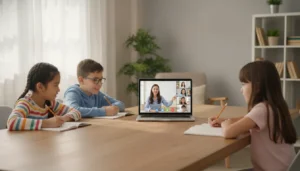
Ideal School offers a one-of-a-kind experience as an accredited K-9 private online school with a bilingual focus in English and Spanish. It connects students from around the world in live classes with professional, bilingual teachers. This global classroom environment helps children develop cultural awareness alongside language fluency. Because it’s a private institution, it provides a distinct curriculum and a close-knit community feel. The school’s accredited programs ensure a high-quality education, preparing students to be confident, multilingual communicators. This is a fantastic choice for families who want to give their child the cognitive and social benefits of learning a second language from an early age.
Utah Connections Academy
As a tuition-free online public school, Utah Connections Academy serves students from kindergarten through 12th grade. This makes it a stable, long-term option for families who want to stick with a single school system. The academy prides itself on having experienced teachers who have been leading online classes for over a decade, ensuring your child is guided by educators who truly understand the virtual environment. It’s an accredited, high-quality school that provides a structured yet flexible learning experience, making it a popular choice for families across Utah seeking a reliable and established online education.
Utah Virtual Academy (UTVA)
Utah Virtual Academy (UTVA) is another excellent tuition-free online public school for students in kindergarten through 12th grade. What sets UTVA apart is its emphasis on letting students learn in a way that fits their life. The school offers flexible schedules and a range of unique courses that might not be available in a traditional brick-and-mortar setting. This approach is perfect for families who need an educational program that can adapt to their child’s specific needs, interests, and even extracurricular pursuits. UTVA’s model is designed to empower students to take charge of their learning journey while receiving full support from certified teachers.
Utah Online School (UOS)
Utah Online School is a free public school for K-12 students that centers its entire approach on personalized learning. The core mission of UOS is to help each student grow by providing them with a flexible schedule and individualized attention. This focus on personal growth makes it a great option for children who thrive when they can learn at their own pace. The school works to create a supportive environment where students feel seen and understood. For parents looking for a program that prioritizes their child’s individual academic and personal development, Utah Online School is a strong contender.
Rocky Peak Virtual Elementary
For families focused specifically on the elementary years, Rocky Peak Virtual Elementary School is a dedicated option. As a tuition-free online school for K-6 students in Utah, it provides a focused and age-appropriate curriculum. The program covers all the core subjects you’d expect: Reading, Writing, Math, Science, and Social Studies. By concentrating only on the elementary grades, Rocky Peak creates a learning environment tailored to the unique needs of younger students. It’s part of the Jordan School District, offering a solid, state-aligned education in a convenient virtual format.
Lumen Scholar Institute
Lumen Scholar Institute is a tuition-free online school for grades K-12 that stands out for its interactive approach. The school’s team of professional educators teaches students through daily virtual instruction that is designed to be engaging and hands-on. This is an ideal choice for families who want a more structured, teacher-led experience that resembles a traditional classroom schedule. The emphasis on daily interaction helps keep students connected to their teachers and classmates, fostering a strong sense of community. If you’re looking for a program that combines the flexibility of online learning with consistent, interactive instruction, Lumen Scholar Institute is worth exploring.
What to Look For in an Online Elementary Program
Choosing an online elementary school is a big decision, and it’s about finding the right fit for your child and your family. The best programs offer more than just a digital version of a traditional classroom. They create a supportive and engaging environment where your child can thrive academically and personally. As you compare options in Utah, Arizona, North Carolina, or New Hampshire, it helps to have a clear checklist of what makes a program stand out.
Think about the curriculum, the teaching style, the level of support, the technology used, and the resources available to you as a parent. A great online school excels in all these areas. It balances structured learning with the flexibility your family needs. It provides access to dedicated teachers who know how to connect with students through a screen. And it empowers you, the parent, to be an active partner in your child’s education. Looking at these key components will help you move past the marketing and find a school that truly aligns with your child’s learning style and your family’s values.
A Strong, State-Aligned Curriculum
The foundation of any great school is its curriculum. You want a program that is not only engaging but also meets or exceeds state educational standards. This ensures your child is learning everything they should be for their grade level, which is especially important if they ever transition back to a traditional school. Look for schools that clearly outline their curriculum standards and how they align with state requirements. An excellent curriculum will also offer more than the basics. For example, programs with dual-language immersion can provide a rich educational experience that prepares children for a globalized world, building cognitive skills and cultural awareness from an early age.
Flexible Learning and Effective Teaching
One of the biggest draws of online school is flexibility. The right program allows learning to fit into your family’s life, not the other way around. Some schools offer asynchronous classes, where students complete assignments on their own schedule, while others provide synchronous, live instruction. Many of the best programs offer a mix of both. This allows students to work at their own pace while still getting real-time interaction with teachers and classmates. Look for schools that offer different learning models, like mixed classes, so you can choose what works best for your child’s personality and your family’s routine.
Student Support and Tutoring Options
Online learning should never feel isolating. A top-tier program will have a strong support system in place to help every student succeed. This goes beyond just the main teacher. Look for schools that provide access to licensed counselors, personal mentors, and academic advisors. It’s also important to see what kind of extra help is available when your child is struggling with a concept. Many schools offer small group sessions or one-on-one tutoring classes to provide targeted support. This ensures that no student falls through the cracks and that everyone has the resources they need to feel confident in their studies.
Easy-to-Use Technology and Reliable Support
The technology platform is your child’s classroom, so it needs to be intuitive and reliable. A clunky or confusing system can create unnecessary frustration and disrupt the learning process. Before enrolling, ask for a demo of the learning management system to see how easy it is to find assignments, communicate with teachers, and track progress. It’s also critical to know what happens when you run into technical glitches. A great online school will have a dedicated and responsive tech support team that you can easily contact to resolve issues quickly, ensuring your child can get back to learning without long delays.
Resources for Parents and Learning Coaches
In an online school setting, parents often take on the role of a “learning coach.” The best programs recognize this and provide you with the tools and resources you need to succeed in that role. This means having a parent portal where you can easily view your child’s grades, progress, and upcoming assignments. It also means clear and consistent communication from teachers and administrators. A school that views parents as partners will work to build a strong school-home connection, offering guidance and support to help you create a positive and effective learning environment at home.
A Utah-Specific Checklist for Comparing Online Elementary Schools
After reviewing online elementary school programs, Utah families can use this state-focused checklist to confirm that an option fits their student, enrollment plans, and budget. The right questions help you compare programs using current information instead of relying on a directory or an older summary.
1. Start with the Utah enrollment pathway
First, decide whether you are comparing a tuition-free public option or a private online school. For a public program, verify Utah residency, grade eligibility, application windows, and required records directly with the school. For a private program, confirm the admissions steps, grades served, start dates, and documents needed. Do not assume that a program is available to your family because it appears in a general list.
2. Verify academic alignment and school accreditation
Ask where the school explains its grade-level learning expectations and how it documents alignment with Utah requirements. Then review the school’s current accreditation information and ask how it maintains student records if a student later changes schools. Accreditation applies to the school, so check the accrediting organization and the school’s current status rather than relying on a general claim. Ideal School families can review the school’s Cognia accreditation information as part of that comparison.
3. Confirm Utah scholarship or ESA details before budgeting
Utah scholarship and education savings account rules can change. Before choosing a private program, confirm current eligibility, application deadlines, and allowable expenses with the official program administrator. Ask the school how tuition, materials, and other approved expenses are handled so your family understands the full payment process and any reimbursement steps, if applicable, before enrollment.
4. Match the school day and records process to your family
Finally, compare live and asynchronous instruction, the daily schedule, teacher communication, progress reports, and the process for requesting records. Families who want live bilingual instruction can review Ideal School’s Full Day Program and compare its K-12 English-Spanish dual-language model with the schedule and support offered by other options. The goal is a program that fits your student’s learning needs and your family’s routine in Utah.
Explore enrollment options with Ideal School
Answering Your Questions About Online Learning
Switching to an online school is a big decision, and it’s natural to have questions. You want to know how your child will stay focused, make friends, and get the support they need. Let’s walk through some of the most common concerns parents have about virtual learning and how the best online programs in Utah address them.
Keeping Your Child Engaged and Motivated
One of the biggest worries for parents is keeping their child focused and excited about learning when they’re not in a physical classroom. Great online schools tackle this head-on. It starts with having passionate, certified teachers who are experts at creating a welcoming and interactive virtual environment. They use dynamic lessons, group projects, and one-on-one check-ins to prevent feelings of isolation and keep students invested in their work. A structured daily schedule also provides routine, while the flexibility of online learning allows children to work at a pace that keeps them challenged without feeling overwhelmed. When a child feels seen and supported, their motivation naturally follows.
Opportunities for Social Interaction
“But what about making friends?” It’s a valid question. Online schools understand that social development is just as important as academics. That’s why many programs offer a wide range of virtual clubs and activities based on student interests, from coding clubs to art groups. Some schools, like Utah Connections Academy, even organize in-person field trips and events to help students build real-world connections. Through collaborative projects and supervised online forums, your child will have plenty of chances to interact with their peers, share ideas, and form lasting friendships with students from across the state and even the world.
The Parent’s Role vs. the Teacher’s
In an online setting, you, the parent, act as the “Learning Coach,” but you’re definitely not expected to be the teacher. Think of it as a partnership. The teacher handles the instruction, lesson planning, and grading. Your role is to provide a supportive learning environment at home, help your child stay on track with their schedule, and communicate with the teacher about your child’s progress. This teamwork creates a strong foundation for success. Many parents find that this active role helps them connect more deeply with their child’s education and witness their growth firsthand, as shared in many positive testimonials.
What to Do About Technical Issues
Let’s be honest, technology can be unpredictable. A strong online school anticipates this and won’t leave you stranded. Before classes even begin, you should receive clear guidance on how to use the learning platform. The best programs use intuitive, easy-to-use systems and provide robust technical support for when you run into trouble. Whether it’s a login issue or a problem with a virtual classroom tool, help should be just a phone call or email away. While news reports sometimes highlight technical glitches during widespread transitions, established online schools have dedicated support teams to resolve issues quickly, ensuring learning isn’t disrupted.
Comparing the Cost and Value of Online Schools
When you’re choosing an online school, the cost is naturally a big factor. The financial landscape of online education includes everything from tuition-free public programs to private schools with comprehensive tuition fees. Understanding the differences helps you look beyond the price tag and focus on the overall value for your child. It’s about finding a program that fits your family’s budget while also meeting your child’s academic and personal growth needs. A school that offers a unique advantage, like a bilingual curriculum, can be a worthwhile investment in your child’s future. Let’s break down the costs and benefits you’ll encounter.
Tuition-Free vs. Paid Programs
Many states offer tuition-free online public schools. In Utah, for example, schools like Utah Connections Academy and Utah Online School (UOS) are free public options for K-12 students. These programs are funded by the state and follow the public school curriculum. They can be a great choice for families seeking a flexible, at-home learning environment without the cost of private tuition. On the other hand, paid programs like Ideal School offer specialized benefits that often go beyond standard public education. These can include dual-language immersion, smaller class sizes for more personalized attention, and a unique global community, which are all part of the tuition investment.
Scholarships and Financial Assistance
Even if you’re considering a private online school, financial assistance may be available to help manage the cost. Many states are introducing programs to give parents more choice in their child’s education. For instance, the Utah Fits All scholarship is a new program that provides funds for K-12 students to use for various educational expenses. This money can cover private school tuition, textbooks, online learning programs, and even certain therapies for students with disabilities. It’s always a good idea to research what scholarships or education savings account (ESA) programs are available in your state, whether you’re in Arizona, North Carolina, or New Hampshire.
Understanding Any Additional Costs
It’s important to remember that “tuition-free” doesn’t always mean “cost-free.” Many online public schools require families to cover certain expenses. As Utah Connections Academy notes, families are often responsible for school supplies, optional field trip costs, and sometimes a computer and internet connection. These additional expenses can add up, so it’s wise to factor them into your budget. When looking at private schools, ask what’s included in the tuition. Sometimes, the fee covers curriculum, materials, and technology, which can simplify your financial planning and prevent unexpected costs down the road.
The Long-Term Value of Online Education
Ultimately, the best choice comes down to the long-term value for your child. The goal is to find an environment where they can thrive academically and personally. Many families find that online learning provides a flexible and supportive atmosphere that makes a real difference. According to one survey, 95% of parents feel their online program prepares their child for future success. Investing in a program that offers unique skills, like fluency in a second language or a deep understanding of different cultures, provides a powerful advantage. These are the kinds of benefits that pay dividends throughout your child’s life, shaping them into confident, capable, and globally-aware adults.
Frequently Asked Questions
Why should I consider a paid online school when so many are tuition-free? While tuition-free public online schools offer a solid education that aligns with state standards, private schools provide a different kind of value. The investment often goes toward specialized programs you won’t find elsewhere, such as dual-language immersion, which can give your child a significant cognitive and cultural advantage. Paid programs may also offer smaller class sizes for more individual attention from teachers and a unique, close-knit global community that connects students from diverse backgrounds.
Will my child’s online education be recognized by other schools or colleges? Absolutely, as long as you choose an accredited program. Accreditation is the key indicator that a school meets high academic standards. An accredited online school ensures that your child’s credits are transferable and that their diploma is respected by colleges and universities. All the reputable schools mentioned, whether public or private, are accredited and align their curriculum with Utah’s state standards, ensuring your child receives a legitimate and high-quality education.
How do children in online schools socialize and make friends? This is a common concern, and great online schools are very intentional about creating social opportunities. Students connect with one another through live classes, collaborative group projects, and a variety of virtual clubs centered around shared interests like art or coding. Many programs also organize optional in-person field trips and events, giving students a chance to build friendships with their classmates in a real-world setting.
What is my role as a parent in my child’s online schooling? Your role is to be a “Learning Coach,” which is more of a supportive partner than a teacher. The certified teacher is responsible for all instruction, lesson planning, and grading. As a Learning Coach, you help create a productive learning environment at home, ensure your child follows their schedule, and serve as the main point of communication with the teacher. It’s a team effort designed to help your child succeed.
Is it really worth it to enroll my young child in a bilingual program? Enrolling your child in a bilingual program at a young age is one of the best ways to prepare them for an interconnected world. Learning a second language doesn’t just make them a better communicator; it also strengthens problem-solving skills, improves memory, and fosters a deeper sense of empathy and cultural awareness. It’s an enriching experience that provides benefits extending far beyond the classroom.

Written by
Eric C. Franzen
Eric C. Franzen is co-founder and owner of Ideal School, with 20+ years of experience as an educational leader and entrepreneur. He holds a BA in Education from the University of Washington and an MA in Educational Administration from Seattle Pacific University.
View LinkedIn Profile →