

We all want to give our children the tools they need to succeed in a world that is more interconnected than ever. Fluency in a second language is no longer just a nice-to-have skill; it’s a significant advantage that opens doors to new opportunities and perspectives. When you combine this with the self-discipline and tech literacy learned through online schooling, you’re truly preparing them for the future. An accredited online bilingual education k-12 program does exactly that. It provides a rigorous academic foundation while building the linguistic and cultural skills that will help your child thrive in any path they choose. Let’s look at how this modern approach to learning works.
Key Takeaways
- Confirm accreditation is your first step: Before considering any other factors, verify that the school is accredited by a recognized agency. This is your assurance of academic quality and guarantees your child’s diploma will be accepted by universities.
- Match the learning format to your child: The best online programs offer different structures, from full-day schedules to more flexible asynchronous options. Consider your child’s personality and your family’s routine to choose a format where they will be most successful.
- Create a strong home-school partnership: Your involvement is key to your child’s success. You can make a significant impact by setting up a dedicated learning space, practicing both languages daily, and maintaining open communication with teachers.
What is an Accredited Online Bilingual K-12 School?
When you hear the term “accredited online bilingual school,” it might sound complex, but the concept is straightforward. It’s an educational institution that offers a full K-12 curriculum in a dual-language setting, all online. Think of it as combining two incredible opportunities for your child: the cognitive power of learning in two languages and the flexibility of a virtual classroom. The “accredited” part is the seal of approval. It means the school has been reviewed by an official agency and meets high academic standards. This is crucial because it ensures the credits your child earns are recognized by other schools, and their diploma holds weight with colleges and future employers.
An accredited online school provides a structured, quality-controlled education that you can trust. It’s not just about language immersion; it’s about receiving a comprehensive education that prepares your child for their next steps, whether that’s university or a career. This model gives families in states like Arizona and North Carolina the freedom to access world-class bilingual learning without being tied to a physical location. You get the best of both worlds: a rigorous, recognized curriculum and the ability to design a school schedule that fits your family’s life. It’s a modern approach to education that builds a foundation for a global perspective, all from the comfort of home.
How Bilingual Education Sharpens Young Minds
Choosing a bilingual education is one of the best things you can do for your child’s developing mind. Learning and thinking in two languages does more than just make them a great communicator; it fundamentally strengthens their cognitive abilities. Research shows that bilingual students often have better memory and problem-solving skills. Their brains become more flexible and adept at switching between tasks. This mental workout also enhances creativity, helping them approach challenges from multiple angles. A dual-language education sets children up for long-term success, giving them a competitive edge in their future academic and professional lives.
Why Accreditation Matters for Your Child’s Future
Accreditation is your assurance that a school provides a legitimate, high-quality education. It’s a formal recognition from an independent agency that the school’s curriculum, teachers, and operations meet rigorous standards. For your child, this is incredibly important. It means the courses they complete and the diploma they earn are valid and transferable. If you ever move or decide to switch to a different school, an accredited transcript makes the process smooth. When it comes time for college applications, universities will recognize and accept their diploma without question. Choosing a school with proper accreditation protects your investment and secures your child’s educational future.
Finding the Right Online Bilingual School for Your Family
Choosing the right school is one of the most important decisions you’ll make for your child. When you’re looking for an online bilingual program, you want to find a place that not only teaches a new language but also nurtures your child’s overall growth in a supportive environment. The goal is to find a program that aligns with your family’s values and your child’s learning style, setting them up for a future where they can connect with people from different backgrounds and see the world from a broader perspective.
A great program offers more than just language lessons; it integrates two languages into the core curriculum, creating a truly immersive experience. It should also provide a safe and engaging virtual classroom where your child feels comfortable participating and making friends. As you compare your options, think about what a day in the life of your child would look like and whether the school’s approach feels like the right fit for their personality and your family’s schedule.
What a Top-Tier Program Looks Like: The Ideal School Example
A top-tier online bilingual school creates a complete dual-language immersion environment. This means students learn subjects like math, science, and history in both English and Spanish simultaneously. At Ideal School, this approach helps children become truly bilingual, not just learn a second language as a separate subject. This method deepens their understanding of complex topics and improves their cognitive skills.
Beyond academics, a leading program provides a safe space for learning. For many families, an online school offers a welcome alternative, free from the social pressures or bullying that can happen in a traditional setting. The focus stays on learning and personal growth. The long-term benefits are significant, leading to better career opportunities, sharper critical thinking, and a genuine appreciation for different cultures.
Key Factors for Comparing Schools
When you start comparing different online schools, a few key factors can help you make a clear choice. First, always check for accreditation. Accreditation ensures the school meets high academic standards and that the credits or diploma your child earns will be recognized by colleges and other institutions. It’s a non-negotiable mark of quality.
Next, consider the curriculum and teaching philosophy. Does the school simply teach a language, or does it foster a deep cultural understanding? A strong program will weave cultural context into its lessons, helping your child become a more empathetic global citizen. Finally, look at the cost and what’s included. Transparent tuition information helps you plan financially and understand the value you’re receiving, from teacher access to learning materials.
Exploring Different Online Learning Formats
Online learning isn’t a one-size-fits-all solution, and that’s a good thing. The best programs offer a variety of formats to match your family’s schedule, your child’s learning style, and your educational goals. Whether you’re looking for a structured school day, a flexible schedule to accommodate other activities, or a way to enrich your current homeschool plan, there’s an option that can work for you. Let’s look at some of the most common formats you’ll find.
The Full-Day Immersive Experience
If you’re looking for a comprehensive replacement for traditional school, a full-day immersive program is an excellent choice. This format mirrors a typical school day with a set schedule of live, interactive classes. In a dual-language setting, this means your child is consistently hearing and using both English and Spanish across all subjects, from math to social studies. This constant exposure is fantastic for building fluency and confidence. Ideal School’s Full-Day Program provides this structured, immersive environment where students learn in two languages simultaneously. It’s a great fit for families who want a complete, accredited curriculum and a consistent daily routine for their child, all from the comfort of home.
Flexible Learning: Asynchronous and Mixed Schedules
For families with busy schedules, student-athletes, or children who thrive with more independence, flexible learning models are a game-changer. Asynchronous learning allows students to complete assignments on their own time, following a weekly schedule of pre-recorded lessons and tasks. This is perfect for self-motivated learners. A mixed schedule combines the best of both worlds: some live, interactive classes to maintain a connection with teachers and peers, plus asynchronous work for greater flexibility. This hybrid approach helps students manage their time effectively while still getting real-time support. Many families appreciate that they can enroll their child at any point during the year, making the transition to online learning smooth and stress-free.
Enhancing Your Homeschool Curriculum
Already homeschooling? You don’t have to switch to a full-time program to give your child the benefits of bilingual education. Supplemental classes are designed to fit into your existing curriculum, adding valuable language skills and cultural understanding. You can choose specific subjects, like a Spanish language arts class or a science class taught in both languages, to round out your child’s education. This approach allows you to maintain control over your homeschool philosophy while accessing expert instruction from accredited teachers. It’s a powerful way to introduce a second language and prepare your child for a more interconnected world, all while complementing the learning you’re already doing at home.
Earning an American High School Diploma Online
For high school students, earning an accredited diploma is the primary goal. An online program can provide a path to a fully recognized American High School Diploma that opens doors to universities and careers worldwide. The key here is accreditation, which ensures that the diploma is accepted by colleges and employers. Pursuing this diploma in a bilingual environment gives students a significant advantage. They not only meet rigorous academic standards but also graduate with fluency in a second language, a skill highly valued in higher education and the global workforce. This makes them stand out on college applications and prepares them for future success in any field they choose to pursue.
Answering Your Top Questions About Online Bilingual School
Choosing a new school for your child is a big decision, and it’s natural to have questions. When you’re considering an online bilingual program, you’re thinking about everything from academic quality to the day-to-day practicalities. Let’s walk through some of the most common questions parents ask so you can feel confident in your search for the right fit.
How Do I Check a School’s Accreditation?
Accreditation is one of the most important factors to verify. Think of it as a quality guarantee. It confirms that a school meets high academic standards and that its curriculum is sound, recognized, and transferable. This is crucial for ensuring your child’s credits will be accepted by other schools and that their diploma holds weight for college applications.
Finding this information should be straightforward. Reputable schools are proud of their status and display it clearly on their website. Look for a dedicated accreditation page that names the accrediting bodies. If you can’t find it easily, that’s a red flag. A school’s commitment to transparency about its credentials speaks volumes about its quality and accountability.
What if My Child Needs Extra Language Support?
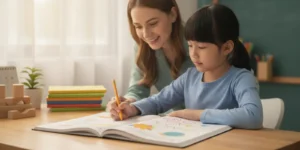
This is a common concern, especially for families where one language is spoken more at home. A great bilingual program is built to meet children where they are. The best schools have experienced teachers who are not only fluent in both languages but are also trained in second-language acquisition. They know how to support a student who is just starting out or one who needs a little extra practice to build confidence.
Look for programs that offer personalized attention and small class sizes. Some schools also provide one-on-one tutoring classes as an add-on service, which can be a fantastic resource for giving your child a focused environment to practice and ask questions without pressure.
What Technology Will We Need?
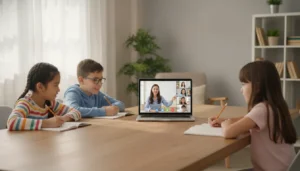
Getting set up for online learning is usually simpler than you might think. The essentials are a reliable computer, a stable internet connection, a webcam, and a microphone. Most modern laptops have these built right in. The school will provide access to its online learning platform, where your child will find their assignments, join live classes, and interact with teachers and classmates.
A good school understands that technology can be a hurdle for new families and will offer support to help you get started. They should provide clear instructions and have a team ready to help if you run into any technical issues. The goal is to make the technology feel invisible so your child can focus on what really matters: learning.
Is the Curriculum Culturally Inclusive?
A true bilingual education is about more than just vocabulary and grammar; it’s about connecting with different cultures. A culturally inclusive curriculum helps your child develop a global perspective by weaving diverse histories, traditions, and viewpoints into their lessons. This approach shows them that language is a bridge to understanding and respecting people from different backgrounds.
When evaluating a school, ask how its curriculum standards reflect the cultures associated with the languages being taught. The curriculum should feature stories, art, and historical events from a variety of perspectives. This not only makes learning more engaging but also prepares your child to be a thoughtful and empathetic global citizen.
Understanding the Investment in Bilingual Education
Thinking about the cost of your child’s education is a natural and important part of the planning process. It’s helpful to view tuition not just as an expense, but as an investment in a skill set that will open doors for your child throughout their life. The cost of an online bilingual education can vary quite a bit, but understanding the components of tuition and the financial support available can make the decision much clearer. Let’s walk through what you can expect and what resources you can find.
A Look at Tuition for Different Programs
When you start researching online schools, you’ll find a range of tuition costs. A specialized, accredited program like the one at Ideal School typically has an annual tuition between $5,000 and $6,000. This often covers a full academic year with certified teachers and a structured curriculum. It’s a significant investment, but it’s also competitive when you compare it to other private education options. The final cost will depend on the specific program you choose, whether it’s a full-day immersive schedule or supplemental classes to enrich a homeschool plan. Always look for a clear breakdown of fees so you know exactly what’s included.
Exploring Financial Aid and Flexible Payments
Don’t let the sticker price discourage you. Many schools are committed to making education accessible and offer ways to manage the cost. Start by asking the admissions office about their financial aid options, scholarships, or sibling discounts. Some schools also provide flexible payment plans that allow you to spread the tuition cost over several months instead of paying in one lump sum. A school’s accreditation can also be a key factor, as it sometimes opens the door to different types of financial support. It’s always worth having a conversation to see what kind of assistance might be available for your family.
What to Know for Families in Arizona, Utah, North Carolina, and New Hampshire
If you live in certain states, you may have access to state-funded programs that can help cover the cost of private or online education. Many states are expanding their school choice initiatives, which provide families with funds for learning environments that best suit their children. For example, families in Arizona can look into the Empowerment Scholarship Account (ESA) program. Similarly, North Carolina offers Opportunity Scholarships, Utah has the Utah Fits All Scholarship, and New Hampshire provides Education Freedom Accounts. These programs can make a world-class bilingual education much more attainable, so I highly recommend researching the specific options available in your state.
Your Checklist for Evaluating Online Bilingual Programs
Choosing the right online school for your child is a big decision, and when you add bilingual education to the mix, it can feel like there are even more factors to consider. But it doesn’t have to be complicated. Think of it like a house hunt: you have a list of non-negotiables and nice-to-haves. Creating a simple checklist can help you cut through the noise and focus on what truly matters for your child’s success and happiness.
A great online bilingual program is built on a few key pillars. You’ll want to look closely at the quality of the teachers, the way the virtual classroom is structured, the strength of the curriculum, and the level of communication and support you can expect. These elements work together to create an environment where your child can thrive academically, socially, and linguistically. It’s about finding a balance between rigorous academics and a supportive, engaging atmosphere that nurtures a love for learning in two languages. As you explore your options, use this checklist to compare schools and find the one that feels like the perfect fit for your family’s needs and goals. This process will help you ask the right questions during virtual open houses and information sessions, ensuring you have all the information you need to make a confident choice.
Expert Teachers Who Are Fluent in Both Languages
The heart of any great school is its teachers, and in a bilingual program, their skills are doubly important. It’s not enough for an instructor to simply speak two languages; they need to be truly fluent and trained in bilingual teaching methods. As the University of Texas Permian Basin notes, this fluency is “essential for effective communication and to support students’ language development.” Look for a school that proudly showcases its educators’ credentials and experience. When you’re evaluating a program, ask how they hire and train their teachers. You want educators who can seamlessly switch between languages to explain complex topics and create a comfortable, immersive learning environment for your child.
An Engaging and Interactive Virtual Classroom
An online classroom should be more than just a video lecture. The best programs use technology to create a dynamic and interactive space where students feel connected and motivated. Look for schools that have moved beyond static lessons and embraced tools that encourage participation. As experts at Class.com point out, modern virtual academies have found ways to overcome barriers to engagement, making student success achievable. This could look like virtual breakout rooms for small group projects, interactive whiteboards for collaborative problem-solving, and fun polls or games to check for understanding. A truly immersive program makes learning feel active, not passive, keeping your child excited to log on each day.
A High-Quality, Standards-Based Curriculum
A strong curriculum is the foundation of your child’s education. In a bilingual program, you’re looking for a curriculum that not only integrates two languages but also meets high academic standards. The program should be thoughtfully designed to build knowledge and skills progressively across all subjects. According to the National Standards for Quality Online Programs, a top-tier curriculum is well-structured and ensures students receive a comprehensive education. When researching schools, check to see if their curriculum standards are clearly stated and aligned with recognized educational benchmarks. This ensures your child is not just becoming bilingual but is also well-prepared for their next academic steps.
Strong Parent-Teacher Communication and Support
In an online learning environment, a strong partnership between home and school is vital. You are your child’s primary guide, and you need a school that sees you as a key team member. Consistent and clear communication is the bedrock of this relationship. Look for a program that offers regular progress updates, easy access to teachers, and a welcoming community for parents. As one education service center explains, “effective two-way communication between home and school is crucial for the success of students.” Before enrolling, ask about the communication policy. How often will you hear from teachers? Are there virtual parent-teacher conferences? Reading parent testimonials can also give you great insight into how a school supports its families.
How to Support Your Child’s Success in Online Learning
As a parent, you play an essential role in your child’s educational journey, especially in an online setting. Your partnership and support at home create the foundation your child needs to thrive. When students have parents actively involved in their learning, it builds a supportive environment that fosters academic growth and confidence. You don’t need to be a certified teacher to make a huge difference; it’s about creating structure, encouraging curiosity, and maintaining open communication.
By focusing on a few key areas, you can help your child get the most out of their online bilingual education. This means creating a physical space that’s conducive to learning, weaving language practice into your daily routines, and building a strong relationship with their teachers. These simple but powerful actions will help your child feel motivated, stay on track, and truly flourish in their studies.
Set Up a Productive Learning Space at Home
Creating a dedicated space for school helps your child mentally shift into learning mode. It doesn’t have to be a separate room; a quiet corner of the living room or a desk in their bedroom works perfectly. The goal is to have a consistent spot that is organized, well-lit, and free from the distractions of toys, television, or household chatter.
Make sure all their supplies, like notebooks, pens, and headphones, are within reach so they aren’t scrambling for things during class. This dedicated area signals that it’s time to focus and engage with their lessons. A structured environment is a key part of a successful online learning program and helps your child develop excellent study habits for the future.
Encourage and Practice Both Languages Daily
Consistency is everything when it comes to bilingualism. Integrating both languages into your daily life makes learning feel natural and fun rather than like a chore. You can do this by reading stories, watching movies, or even just talking about your day in both languages. Using both languages at home is crucial, as it helps your child process new ideas without feeling overwhelmed.
This daily practice not only sharpens their language abilities but also builds their confidence. When children feel comfortable switching between languages, they become more engaged and active participants in their education. For families looking for more structured practice, our Language Institute offers supplemental courses to strengthen fluency and cultural understanding.
Stay Connected with Your Child’s Teachers
In an online school, a strong parent-teacher partnership is vital. Think of it as a team effort dedicated to your child’s success. Establishing open, two-way communication allows you to stay informed about your child’s progress and work together to address any challenges that come up. Your child’s teachers are your greatest resource, offering insights into your child’s learning style and academic development.
Don’t hesitate to reach out with questions or share observations about how your child is doing at home. Ideal School’s expert teachers are committed to working closely with families. Regular check-ins ensure that everyone is on the same page and that your child feels fully supported from all sides.
Frequently Asked Questions
What if my child has no prior experience with a second language? That’s a perfect place to start. Our programs are designed to welcome students at every level, including complete beginners. The immersive approach means your child will learn the new language naturally, just as they learned their first one, by hearing and using it in the context of subjects like math and science. Our teachers are experts in language acquisition and create a supportive environment where every student can build confidence and skills at their own pace.
How do students make friends and socialize in an online setting? We are very intentional about building a strong and interactive community. Our live classes are not lectures; they are collaborative sessions where students work together on projects, participate in discussions, and get to know one another in a supervised environment. This structure helps students form genuine friendships with peers from diverse backgrounds, all while developing important communication and teamwork skills.
Is an online bilingual education as academically rigorous as a traditional school? Yes, absolutely. Our accreditation is the formal guarantee that our curriculum meets high academic standards. We provide a comprehensive, standards-based education that prepares students for success in university and future careers. In fact, the cognitive benefits of learning in two languages often give our students an edge, enhancing their problem-solving abilities and mental flexibility beyond what a traditional, single-language curriculum can offer.
How much daily involvement is required from me as a parent? Your role will naturally evolve as your child grows. For younger children, you’ll be more hands-on with setting up their learning space and ensuring they log in on time. As students become more independent, your role shifts to that of a supportive guide, checking in on their progress and communicating with teachers. Our goal is to empower students to take ownership of their education, while you remain an important partner in their success.
Can we switch between different programs if our family’s needs change? Flexibility is a key part of our approach. We understand that life happens, and schedules can change. Families can transition between our different formats, such as moving from a full-day program to a more flexible mixed schedule, as their needs evolve. Our admissions team is always available to discuss your options and help you find the program that works best for your child and your family at any given time.

Written by
Eric C. Franzen
Eric C. Franzen is co-founder and owner of Ideal School, with 20+ years of experience as an educational leader and entrepreneur. He holds a BA in Education from the University of Washington and an MA in Educational Administration from Seattle Pacific University.
View LinkedIn Profile →