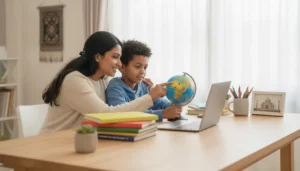


One of the biggest challenges for families abroad is helping children maintain a strong connection to their heritage and home language. A bilingual education does more than just teach vocabulary; it builds a bridge to your family’s culture and identity. By making both languages a central part of their learning, you give your child a gift that lasts a lifetime. A structured English and Spanish homeschool program for expats provides the framework to nurture true fluency and cultural appreciation. Here, we’ll explore how this educational choice strengthens family bonds and helps your child feel at home in the world.
Key Takeaways
- Focus on the benefits beyond language: A bilingual education gives your child a serious cognitive advantage by improving their problem-solving skills and adaptability. It also builds cultural empathy, a crucial skill for thriving in our connected world.
- Make accreditation and flexibility your top priorities: Choosing an accredited program is essential for ensuring your child’s academic record is recognized globally. Also, look for flexible options like asynchronous or mixed classes that fit your family’s unique schedule and mobile lifestyle.
- Weave Spanish into daily life while staying legally compliant: Reinforce learning by making Spanish part of your family’s routine through media, conversation, and cultural activities. At the same time, be sure to research and follow the specific homeschooling laws for both your host country and your U.S. home state.
Why Choose Bilingual Homeschooling for Your Expat Family?
Choosing the right educational path for your child while living abroad is a big decision. Bilingual homeschooling offers a unique opportunity to not only provide a stable, high-quality education but also to give your child a set of skills that will last a lifetime. It’s about more than just learning another language; it’s about enriching their cognitive abilities, deepening their cultural understanding, and strengthening family bonds, no matter where you are in the world. This approach allows you to create a learning environment that is as mobile and globally-minded as your family is.
Sharpen Cognitive Skills with Every Lesson
Learning a second language is one of the best workouts you can give your child’s brain. Research consistently shows that bilingual children develop stronger problem-solving and critical-thinking skills. Because they are constantly working between two language systems, their minds become incredibly agile. This mental exercise builds what experts call “cognitive flexibility,” or a superior ability to focus on tasks and adapt to changing situations. The advantages of a bilingual brain are truly remarkable, helping your child become a more creative and resilient thinker in the classroom and far beyond.
Develop Cultural Fluency as a Life Skill
A bilingual education gives your child more than just academic advantages; it gives them a passport to the world. For expat families, this is invaluable. Learning another language opens the door to deeper connections within your new community and helps maintain a strong link to your own heritage and family members back home. This dual perspective fosters a natural sense of empathy. Children who learn multiple languages get early practice imagining different viewpoints, making them more compassionate and understanding individuals. This cultural fluency is a true life skill in our interconnected world.
Maintain Language Fluency Abroad
One of the biggest concerns for parents raising children abroad is the potential for them to lose their home language. A structured bilingual homeschool program directly addresses this by treating your home language as a vital foundation for learning. It ensures your child continues to develop their native tongue right alongside their new one, aiming for true biliteracy, which is the ability to read and write proficiently in both. This not only supports their overall academic progress but also keeps them connected to their family’s story and cultural identity, creating a powerful and lasting bond. The benefits of being bilingual are both personal and academic.
How to Choose an Accredited English and Spanish Homeschool Program
Choosing a bilingual homeschool program is a big decision, and with so many options, it’s easy to feel overwhelmed. You’re not just picking a curriculum; you’re shaping your child’s educational journey and connection to two languages. To make the right choice for your family, it helps to look at a few key factors. Focusing on accreditation, curriculum quality, flexibility, and cost will give you a clear framework for comparing programs and finding one that truly fits your family’s needs, wherever you are in the world.
Why Accreditation Is Non-Negotiable
Think of accreditation as a seal of approval from a trusted, third-party organization. It confirms that a school’s program meets high academic standards and that its curriculum is sound. For your child, this is crucial. An accredited program provides official records, like transcripts and report cards, that other schools and universities recognize. This makes transferring to another school or applying for college much smoother down the road. Without it, you risk your child’s hard work not being formally recognized, which can create major hurdles for their future academic and career goals. Our accreditation ensures your child receives a recognized, high-quality education that opens doors, rather than closing them.
Check for Strong Curriculum Standards and Language Balance
A great bilingual program does more than teach vocabulary lists; it cultivates true fluency. As you review options, look for clear curriculum standards that outline what your child will learn and how their progress will be measured. Does the program aim for conversational ability and cultural understanding? A well-balanced curriculum should integrate both English and Spanish seamlessly across subjects, not just in language class. It’s also important to ensure the program meets any educational requirements for your home state, whether you’re registered in Arizona, Utah, North Carolina, or New Hampshire. The goal is a rigorous academic experience that also builds a genuine, lifelong connection to both languages.
Find a Flexible Program for Your Mobile Lifestyle
One of the greatest advantages of homeschooling is the ability to tailor education to your family’s life, and for expats, that life often involves travel and unique schedules. The right program will support your mobile lifestyle, not complicate it. Look for flexible options that allow your child to learn from anywhere. For example, asynchronous classes let students complete lessons on their own time, which is perfect for managing different time zones or a busy travel itinerary. This flexibility allows you to create a learning environment that adapts to your child’s interests and your family’s adventures, making education a natural part of your life abroad instead of a rigid constraint.
Understand the Costs and Budget Accordingly
Finally, let’s talk about the financial investment. The cost of bilingual homeschool programs can vary widely, so it’s important to find one that fits your budget without sacrificing quality. Look for schools with transparent pricing so you know exactly what’s included. Some programs charge a flat annual rate, while others offer payment plans or à la carte options for supplemental classes. When you compare costs, consider the value you’re getting. Does the program include live instruction with certified teachers, one-on-one support, and all necessary learning materials? Viewing the expense as an investment in your child’s bilingual future can help you prioritize what matters most. You can review our tuition to see a clear breakdown of costs.
Our Top Picks: English and Spanish Homeschool Programs for Expats
Finding the right bilingual program can feel like a huge task, but there are some fantastic options out there designed to fit different family needs. Whether you’re looking for a complete, immersive curriculum or a supplemental class to keep language skills sharp, one of these programs could be the perfect match for your family. We’ve gathered our top picks to help you compare different teaching styles and find a program that supports your child’s learning journey while living abroad.
1. Ideal School
For families seeking a comprehensive, accredited K-12 education, Ideal School offers a fully bilingual environment from the ground up. Unlike programs that simply add a language class, we integrate English and Spanish across all core subjects. This immersive approach helps children think and learn in both languages naturally. We offer incredible flexibility with full-day programs, asynchronous classes, and mixed schedules to fit your life, no matter your time zone. Because we are a fully accredited institution, you can be confident that your child is receiving a world-class education that is recognized globally. Our curriculum is designed to foster not just bilingualism but also cultural fluency, preparing your child for a connected world.
2. Homeschool Spanish Academy
If your main goal is to strengthen your child’s conversational Spanish, Homeschool Spanish Academy is an excellent choice. This program connects students with teachers from Guatemala for live, one-on-one online classes. The focus is heavily on speaking and listening, using pictures and real-time conversation to build vocabulary and confidence. While it isn’t a full curriculum, it serves as a powerful supplement for families who want their children to practice speaking with a native speaker regularly. It’s a great way to add an authentic, conversational element to your existing homeschool schedule and help your child’s speaking skills flourish.
3. IXL Learning
For parents who appreciate a tech-centered approach, IXL Learning offers a platform that covers core subjects like math, science, and language arts, along with a comprehensive Spanish curriculum. Its standout feature is the adaptive technology, which adjusts the difficulty of lessons based on your child’s performance. This ensures they are always challenged but never overwhelmed. IXL provides detailed progress reports for parents, highlighting strengths and areas that need more attention. It’s a solid choice for families who want a data-driven way to track learning and supplement their child’s education in both English and Spanish subjects.
4. Flip Flop Spanish
Inspired by Charlotte Mason and Montessori teaching methods, Flip Flop Spanish is designed to make learning Spanish feel like a game. This program is particularly well-suited for younger learners or those just beginning their language journey. It uses a two-year curriculum built around flashcards, audio lessons, and repetition to teach essential words and phrases. The gentle, bite-sized approach helps children absorb the language without pressure. If you’re looking for a fun and engaging way to introduce Spanish into your home, this program’s hands-on style could be a wonderful fit for your family’s routine.
5. Breaking the Barrier
For older students or those who thrive on structure, Breaking the Barrier offers a more traditional, in-depth approach to learning Spanish. This program focuses on a deep understanding of grammar rules and cultural contexts. Using a combination of textbooks, workbooks, and audio materials, it systematically builds skills in reading, writing, listening, and speaking. It’s a rigorous option that prepares students for higher-level language studies, similar to the academic focus required to earn an American High School Diploma. This structured curriculum can provide a strong foundation for any student serious about mastering the language.
Full-Day, Supplemental, or Asynchronous: Which Program Fits Your Family?
Choosing the right program structure is just as important as choosing the right curriculum. The beauty of online bilingual education is its flexibility, allowing you to find a rhythm that works for your family’s unique needs, travel schedule, and learning goals. Whether you need a comprehensive, structured school day or the freedom to learn on your own time, there’s a path that can lead your child to fluency.
Understanding the differences between full-day, supplemental, and asynchronous programs will help you make a confident choice. Let’s look at what each option offers so you can decide which one aligns best with your vision for your child’s education.
The Full-Day Immersion Experience
If you’re looking for a complete, structured school experience, a full-day immersion program is an excellent choice. These programs replicate a traditional school day, with a set schedule of live classes where instruction is delivered in both English and Spanish. This consistent exposure helps children develop superior cognitive skills and a genuine appreciation for cultural diversity. It’s an ideal option for families who want a comprehensive, hands-off curriculum led by expert teachers. With full-day immersion programs, you can give your child a robust, bilingual education without having to plan a single lesson.
Blend Your Curriculum with Supplemental Classes
Do you already have a homeschooling routine you love but want to add a strong bilingual component? Supplemental classes are the perfect solution. Research shows that children gain the most cognitive benefits when they use both languages in a meaningful and regular way. Adding a few targeted classes can provide the structure and interaction needed to build true fluency. You can use supplemental classes to reinforce language skills, explore subjects like science or history in Spanish, or simply give your child a chance to practice with native-speaking teachers and peers. This approach allows you to maintain control over your curriculum while getting expert support where you need it most.
Learn on Your Own Time with Asynchronous Options
For expat families with busy, unpredictable schedules, asynchronous learning offers ultimate flexibility. These programs provide the same high-quality, accredited curriculum but allow your child to complete lessons and assignments on their own timeline. This self-paced model is perfect for children who are independent learners or for families who are traveling across different time zones. Asynchronous learning options help children develop sharp problem-solving skills, creativity, and adaptability by giving them ownership over their education. Your child can access pre-recorded lessons and materials whenever it works for them, all while receiving support and feedback from their teachers.
How to Design Your Own Bilingual Homeschool Curriculum
Creating a custom bilingual curriculum for your child can feel like a huge undertaking, but it’s also one of the most rewarding parts of the homeschooling journey. It allows you to build a learning experience that perfectly fits your child’s personality, strengths, and interests. Instead of following a one-size-fits-all model, you get to be the architect of an education that is as unique as your family. The key is to approach it with a clear plan, focusing on a few core principles that will guide your decisions.
A successful bilingual curriculum isn’t just about translating worksheets. It’s about weaving two languages into the fabric of your child’s daily learning and life. This process involves understanding where your child is starting from, intentionally integrating both English and Spanish into lessons, creating a consistent schedule, and finding the right resources to support your efforts. By breaking it down into these manageable steps, you can design a curriculum that not only meets academic standards but also nurtures a genuine love for both languages and cultures. You can always look at established curriculum standards to get a clear idea of learning goals for each grade level.
Assess Your Child’s Language Level and Learning Style
Before you map out any lessons, the first step is to get a clear picture of your child’s current abilities. Understanding your child’s proficiency in both English and Spanish is essential for creating effective lessons. Research shows that the cognitive benefits of bilingualism are strongest when children use both languages in meaningful ways and feel secure doing so. Observe how they communicate. Are they more comfortable speaking, listening, or reading in one language over the other? Also, pay attention to their learning style. Do they learn best through hands-on activities, listening to stories, or watching videos? A clear assessment will help you tailor activities that challenge them without causing frustration. For a professional evaluation, tutoring classes can offer valuable insights.
Integrate English and Spanish into Daily Lessons
The most effective way to teach two languages is to make them a natural part of your daily routine. Bilingual education is about more than just vocabulary; it promotes deep cultural awareness and empathy. When you integrate language with culture, learning becomes much more meaningful. You can achieve this through storytelling, music, and activities that reflect the traditions of both English and Spanish-speaking cultures. For example, you could read a folktale in Spanish, then do an art project related to it while discussing the story in English. The goal is to create an immersive environment where both languages are used for learning, playing, and connecting. A dedicated Language Institute can also provide structured cultural and linguistic immersion.
Structure a Weekly Bilingual Schedule
Consistency is your best friend in bilingual homeschooling. A structured schedule helps your child know what to expect and ensures that both languages receive equal attention. Research confirms that a balanced approach helps children develop stronger thinking skills and perform well academically over time. You can experiment with different models to see what works for your family. Some parents assign certain days to a specific language (Monday in English, Tuesday in Spanish), while others dedicate certain subjects to each language. Another popular method is the “one parent, one language” approach. There’s no single right way, so feel free to create a flexible schedule, like those found in mixed classes, and adjust it as you go.
Find Digital Tools and Resources That Work
You don’t have to create every single piece of learning material from scratch. A wealth of digital tools and resources can enrich your bilingual homeschool curriculum and save you valuable time. Online platforms, educational apps, and virtual libraries offer endless opportunities for interactive learning in both English and Spanish. According to Homeschool Spanish Academy, one-on-one sessions can be invaluable for providing regular exposure to native speakers. These resources are perfect for keeping your child engaged and providing authentic language practice. You can also use asynchronous classes to supplement your curriculum with expert instruction that your child can complete on their own schedule.
Practical Ways to Keep Spanish Thriving at Home
Enrolling your child in a bilingual program is a fantastic first step, but the real magic happens when Spanish becomes part of your family’s daily rhythm. Keeping the language alive at home reinforces what they learn in class and transforms it from an academic subject into a living, breathing part of their identity. It’s about creating a fun, immersive environment where your child can practice and play with the language naturally. This doesn’t have to feel like extra homework; instead, it can be a way to connect as a family and explore a new culture together. By integrating Spanish into your routines, you show your child that being bilingual is a valuable and exciting part of who they are. Here are a few practical ways to weave Spanish into your everyday life, no matter where you are in the world.
Practice the Language in Real-Life Situations
The best way for your child to become truly comfortable with Spanish is to use it in everyday situations. You can start small by labeling furniture and household items with their Spanish names. Make dinnertime a “Spanish-only” zone, or challenge everyone to narrate their day using as much Spanish as they can. Even a trip to the grocery store can become a language lesson. The goal is to make Spanish a practical tool for communication, not just a set of vocabulary words to memorize.
One of the most effective methods is immersion with other speakers. Try to connect with Spanish-speaking families and arrange playdates for your children. You can take turns hosting, with one parent speaking only English and the other only Spanish. These real-life interactions make learning feel effortless and fun. If you need more structured practice, our supplemental homeschool classes can provide targeted support to strengthen their conversational skills.
Use Spanish Media, Books, and Cultural Events
Surrounding your child with Spanish-language media is a simple yet powerful way to support their learning. Switch their favorite cartoons to the Spanish audio track, create a playlist of popular Spanish songs, or make reading a storybook in Spanish part of your bedtime routine. This exposure helps them pick up on natural speech patterns, intonation, and new vocabulary in a low-pressure setting. It also shows them that Spanish is a language used for fun, storytelling, and entertainment.
You can also connect language with culture through hands-on activities. Cooking traditional meals together or celebrating Hispanic holidays allows children to form a deeper connection with their roots and fosters a sense of belonging. These shared experiences make the language more meaningful. For those wanting to explore the language and culture more deeply, our Language Institute offers programs designed to build fluency and cultural appreciation.
Build a Bilingual Community Abroad
Language is social, and building a community is essential for keeping it alive, especially when living abroad. Seek out other families who are also raising bilingual children. You can find them through local expat groups, community centers, or online forums. Arranging regular get-togethers gives your child a chance to practice Spanish with peers in a natural, social setting, which is crucial for building confidence and motivation.
Daily interactions with friends and mentors in both languages enhance cultural understanding and social adaptation. These relationships provide an authentic reason to communicate in Spanish, moving beyond classroom exercises. At Ideal School, we foster a global learning environment where students connect with peers and teachers from diverse backgrounds. We believe that being part of a supportive bilingual community is fundamental to a successful language journey.
What Are the Legal Considerations for Homeschooling Abroad?
Moving your family to a new country is an adventure, but it comes with a to-do list. One of the most important items is figuring out the legal side of homeschooling. The rules can change dramatically from one border to the next, and what’s common practice in the United States might be strictly regulated or even illegal elsewhere. Taking the time to understand these laws is not just about checking a box; it’s about ensuring a smooth and secure educational path for your child. Your legal obligations can depend on your host country, your home state, and even your residency status, but the process is manageable when you know what to look for.
Understand How Homeschooling Laws Vary
The first thing to know is that there is no universal law for homeschooling. While it’s legal and widely accepted in many countries, some nations have strict regulations or prohibit it entirely. For example, home education is illegal in Germany, and families can face serious legal consequences for not enrolling their children in a state-approved school. In contrast, countries like the United Kingdom, Australia, and Canada are generally homeschool-friendly, though they each have their own set of rules. Before you even start packing, you need to research the laws of your destination country. This is a non-negotiable first step to ensure you’re starting your expat journey on the right foot.
Know the Rules for Registration and Curriculum
Once you confirm that homeschooling is legal in your new country, the next step is to learn the specific requirements. Your legal status, whether you’re a citizen, a temporary resident, or on a specific visa, can influence the rules you need to follow. Some countries may require you to register your intent to homeschool with a local education authority. Others might ask you to submit your curriculum for approval or have your child participate in annual assessments or standardized testing. Using a program with clear curriculum standards can make this process much easier, as you’ll have a structured plan ready to share if officials ask for it.
Protect Your Child’s Academic Record with Accreditation
For any expat family, an accredited program is your best friend. Accreditation is a formal review process that confirms a school meets high academic standards. When you choose an accredited online school, you’re getting more than just a quality education; you’re getting a portable academic record that other institutions will recognize. This is crucial when you move between countries or when your child is ready to apply for college. An accredited diploma ensures that your child’s hard work is officially documented and valued, preventing any frustrating credit transfer issues down the road and keeping their future options wide open.
Stay Compliant in Arizona, Utah, North Carolina, and New Hampshire
Even when you’re living thousands of miles away, your U.S. home state’s laws can still apply. Many expat families maintain a “home base” in the United States and must continue to follow that state’s homeschooling regulations. Each state has its own rules; for example, Arizona has very few requirements, while North Carolina requires annual standardized testing. If your family is based in Arizona, Utah, North Carolina, or New Hampshire, make sure you understand and follow the specific homeschool laws for that state. This is especially important if you plan to return one day. Military families may have different legal protections under status of forces agreements, so it’s wise to check those specific guidelines as well.
Common Challenges of Bilingual Homeschooling (and How to Solve Them)
Bilingual homeschooling is an incredible gift to give your child, but it’s not always a walk in the park. You might worry about finding the right materials, keeping both languages in balance, or making sure your child stays excited about learning. The good news is that these challenges are completely normal, and with a little strategy, you can handle them gracefully. Think of these hurdles as opportunities to get creative and strengthen your family’s approach to bilingual education.
How to Maintain a Healthy Language Balance
One of the biggest questions I hear is how to give both English and Spanish equal footing. It’s easy for one language to start dominating, especially if it’s the primary language spoken in your community. The key is to be intentional. Remember that the goal isn’t just fluency; it’s about nurturing a deep connection to culture, family, and identity. The benefits beyond cognition are what make this journey so meaningful.
Take a moment each week to assess which languages your child is hearing and using. If you notice an imbalance, be ready to adjust. You could try a “one parent, one language” approach, designate certain days for Spanish, or use Spanish for specific activities like cooking or story time. Flexibility is your best friend here.
How to Find Bilingual Resources and Support
Finding high-quality, engaging resources in two languages can feel like a treasure hunt. It’s also important for your child to interact with others in both languages to build confidence and social skills. While you can piece together a curriculum, sometimes a structured program is the simplest solution. Online schools often provide a built-in community of peers and teachers who can enrich your child’s learning.
Look for programs that offer part-time options, like supplemental homeschool classes, which can fill in any gaps in your curriculum. You can also connect with local expat groups or cultural centers to find language exchange partners and friends. Don’t feel like you have to do it all on your own; a strong support system makes all the difference.
How to Keep Your Children Engaged and Motivated
Some days, your child will be thrilled to practice Spanish. Other days, not so much. When motivation dips, it helps to gently remind them (and yourself) of the amazing advantages they are gaining. Bilingual children often develop stronger thinking skills, greater empathy, and a lifelong ability to connect with more people.
To keep things fresh, weave language practice into fun, everyday activities. Watch movies in Spanish, cook a new recipe from a Spanish-speaking country, or plan a trip where they can use their language skills. When your child sees how their second language opens up a whole new world of experiences and friendships, their motivation will naturally follow.
Prepare Your Expat Child for High School and Beyond
Thinking about high school and college can feel complicated when you live abroad, but it doesn’t have to be. With the right approach, your child’s international experience can become one of their greatest assets. An accredited online program provides a clear and stable path forward, ensuring their education is recognized while they continue to benefit from a global life. This path not only prepares them academically but also equips them with unique skills that will help them stand out. By focusing on a recognized diploma and leveraging the cognitive advantages of bilingualism, you can set your child up for success in higher education and beyond.
Earn an American High School Diploma Online
One of the most practical ways to prepare your high schooler for university is by enrolling them in a program that offers a globally recognized credential. Pursuing an American High School Diploma Program online gives your child a flexible and legitimate educational path that universities in the U.S. and around the world will accept. This option removes the uncertainty of local school accreditation and ensures their hard work translates into a valid transcript. It allows your family to maintain your mobile lifestyle without compromising the quality or recognition of your child’s education, giving you both stability and freedom as you plan for their future.
Ensure College Readiness in a Bilingual Context
A bilingual education does more than just teach another language; it prepares your child’s mind for complex thinking. Research shows that bilingual children develop stronger problem-solving, multitasking, and creative skills. Because a bilingual brain is always working to select the right language, it gets constant practice in focus and mental flexibility. These executive function skills are essential for the rigors of college coursework. Beyond academics, a bilingual education fosters a deep appreciation for different cultures and strengthens family connections, building a well-rounded foundation for your child. A program with high curriculum standards ensures these cognitive benefits are woven into every subject.
Related Articles
- Guide to NH Bilingual Online Homeschool Programs
- AZ Online Bilingual Homeschool Program: A 2026 Guide
- A Guide to Accredited Online Bilingual Education K-12
- How to Raise a Bilingual Child in a Monolingual Home
- Bilingual Immersion Program for Children | Ideal School
Frequently Asked Questions
What are the actual risks of choosing a non-accredited homeschool program? Choosing a non-accredited program can create significant hurdles for your child’s future. Without accreditation, other schools and universities may not recognize your child’s coursework or accept their transcripts. This could mean they have trouble transferring to another school or face major obstacles when applying to college. Essentially, an accredited diploma acts as a guarantee that your child’s hard work is officially validated and will be respected by other educational institutions.
My child is already fluent in English. Will it be too difficult to introduce Spanish now? Not at all, it’s a very common starting point. The key is to find a program that meets your child where they are. You don’t have to jump into a full immersion environment right away. You could start with supplemental classes or one-on-one tutoring to build their confidence and make learning feel fun. The best programs are designed to support learners at all levels, so you can find a path that feels challenging but not overwhelming for your child.
How do I choose between a structured full-day program and more flexible options like asynchronous classes? This choice really comes down to your family’s lifestyle and your child’s learning style. A full-day program is a great fit if you want a comprehensive curriculum and a predictable daily schedule that resembles a traditional school day. On the other hand, asynchronous classes offer complete flexibility, which is perfect for families who travel frequently or have children who thrive on self-paced learning. Think about what rhythm works best for your life, not the other way around.
We move a lot. How can we ensure our child’s education is legally recognized everywhere we go? This is where accreditation is so important for expat families. When you enroll in an accredited online school, your child is earning credits that are part of a recognized educational system. This provides a portable and official academic record, including transcripts and a diploma, that remains consistent no matter where you live. It simplifies the process of meeting legal requirements and ensures a smooth path to higher education.
How can I make sure my child gets enough social interaction while homeschooling abroad? This is a valid concern, and it requires being intentional. A great first step is to connect with other expat families through local groups or online forums to arrange playdates and activities. You can also enroll your child in programs that offer live online classes, which provide a built-in community of peers and teachers from around the world. Socialization is about creating opportunities for meaningful connection, and you can find those both in your local community and through a global school network.

Written by
Eric C. Franzen
Eric C. Franzen is co-founder and owner of Ideal School, with 20+ years of experience as an educational leader and entrepreneur. He holds a BA in Education from the University of Washington and an MA in Educational Administration from Seattle Pacific University.
View LinkedIn Profile →