

Choosing a private school is a major family decision. You are not only comparing academics. You are evaluating safety, teaching quality, school culture, accreditation, schedule flexibility, and whether the learning environment fits your child’s needs.
For many families, the challenge is not finding a school. It is narrowing the options down to the one that will help their child thrive academically, socially, and emotionally.
If you are comparing private school options and want to see how an accredited bilingual online program works in practice, schedule a tour at Ideal School to explore the experience firsthand.
This guide walks you through the most important factors to consider when comparing private schools, so you can make a confident and informed decision.
What Should You Consider About Your Child’s Learning Needs First?
Start by identifying how your child learns best. The strongest private school choice is the one that matches your child’s academic needs, daily rhythm, personality, and long-term goals, not just the school with the strongest marketing.
Before comparing schools, define what your child needs most from their education.
Ask yourself:
- Does your child learn best in small classes or larger group settings?
- Do they need a structured daily routine or more flexibility?
- Are they most engaged with live teacher interaction, independent work, or a mix of both?
- Would they benefit from bilingual instruction or a more globally connected learning environment?
- Are safety, schedule flexibility, or travel freedom major priorities for your family?
A school can look strong on paper and still be the wrong fit. Start with your child, not the marketing.
Why Should You Verify Accreditation First?
Accreditation is one of the fastest ways to separate a credible private school from a risky one. It affects academic quality, diploma recognition, credit transfers, and how confidently families can invest in a program. View Ideal School’s accreditation details.
Accreditation is one of the first things parents should confirm when evaluating a private school.
An accredited school has been reviewed by an outside organization to verify that it meets recognized standards for educational quality. This matters because accreditation can affect:
- Credit transfer between schools
- Diploma recognition
- College admissions readiness
- Overall academic accountability
If a school claims to offer a high-quality education, ask who accredits it and verify that information directly.
Ideal School is accredited by Cognia, an international accrediting organization recognized for evaluating schools and education providers against rigorous standards. Parents can also review why families choose Ideal School when comparing accredited options.
What Curriculum and Instruction Model Should You Look For?
Parents should compare not only what a school teaches, but how it teaches. The right curriculum model should fit your child’s pace, engagement style, support needs, and family schedule.
Not all private schools teach the same way. Some focus on traditional instruction. Others emphasize project-based learning, bilingual education, college preparation, or flexible online models.
When reviewing curriculum, look at:
- Core subjects offered at your child’s grade level
- Teaching methods and daily structure
- Whether classes are live, self-paced, or mixed
- Opportunities for enrichment, electives, or extracurricular activities
- Academic support available when a student needs help
Parents should also ask whether the school’s model matches the way their child learns best. A student who benefits from live discussion and teacher feedback may struggle in a program that is mostly independent. On the other hand, a family that needs flexibility may prefer a model that combines structured teaching with asynchronous work.
At Ideal School, families can choose from full-day synchronous programs, asynchronous classes, mixed classes, supplemental homeschool classes, tutoring, and language learning options. That flexibility can be important for families who want more than a one-size-fits-all approach.
Why Do Class Size and Teacher Access Matter?
Smaller class sizes can improve feedback, accountability, and student confidence, but only if teacher access is strong. Families should evaluate both classroom size and how responsive teachers are day to day.
One of the biggest reasons parents consider private school is the possibility of more personalized instruction.
Small class sizes can make a real difference. They often allow teachers to:
- Give more direct feedback
- Monitor student progress more closely
- Adjust instruction faster
- Build stronger relationships with students
But class size alone is not enough. You also need to understand how accessible teachers are.
Ask questions like:
- How often do students interact with teachers live?
- How quickly do teachers respond to parent questions?
- How often are progress updates shared with families?
- Is there one-on-one support when a student falls behind?
A private school should make it easy for parents to stay informed and involved.
How Should You Evaluate School Culture, Safety, and Community?
A private school should feel academically strong and emotionally supportive. Parents should look for a learning environment that is safe, respectful, interactive, and aligned with the values they want reinforced every day.
Academics matter, but so does the learning environment.
Parents should look at whether a school feels safe, respectful, interactive, and aligned with their family values. For many families, this is where private school stands apart.
Consider:
- How the school handles student behavior and communication
- Whether students feel supported and included
- How the school builds community among families
- Whether the environment reduces common concerns like bullying, classroom disruption, or safety risks
For online private schools, culture matters just as much as it does on a physical campus. Ask how students connect with peers, how teachers build engagement, and how the school supports a sense of belonging.
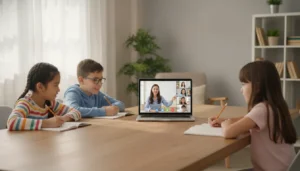
Ideal School emphasizes a live, interactive environment where students learn in real time with professional teachers and classmates from different countries. For families who value both safety and meaningful student interaction, that combination can be compelling.
How Important Is Scheduling Flexibility?
Flexibility matters when a family’s real life does not fit a traditional campus schedule. The best private school option balances structure with practical scheduling freedom.
Many families explore private school because traditional schedules do not fit their real life.
If your family travels, homeschools part-time, needs a bilingual option, or wants to avoid the limitations of a local campus, flexibility becomes a deciding factor.
Look at:
- Daily class schedules
- Attendance expectations
- Whether the program works for your time zone or routine
- Availability of full-time and part-time options
- How quickly a student can get started
Some private schools offer excellent academics but very limited flexibility. Others offer flexibility but little structure. The best option is one that supports your family’s logistics without sacrificing teaching quality.
What Costs Should You Compare Beyond Tuition?
Tuition is only one part of the investment. Families should compare the total annual cost, including fees, materials, assessments, and optional extras, before making a final decision.
Tuition is important, but it should never be the only factor.
Parents need to understand the full cost of attendance, including:
- Tuition
- Enrollment fees
- Technology or resource fees
- Testing or assessment costs
- Extracurricular or optional program fees
This is also where transparency matters. A school should clearly explain what is included and what is not.
Ideal School’s general tuition range is around $5,000 to $6,000 per year, but families should always review the current program details directly before making a decision.
How Should a Private School Communicate With Parents?
Strong private schools keep parents informed, not guessing. Consistent updates, accessible staff, and responsive support are part of the educational experience, not an extra.
A strong private school does not just teach students. It supports families.
When comparing schools, ask:
- How often do parents receive updates?
- Are conferences scheduled regularly?
- Is support available if questions come up during the week?
- Is there onboarding for new families?
The best schools make parents feel informed, not shut out.
This is especially important in online education, where family-school communication plays a major role in long-term success. Parents comparing models may also find it helpful to review the differences between online learning and homeschooling.
What Extracurriculars and Student Development Opportunities Matter?
A good private school supports more than academic performance. Families should also evaluate the social, creative, leadership, and confidence-building opportunities available to students.
Private school is about more than completing assignments.
Parents should ask how the school supports the full development of the student, including:
- Social growth
- Communication skills
- Confidence
- Cultural awareness
- Leadership opportunities
- Creative or extracurricular activities
For some families, a school’s enrichment options are a deciding factor. A child may need arts, clubs, tutoring, language development, or social groups to stay engaged.
Ideal School highlights extracurricular learning, social interaction, tutoring, and bilingual development as part of its broader student experience. Families can also review the contact page to ask direct questions before enrolling.
How Should You Compare In-Person and Online Private School Options?
Families should compare private school options based on fit, not assumptions. In many cases, an interactive online private school can offer stronger flexibility, safety, and access than a local campus option.
Some families assume a traditional campus is automatically the better choice. That is not always true.
For many students, an online private school can offer advantages such as:
- Greater safety and comfort learning from home
- More schedule flexibility
- Access to specialized programs not available locally
- More consistent parent visibility into the learning process
- A broader, more international learning community
The key is to separate outdated assumptions from actual fit. If a student needs live teacher interaction, a structured schedule, and personalized support, an interactive online private school may be a better option than a local school with overcrowded classrooms and fewer specialized opportunities.
What Questions Should You Ask Before You Enroll?
The enrollment conversation should help you test whether a school’s promises match reality. Asking the right questions makes it easier to compare schools fairly and avoid expensive mistakes.
Use this checklist when talking to any private school:
- Is the school accredited, and by whom?
- What does a normal school day look like?
- Are classes live, self-paced, or both?
- What is the typical class size?
- How do teachers communicate with parents?
- What support is available if a student struggles academically?
- What enrichment or extracurricular opportunities are available?
- What are the total annual costs, including additional fees?
- How does the school build student community and engagement?
10. What makes this school a strong fit for my child specifically?
Families who want to take the next step can also review Ideal School enrollment options.
A good school will answer these questions clearly. A great school will make you feel confident in the answers.
How Do You Know Which Private School Is the Right Fit?
The best private school choice is the one that aligns with your child’s needs and your family’s priorities. Fit matters more than brand recognition or price alone.
The right private school is not always the most expensive, the most well-known, or the closest to home. It is the school that aligns with your child’s learning style, your family’s priorities, and your long-term educational goals.
For families looking for an accredited, bilingual, interactive online private school with live instruction and flexible program options, Ideal School offers a distinctive model worth considering.
If you want to explore whether Ideal School is the right fit for your family, schedule a tour at Ideal School, book a FREE live class, or review the available enrollment options on the site.
Frequently Asked Questions
What should parents look for when choosing a private school?
Parents should look for accreditation, teaching quality, class size, curriculum structure, school culture, communication, flexibility, and total cost. Most importantly, the school should match the child’s learning needs.
Why is accreditation important for a private school?
Accreditation helps confirm that a school meets recognized academic standards. It can also affect diploma recognition, credit transfer, and college readiness.
How do I know if an online private school is a good fit?
Look at whether the school offers live teacher interaction, a structured schedule, strong communication, student support, and a clear learning model. Online private schools can be an excellent fit when they combine flexibility with real engagement.
Is a smaller private school class size always better?
Smaller classes can support more personalized instruction, but parents should also evaluate teacher quality, communication, and how the school supports student progress.
What makes Ideal School different from other private schools?
Ideal School combines accredited online learning with bilingual instruction, live classes, flexible program options, and a global student community. That model can be especially valuable for families looking for both quality and flexibility.

Written by
Eric C. Franzen
Eric C. Franzen is co-founder and owner of Ideal School, with 20+ years of experience as an educational leader and entrepreneur. He holds a BA in Education from the University of Washington and an MA in Educational Administration from Seattle Pacific University.
View LinkedIn Profile →