



Families exploring the benefits of bilingual education often want to know more than whether a child can learn two languages. They want to understand what daily learning feels like, how growth happens, and what to check before choosing a school. For elementary-age learners, the right setting can make language practice part of real academic work, conversation, and relationships—not a separate exercise alone.
Ask about online bilingual learning
What does bilingual learning look like in elementary school?
Bilingual education is not one single teaching method. A program may teach a second language as a subject, use two languages to teach academic subjects, or combine both approaches. Families should ask how much instruction happens in each language, which subjects use each language, and what support is available when a learner is new to one of them.
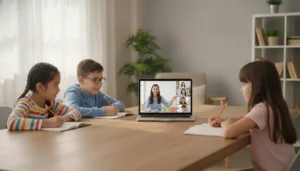
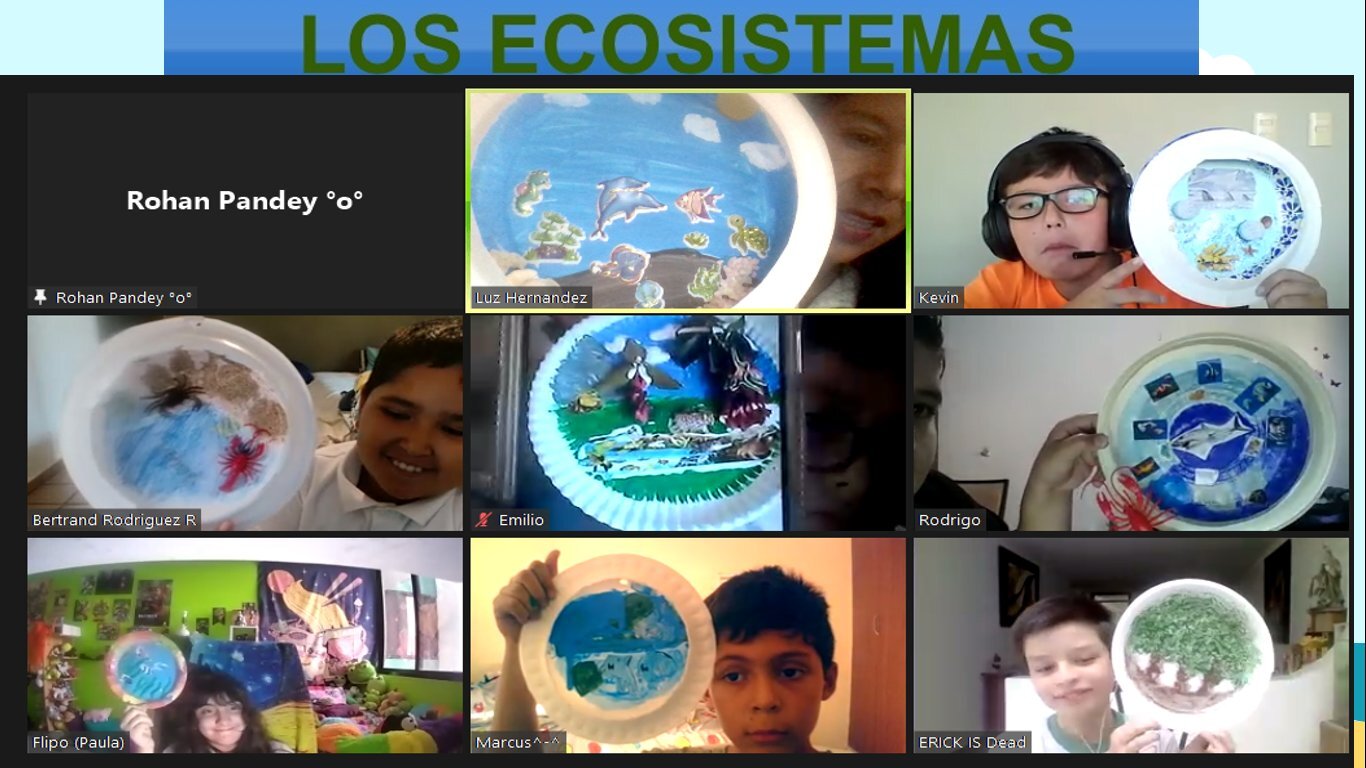
In a two-way immersion model, students who have strengths in different languages learn together and use both languages in meaningful classroom activities. That is different from a class where everyone studies vocabulary for a short block and then returns to instruction in only one language. Ask for examples of the actual weekly schedule and classroom tasks. A live lesson, a reading discussion, and a science activity can show how language and subject learning work together.
Ideal School describes its model as two-way dual-language immersion delivered in synchronous virtual classrooms. Its full-day program overview explains the core subject structure. Families can also learn about the school’s teachers and instruction as part of comparing who leads lessons and how learners participate.
When reviewing a sample day, look beyond the language label. Ask what students are doing during each part of the lesson. A teacher might introduce a science idea, model key terms, invite students to describe an observation, and then check what they understood about the concept. That sequence gives families a more useful picture than a statement that a class is simply bilingual. Ask how students can show their thinking if they cannot yet find every word in the language of instruction.
Which benefits can families reasonably expect?
The benefits of bilingual education depend on the learner, the quality and consistency of instruction, opportunities to use both languages, and the family’s goals. It is useful to think in terms of possibilities and experiences rather than promises of a particular result. A school cannot guarantee that every learner will progress at the same speed or reach the same level of fluency.
More meaningful opportunities to use two languages
When learners hear, read, speak, and write in both languages during school activities, they get practice connected to ideas and tasks. They might explain a solution, discuss a story, ask a question, or collaborate with a classmate. This is different from memorizing a list without using the words in context. Families should find out how students get speaking time and how teachers help them express an idea when they do not yet know every word.
Progress can look uneven. A learner may understand more than they can say, or feel confident in one subject and hesitant in another. That is not automatically a sign that the approach is failing. Ask how teachers notice progress in each language, share feedback, and help learners take the next step without expecting every skill to develop at once.
Consider two learners who enter a program with different experiences. One may speak Spanish with relatives but have had little formal reading practice in Spanish. Another may have studied Spanish at school and understand classroom directions, but feel unsure about speaking spontaneously. Their starting points are not interchangeable. A helpful program can explain how teachers learn what each student already understands and how classroom activities let students build on those strengths. Families can share useful context too, such as languages used at home, past instruction, preferred ways to participate, and situations that make the learner feel confident.
Connections to family, culture, and community
Language can help a young person take part in conversations with relatives, neighbors, and wider communities. It can also make stories, traditions, and perspectives more accessible. These outcomes matter especially to families who want a child to maintain a home language or develop a connection with people who use another language. The National Clearinghouse for English Language Acquisition describes potential benefits of bilingual education, including language and community connections, in its overview of potential benefits of bilingual education.
Families can make this connection concrete. Share a story or song in a family language, talk about words that have more than one meaning, or invite a relative to describe a tradition. School learning can support these conversations, but a school should not be expected to replace the relationships and cultural knowledge a family brings.
Practice with listening, explaining, and persistence
Learning through a developing language asks students to listen closely, notice context, and try different ways to express meaning. In a supportive classroom, learners can ask for clarification, use a known word as a bridge, and revise an answer. These habits are useful in many subjects. They should not be presented as a guaranteed cognitive advantage for every student; focus on the observable skills a family can discuss with teachers.
Academic ideas still matter. Learners need clear instruction in reading, writing, mathematics, science, and social studies as they build language. Ask how a teacher checks understanding of the subject, not just the words. A child who can explain a math strategy with a diagram, for example, may understand the concept while continuing to develop the language needed for a fuller explanation.
How can families compare program models?
Program labels can sound similar while describing very different school days. Use a short set of questions to see whether an option fits your child’s current language experience, academic needs, and home routine. A school’s program information can be a starting point, but families should ask for details that apply to their own circumstances.
| What to compare | Questions to ask | Why it matters |
|---|---|---|
| Language model | Are two languages used to teach subjects, or is one taught mainly as a separate class? | Clarifies what language exposure and practice look like across the week. |
| Student language mix | How does the class include learners with different starting levels? | Shows whether lessons make room for varied strengths and needs. |
| Live participation | How often do students speak, collaborate, and receive teacher feedback? | Helps families judge whether the format offers active practice. |
| Academic program | Which subjects are taught, and how is subject understanding assessed? | Connects language development with a complete school experience. |
| Schedule and support | What are the daily attendance expectations, technology needs, and help options? | Lets families plan a realistic home routine before enrolling. |
For a useful comparison, write down the same questions for each school and record the answers in concrete terms. “Students practice both languages” is less informative than a description of when they read, speak, write, and receive feedback in each one. If the school cannot explain how an approach works during a typical week, ask for a sample timetable or a brief walkthrough. You can also note which details are confirmed and which you still need to verify, such as subject coverage, class participation, or the family’s role outside live instruction.
What should you check about an online elementary school?
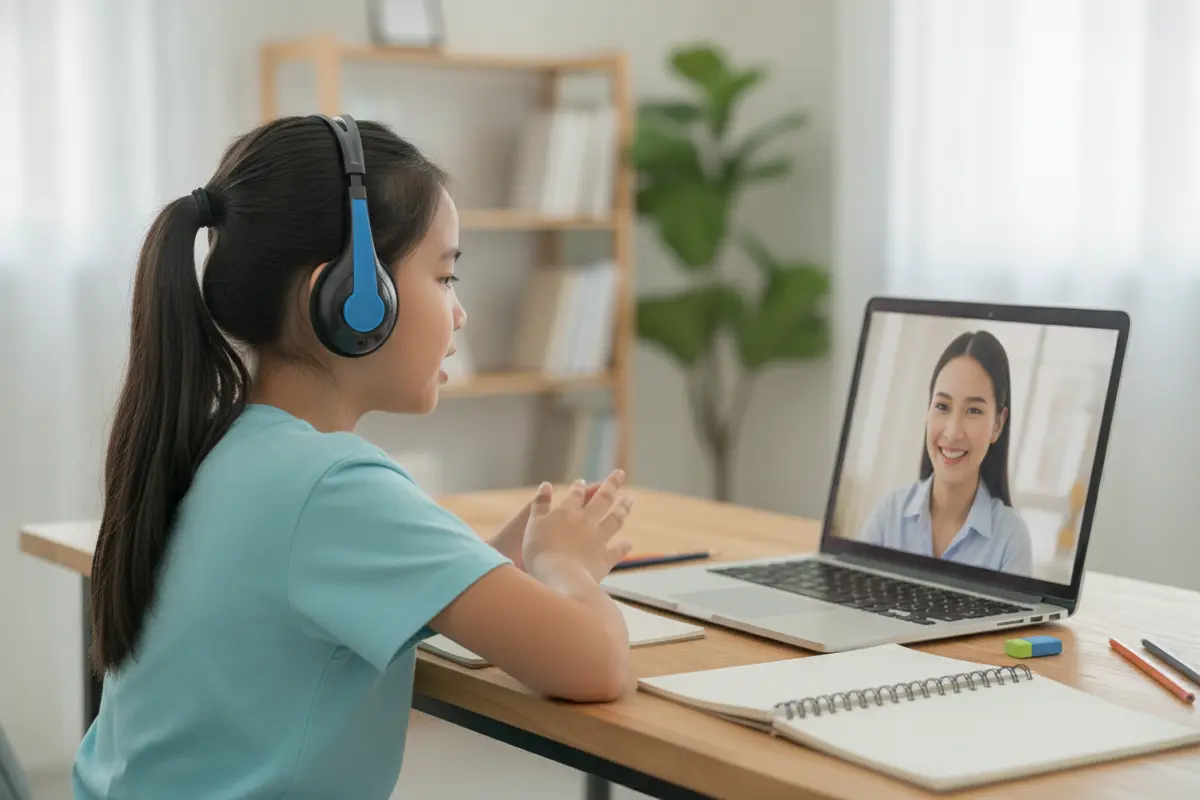
Online learning can make a school accessible across locations, but it also changes the practical questions families need to ask. For a live program, confirm the time zone, daily schedule, attendance expectations, and what happens if a student cannot join a session. Find out which devices and internet connection are needed, how assignments are submitted, and where families can get technical help. A video demonstration or a sample lesson can help you picture the experience better than a brochure alone.
Ask how students interact with one another. A useful classroom has planned ways for learners to contribute, not only watch a screen. Find out whether students ask questions, work in small groups, share their thinking, and receive direct feedback. Families may also want to ask how teachers encourage participation when a learner is shy or still building confidence in one of the languages.
Review the school’s status and accreditation carefully. Ask what the accreditation covers, how to verify it, and what academic records or credits the school provides. Ideal School shares information about its accreditation and school status. Families should confirm that the details fit their own plans, particularly if they expect to move, transfer, or continue to another school later.
Teacher preparation and communication deserve equal attention. Ask who teaches each subject, how families receive updates, and how concerns are handled. The instructor information can help families learn about the people leading classes. For questions about how a learner is progressing, ask what feedback families can expect and how often they can speak with a teacher.
Ask for an example of how the school responds when a learner needs more time or a different explanation. Families can listen for a clear process: how a concern is shared, who follows up, and how the family and teacher decide whether the support is helping. It is also reasonable to ask what happens when a student misses a live session, whether lesson materials or assignments are available afterward, and what work must be completed independently. These details help distinguish a schedule that sounds appealing from one the family can reliably manage.
How can you tell whether the schedule is a good fit?
A strong academic option still has to work in ordinary family life. Write down the fixed parts of the week: work hours, care responsibilities, appointments, other learning activities, and time for rest. Then compare those commitments with the school’s live schedule. Do not assume that “online” means self-paced. Synchronous instruction takes place at scheduled times, so check the details before deciding.
Discuss the routine with your child in simple terms. Where will they join class? Who can help if a device stops working? When will they take breaks, read independently, or complete assignments? A predictable study area can help, but it does not need to be a separate room. The important thing is to create a workable place and a plan for everyday interruptions.
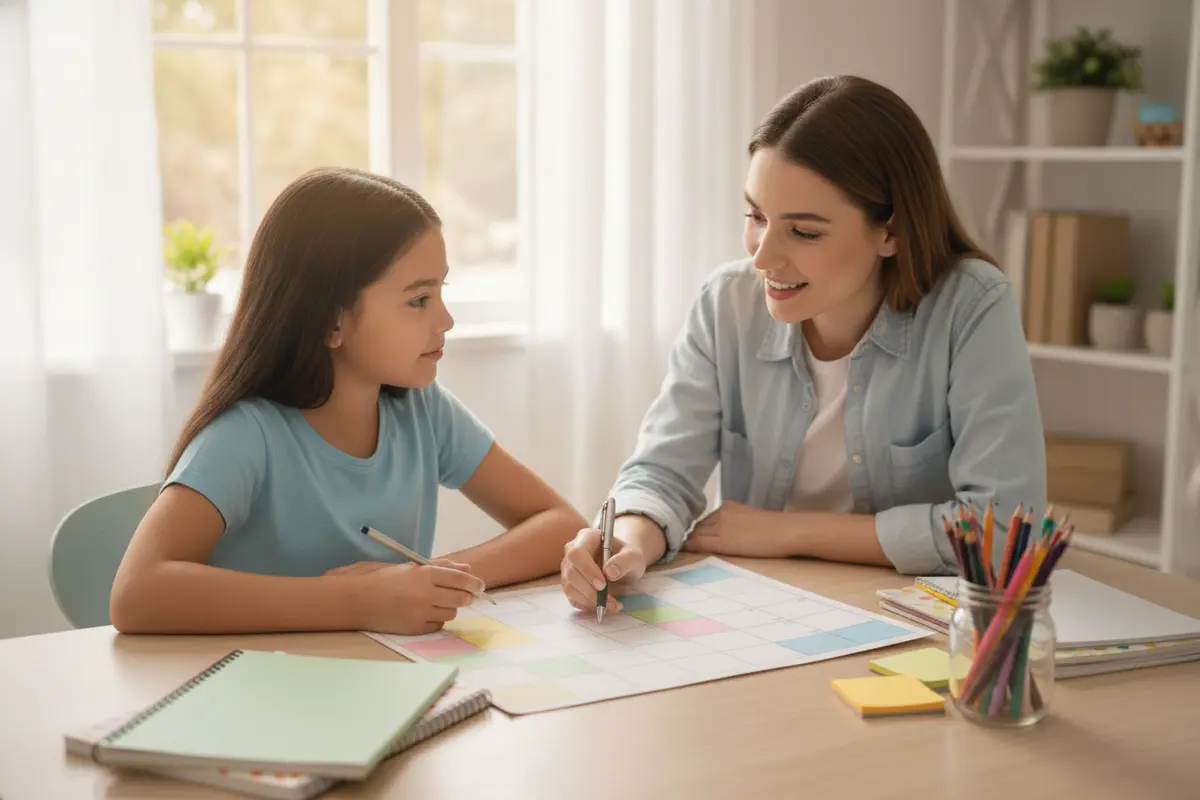
Families can test a proposed routine before making a decision. Sketch a sample weekday with the live classes, meals, movement breaks, and any work that happens outside class. Then look for crowded transitions: perhaps a caregiver is unavailable at the start of a session, or there is no quiet moment for an assignment after the school day. Adjusting the plan on paper can reveal practical issues early. It can also help the learner understand what the day will ask of them and identify where they may need adult help.
Families comparing a full school day with a single subject can look at supplemental subject classes as one possible format, while remembering that Ideal School is a K-12 school supporting students who study from home—not a homeschool program. Ask what responsibilities remain with the family in each option. Review tuition and fee information alongside the schedule, included instruction, and any additional costs that apply to your family.
What questions help you judge progress?
Before enrolling, ask how teachers describe progress in both languages and across academic subjects. Useful answers should explain what teachers observe, how they share feedback, and what support follows when a learner needs more practice. Ask whether progress is reviewed through classroom participation, assignments, reading, conversation, or other measures. Avoid relying on a single fluency label to describe a child’s full range of skills.
Families can also keep a simple record of what they notice at home. Does the learner volunteer a new phrase? Are they more willing to read aloud or explain an idea? Can they use a language in a conversation with a relative? These observations are not a formal assessment, but they can give a teacher specific examples to discuss. Compare them with classroom feedback over time rather than expecting dramatic change in a few weeks.
A short observation log can make a meeting more productive. Record the date, the situation, and what the learner tried—for example, explaining a game rule to a relative or recognizing a familiar word in a story. Include questions as well as successes. If the learner avoids a task, note whether it involved reading, speaking in front of others, understanding directions, or working independently. Specific examples help adults discuss what support may be useful without turning ordinary ups and downs into a judgment about the child’s ability.
If a learner seems frustrated, ask what part feels difficult. The challenge may be the academic concept, the language used to explain it, the pace of the lesson, or the online routine. A clear conversation with the teacher can help identify a useful adjustment. Families should not have to guess whether a concern is about language growth or another part of learning.
What is a practical checklist before choosing?
- Define your goal. Decide whether you want to maintain a family language, add a second language, pursue a bilingual academic setting, or meet several goals at once.
- Ask about the model. Get a subject-by-subject explanation of how and when each language is used.
- See instruction in action. Request a class demonstration or a detailed example of a typical lesson and student participation.
- Check academic and school details. Verify accreditation, grade coverage, records, and the process for transitions to another school.
- Plan the routine. Confirm live class times, attendance, technology, assignment expectations, and family support.
- Understand costs and enrollment. Review fees and ask what information is needed for a thoughtful enrollment decision.
- Discuss your child’s needs. Share language experience, learning preferences, and any questions that may affect classroom participation.
Families can use the school’s frequently asked questions to prepare, then request clarification on anything that affects their child. If you are comparing more than one option, use the same questions for each school. A consistent comparison makes it easier to tell the difference between a program’s promise and its daily practice.
Before settling on a choice, consider what a successful first month would look like for your family. That might mean a learner can follow the daily routine, knows how to ask for help, and is beginning to participate in class—not that every language skill has changed at once. Agree on a few practical signs to review with the teacher after classes begin. A clear starting plan gives families a fair way to notice what is working and where questions remain.
Frequently asked questions
Is bilingual education suitable for a child who is new to one language?
It can be worth exploring, but the family should ask how the school supports learners with different starting points. Find out how teachers explain new material, invite participation, and monitor understanding in both the language and the subject. A program should be able to describe its support rather than assuming every student begins at the same level.
Will learning in two languages delay academic learning?
There is no single answer that applies to every learner or program. Ask how the school teaches grade-level ideas, checks understanding, and responds when a student needs help. A learner may express knowledge differently while building language skills, so it is important to consider subject understanding and language development together.
How much should parents speak the second language at home?
Families do not need to change the language they naturally use to support learning. Regular conversation, reading, music, and contact with fluent speakers can create meaningful opportunities, when available. Ask the school for ideas that fit your family, especially if you want to nurture a heritage language or connect classroom learning with relatives.
What if my child is quiet during online lessons?
Ask the teacher how participation works and what support is available. A quiet student may need time to become comfortable, may be processing a new language, or may have another concern. Practical options can include clear turn-taking, smaller-group conversation, preparation time, and direct check-ins. Discuss what the teacher observes before drawing conclusions.
Request details about the school day
The benefits of bilingual education are most meaningful when a program fits a learner’s goals, provides thoughtful instruction in both languages, and works for the family’s daily routine. Compare the classroom experience, academic support, and school details before choosing, and ask specific questions whenever an answer is unclear.

Written by
Eric C. Franzen
Eric C. Franzen is co-founder and owner of Ideal School, with 20+ years of experience as an educational leader and entrepreneur. He holds a BA in Education from the University of Washington and an MA in Educational Administration from Seattle Pacific University.
View LinkedIn Profile →