

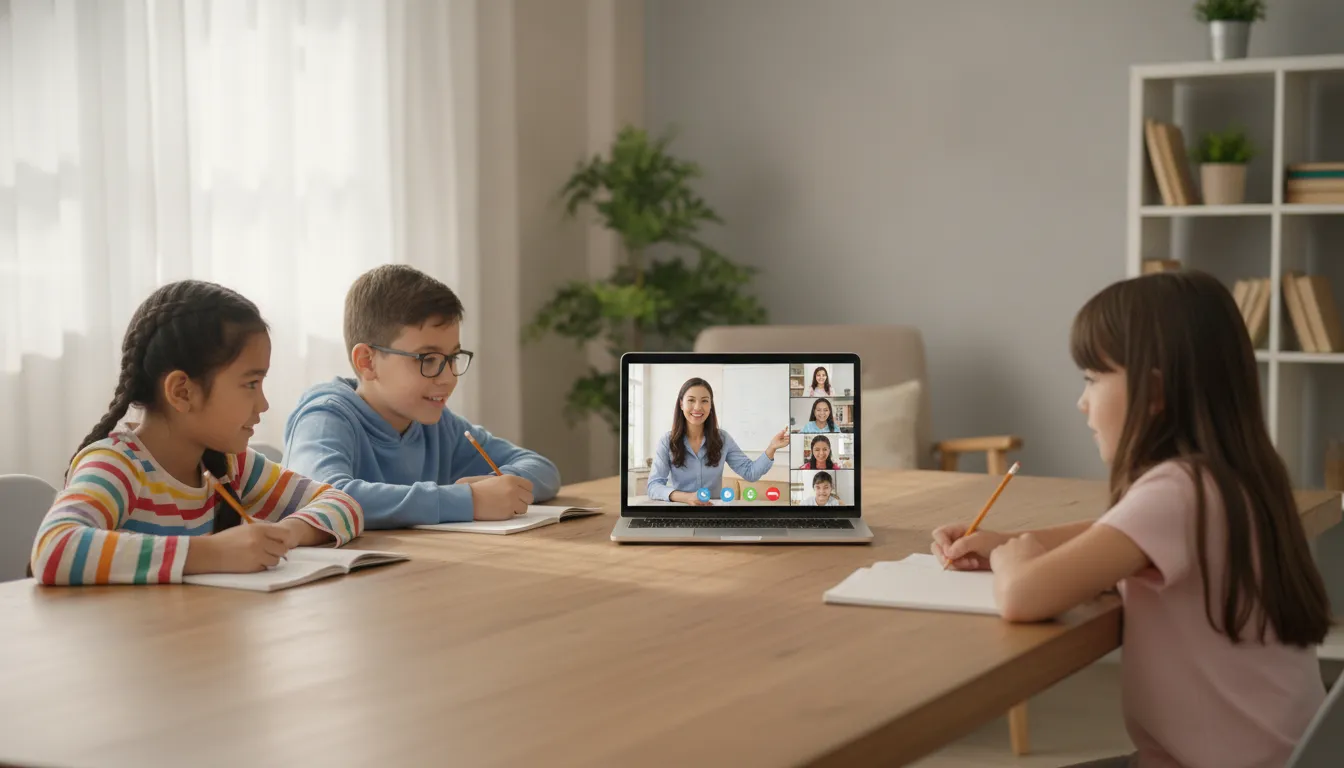

Distance online learning, a 21st-century approach to education, is a planned school model, not a stack of worksheets emailed home. Students still meet teachers, work with classmates, and meet the same academic standards. The difference is that the classroom can travel with the family.
Review Ideal School enrollment options
What Distance Online Learning Means Today
Older distance courses often meant a packet, a mailbox, and a grade at the end. A modern version uses a shared digital classroom so teaching, questions, and feedback happen on a schedule. The student is not left to invent the school day alone.
The National Center for Education Statistics separates self-paced distance learning from real-time classes. In its distance learning Fast Facts, NCES notes that schools have used both formats. That split still matters. A recording can review a lesson. It cannot replace a teacher who hears a wrong answer and corrects it that day.
For families, the useful question is simple. Does this program still have a teacher, a class, a record of work, and a way to ask for help? If those pieces are present, distance is the delivery method. It is not a lower academic bar.
A parent can test this in one week of sample work. Ask to see a lesson objective, one assignment, and the name of the person who grades it. If the school can show those three items, the course has a spine. If it can show only a login, the family is looking at access without a class.
That test also keeps the conversation honest about age. A kindergartner needs a short live block and an adult nearby. An older student can carry more independent work. The delivery can change with the grade. The need for a teacher does not disappear.
Distance Online Learning as a 21st-Century Approach
A serious model joins five pieces: flexibility, teacher interaction, shared technology, collaboration, and access from more than one place. Drop any one of them and the program starts to look like emergency remote school. Keep all five, and the student can move without losing the structure of a school day.
Flexibility means the family can choose a live day, a guided week, or a mix. It does not mean every subject becomes optional. Interaction means a named teacher answers questions and checks understanding. Technology is the room where that happens, not a pile of apps. Collaboration gives students a reason to explain their thinking. Access lets a student in another city, or another country, join the same class.
Rigor sits across those pieces. The course still has objectives, assignments, and assessments. A student who misses a live class still owes the work. A student who studies at a different hour still meets the same checkpoint. That is how flexibility and standards can live in the same plan.
Think of the five pieces as a checklist, not a slogan. Flexibility without a teacher becomes a solo workbook. A teacher without collaboration becomes a tutoring hour. Technology without a routine becomes another tab. Collaboration without shared standards becomes a social call. Access without a record makes a move look smooth until the next school asks for grades.
Families can write the checklist on one page before they compare schools. Next to each piece, note what the program actually does this week. A live math class on Tuesday is interaction. A Friday file of unfinished work is a record. A classmate who has to answer the same question is collaboration. Vague promises do not count.
How Live Teaching Protects Academic Standards
Live class time is the clearest guard against a thin online course. A teacher can see confusion, call on a student, and adjust the example before the misunderstanding hardens. Written feedback still matters, but it arrives later. The live hour catches the error while the lesson is still open.
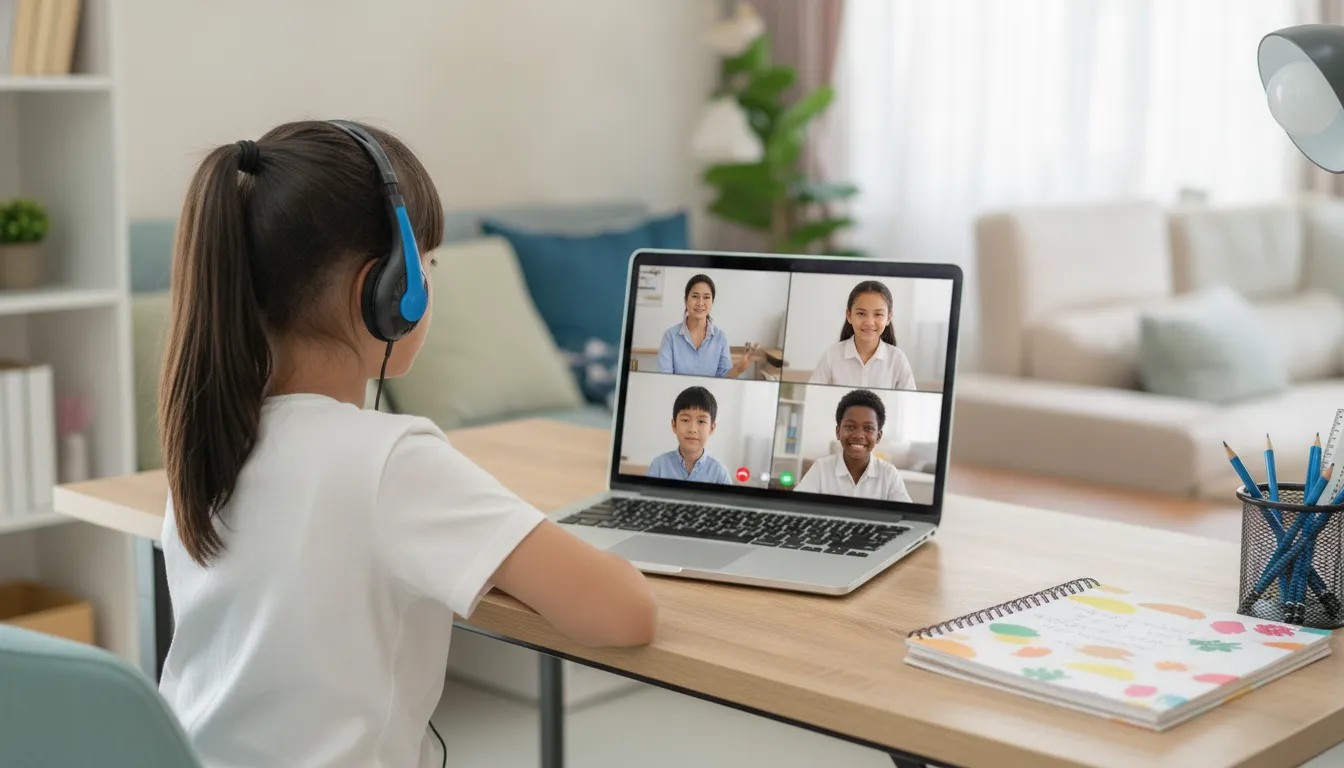
Ideal School uses that idea in its full-day live program. Students in kindergarten through 12th grade study core subjects with bilingual teachers in daily live classes. Classmates join from more than 20 countries. The page also lists small classes, Friday social groups, and a monthly art class with a professional artist. Those are school routines, not extras bolted on after the fact.
Families who want the high-school case for that live structure can read the benefits of live online high school. This article stays on the wider model: how the pieces fit from the elementary years through graduation, without turning flexibility into a lighter course.
What a Live Block Should Include
A useful live block has a short check of yesterday’s work, direct teaching, and time for students to try the skill while the teacher is still there. It closes with a clear task for the next meeting. If a class is only a lecture played at the group, students can watch without learning. If it is only chat, nobody finishes the objective.
Parents can ask three questions before they enroll. Who teaches this subject? How often does the student speak or write during class? What happens when the student is absent? Clear answers are a better signal than a long feature list.
Absence rules are part of rigor. A school can record the live class, post the task, and set a due date. It should also say who notices if the task never arrives. A student who travels still needs that net. Otherwise flexibility hides missing work until the grade drops.
Live teaching also gives younger students a pace they cannot set alone. The teacher starts the page, watches the attempt, and stops the group when the example fails. Home practice still matters after class. It should follow a lesson the student already tried with help.
Compare Flexible Formats Without Lowering the Bar
Not every family needs five live subjects. Some students travel for sport. Some families split time across cities. A modern school should say which grades can use which format, then keep the academic target steady.
| Format. | Who it fits. | How teaching works. | What stays rigorous. |
|---|---|---|---|
| Live full day. | Kinder through 12th grade at Ideal School. | Daily live classes in core subjects. | Shared lessons, teacher checks, and class participation. |
| Asynchronous full day or subject. | 4th through 12th grade at Ideal School. | Monday guides, Friday work, email help within 24 hours, and a weekly live support hour. | Same digital exams as live students, plus weekly assignments. |
| Mixed live and asynchronous. | Students who travel or train and need both formats. | Some subjects live, others on a weekly guide, with teacher support either way. | Teachers still own the course. Pace changes, but standards do not. |
| Single supplemental subject. | A student who needs one course, not a full school day. | One live or guided subject with that subject’s teacher. | That course has its own work. It is not full diploma enrollment. |
Ideal School publishes those ranges on its program pages. Live classes run from kindergarten through 12th grade. Asynchronous classes are offered from 4th grade through 12th grade, with weekly study guides, a Friday deadline, tutor email, and a weekly Zoom hour. Mixed classes let a student take some subjects live and others on that guided plan. A single supplemental class is support in one subject. It is not the same as enrolling for a full diploma.
The curriculum standards page shows why the format should not rewrite the goal. Kindergarten language arts, for example, still asks students to join group reading and to answer questions about a text. Those are active skills. A program can deliver them live or through a guided week. It should not drop them because the student is at home.
Parents can use one subject as the sample. Take math. In a live block, the teacher shows a problem, students try one, and the class corrects the miss together. In an asynchronous week, the guide assigns the same kind of problem, the student submits it by Friday, and the tutor returns the correction. The hour changed. The skill did not.
Cost should stay on the tuition page, but the format choice still affects the bill. Full-day live tuition is listed by grade band, and it excludes separate enrollment, digital-resource, and diagnostic fees. Asynchronous full-day pricing is also listed by grade band, with its own separate annual fees. A family should compare the matching grade row, not a single monthly number pulled out of context.
Technology Should Serve the Class, Not Replace It
Families sometimes collect apps and call the pile a school. A better test is whether every tool has a job inside the lesson. The video room is for live teaching. The portal is for attendance, assignments, and messages. The weekly guide is the map for students who are not in every live block.
Ideal School’s asynchronous page is a clean example. Material arrives by module. A weekly guide goes out on Monday. Assignments are due Friday, and corrections come the following Friday. Exams use the same digital platform as the live program. The tools are ordinary. The routine is what keeps the course from drifting.
Parents can set a matching routine at home without buying more software. Pick one desk, one login, and one place for the week’s guide. Check the portal on the same two days each week. When the tool list grows faster than the routine, students spend the hour hunting for the assignment instead of doing it.
Shared technology also needs a house rule about attention. One window for the class, one window for the assignment, and no extra video running beside them. The point of the laptop is to put the student in the room with the teacher. It is not to recreate every distraction of a hallway between tabs.
Teachers at Ideal School are part of that room. The teacher page is the right place to see who leads classes, rather than treating software as the instructor. A platform can deliver a file at midnight. It cannot decide that a student needs the example taught a second way.
A Simple Home Setup
- Choose a quiet desk and test the camera and sound before the first live class.
- Save the class link, the portal, and the weekly guide in one folder.
- Block the live hours on a family calendar, including the weekly support hour.
- Set a Friday check so unfinished work does not roll into the next module unseen.
- Write down the teacher’s contact path so a stuck student is not waiting until Monday.
Collaboration and Access Across Locations
A 21st century classroom can include students who will never share a hallway. That only helps if the course gives them something to do together. Group reading, a shared science explanation, or a Friday social block makes classmates real. A muted gallery of faces does not.
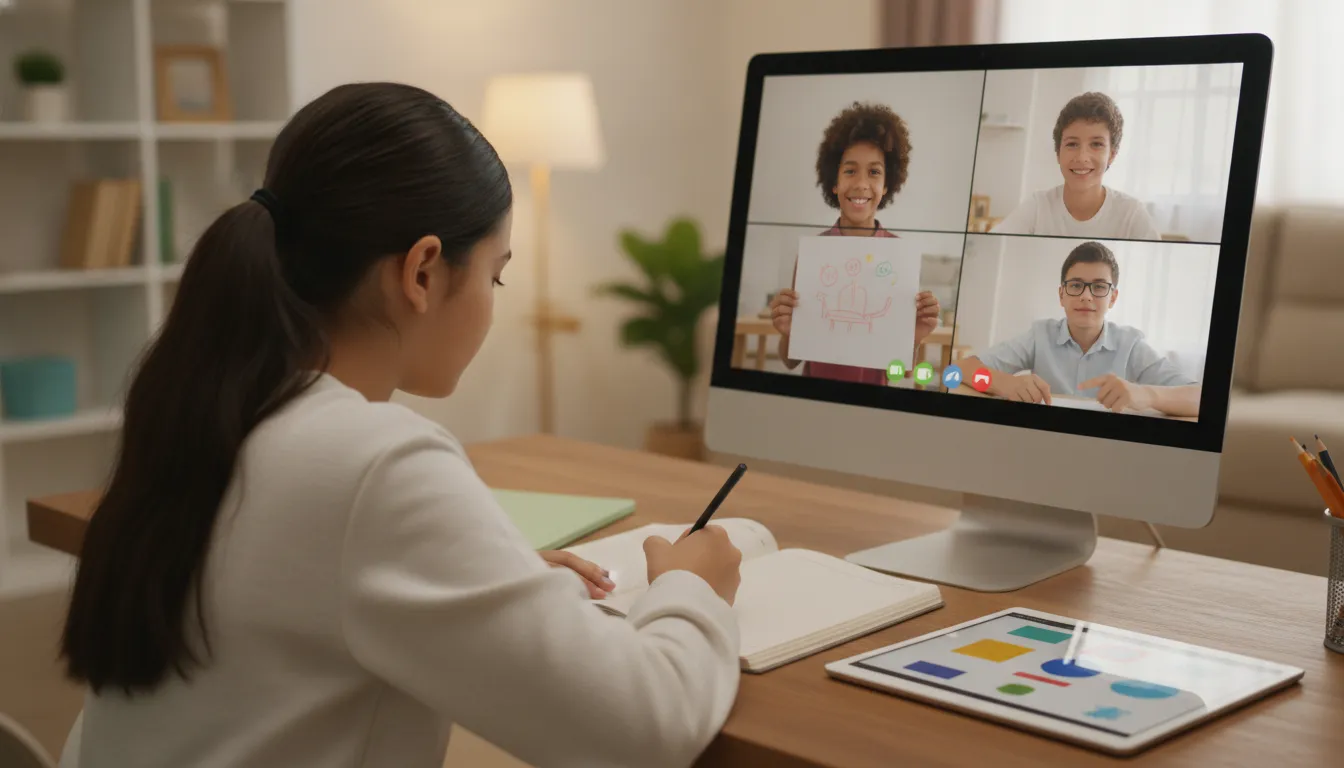
Ideal School describes this as multicultural education for children wherever they are. Core subjects are taught in English and Spanish, and students meet teachers and classmates from different countries. For a family that moves, the class stays put even when the apartment does not. For a student learning both languages, the second language is part of the subject, not a club after school.
Access still needs limits. A live class in one time zone may fall at dinner in another. Mixed and asynchronous formats exist for that reason. The student keeps the course, the teacher, and the exam. Only the hour changes. Families comparing class size and attention can use the small class sizes checklist as a separate decision tool. This page is about the model, not a scorecard of schools.
How Families Can Judge Rigor Before They Enroll
Marketing language is easy to copy. Records are not. Before a family treats distance learning as a full school plan, it should look for five signs.
- A named teacher for the subject. Office hours, a weekly live hour, or a 24-hour reply promise should be written down.
- A visible course map. Weekly guides, due dates, and exams tell you the course has a pace.
- The same assessments across formats. Live and asynchronous students should not sit different tests for the same course.
- A school accreditation, stated plainly. Ideal School is a Cognia-accredited K-12 school and says it is registered with the Florida Department of Education. Cognia accredits schools. It does not accredit a curriculum, and it does not turn a home study plan into an accredited school by itself.
- A clear line between one class and full enrollment. A supplemental subject helps with one gap. A diploma path is a separate decision with its own records.
Read Ideal School’s accreditation page for the school-level claim, then use the tuition page for current cost. Monthly tuition varies by grade. Enrollment, digital resources, and diagnostic exams are separate fees. Do not add those numbers into one sticker price from a blog post.
Parents who want a campus-versus-online comparison for high school should read how online high schools compare with traditional education. That comparison addresses a different question from the one on this page.
Ask Ideal School which format fits your student
Frequently Asked Questions
Is distance education the same as online education?
Not always. Distance education is any teaching that happens when the student and teacher are apart. Online education is the version that uses the internet. A strong program uses live or guided online classes, not only files sent home.
Can flexible online learning still be rigorous?
Yes, when the course keeps a teacher, a weekly map, required work, and the same exams across formats. Changing the hour is flexibility. Dropping the checkpoint is not.
Which Ideal School formats include a teacher?
Live classes include a teacher in the daily lesson. Asynchronous classes include a tutor by email, with a reply expected within 24 hours, plus a weekly live support hour. Mixed classes use both, depending on the subject.
Does a single online subject replace full school enrollment?
No. A supplemental subject is one course. Full-day enrollment, and any diploma plan, follows a separate path with its own records and fees.
Where should families confirm grades, cost, and accreditation?
Use the live program pages for grade ranges, the tuition page for current fees, and the accreditation page for the Cognia school claim. Those pages stay current when a blog summary cannot.

Written by
Eric C. Franzen
Eric C. Franzen is co-founder and owner of Ideal School, with 20+ years of experience as an educational leader and entrepreneur. He holds a BA in Education from the University of Washington and an MA in Educational Administration from Seattle Pacific University.
View LinkedIn Profile →