


Choosing a bilingual program is about more than adding a second language to the school day. The right online setting can help your student build communication skills while learning at a pace that supports confidence, consistency, and academic growth.
The benefits of bilingual education online include stronger language processing, greater cognitive flexibility, and a more adaptable approach to learning. Research has found that bilingual students can perform better on tasks involving executive control. While flexible online pacing can give them more opportunities to practice and apply both languages across their studies (research review).
For families considering virtual K-12 education, delivery matters as much as the curriculum. A well-designed program can make language practice part of everyday learning instead of isolating it as a separate subject. That combination of structure, flexibility, and meaningful use creates a strong foundation for understanding why bilingual education fits naturally within virtual learning.
Why Bilingual Education Belongs in Virtual K-12 Learning
Virtual K-12 learning gives bilingual education room to become part of a student’s everyday academic experience rather than an isolated language lesson. Students can encounter both languages in reading, discussion, science, mathematics, and project work. That consistency helps them connect vocabulary to real concepts and use each language for meaningful purposes.
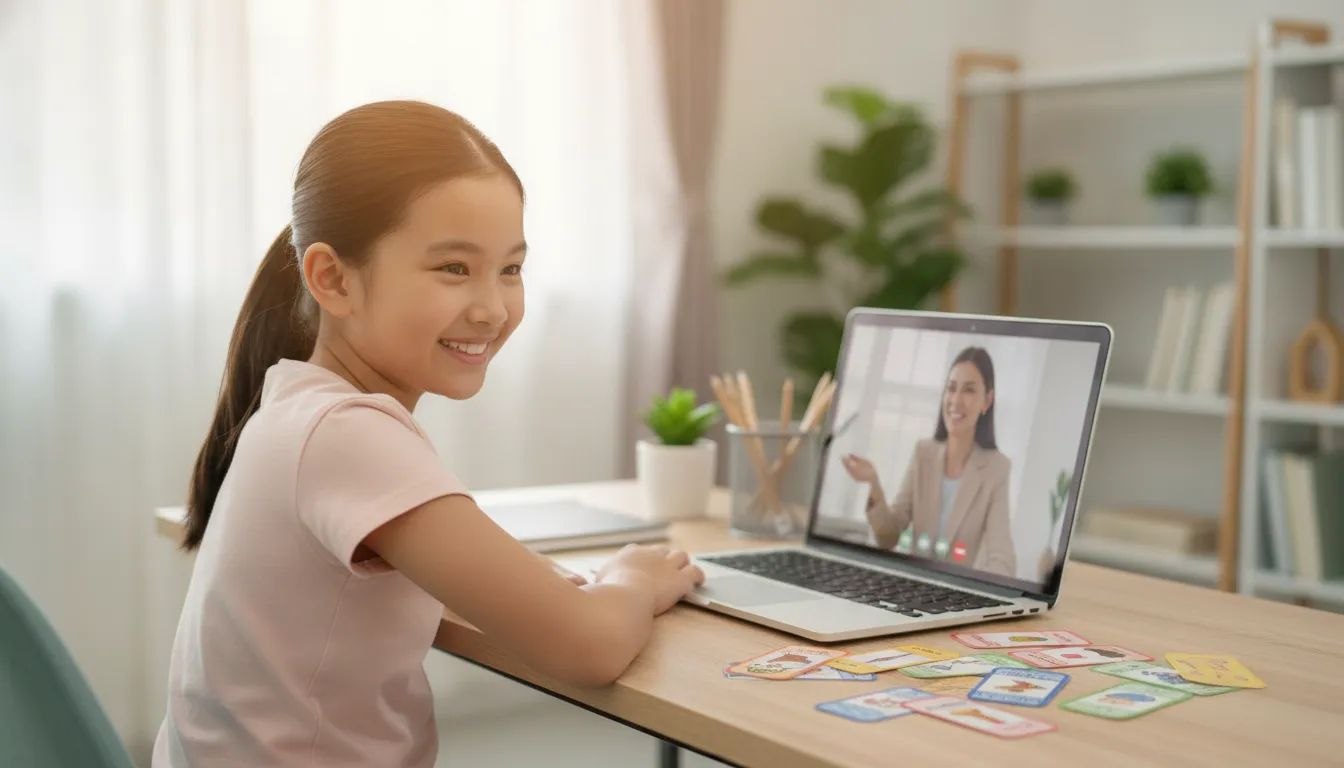
Online delivery also makes pacing more adaptable. A student may need extra time to process a lesson in a developing language, while another may be ready to extend the assignment. With a flexible schedule, families can revisit instruction, practice skills, and move forward without treating language development as a reason to rush or repeat an entire course. Ideal School describes this flexibility as an advantage for students learning a bilingual curriculum at their own pace.
Immersion can continue across the school day
A well-designed virtual program can create a steady pattern of exposure. A student might read a text in one language, discuss its ideas in another, and then apply the same knowledge in a project. This cross-subject approach supports language acquisition because new terms appear in context and are reinforced through repeated use. It also keeps bilingual learning connected to academic progress, not separated from it.
Research reviewed in the journal Child Development Perspectives found no evidence of harmful effects from bilingual education and reported net benefits across areas of language proficiency and academic achievement. The review supports a balanced view: learning through two languages can strengthen a student’s education when instruction is thoughtfully structured. Ideal School’s knowledge base likewise identifies online bilingual education as a way to foster cognitive development and improve academic performance.
A practical fit for US expatriate families
For US families living abroad, an online K-12 program can help students maintain continuity with US academic expectations while developing or preserving another language. Families may be managing changing locations, time zones, or local school options. A virtual setting can provide a stable learning framework that travels with them, while daily bilingual instruction keeps language connected to schoolwork and family life.
This wider linguistic repertoire is increasingly useful in a globalized environment. Bilingual students are better positioned to communicate across communities, understand different perspectives, and carry their learning into future academic and professional settings. The online format does not make bilingual education less personal. With responsive teachers, purposeful interaction, and regular practice, it can make language learning more consistent, accessible, and relevant.
What Are the Benefits of Bilingual Education Online?
Learning in two languages can influence more than a student’s vocabulary. A well-designed virtual K-12 program gives students regular opportunities to compare ideas, communicate across languages, and apply academic concepts in more than one linguistic context. The result is a learning experience that can support cognitive development, academic growth, and preparation for future opportunities.
Stronger cognitive flexibility
Using two languages requires students to select the language that fits the speaker, setting, and purpose. That ongoing mental management can strengthen the ability to shift attention, organize information, and respond to changing demands. Research reviewed by the National Institutes of Health reports that bilingual individuals consistently outperform monolingual counterparts on tasks involving executive control and cognitive flexibility. Read the research on bilingualism and executive control.
Related research describes bilingualism as the experience of managing two languages within one mind. This process can improve language processing and contribute to general cognition, helping students think carefully about meaning, context, and how ideas connect. These skills are useful well beyond language class because they support attention, problem-solving, and thoughtful communication across subjects.
Academic growth across subjects
When students learn through a bilingual curriculum, they encounter subject knowledge through multiple language systems. They may compare vocabulary, notice how different languages express relationships, and explain a concept in more than one way. This kind of active processing can deepen understanding instead of treating language as a separate skill used only during a designated lesson.
Online delivery can make that work more manageable. Students may review a lesson, revisit unfamiliar terms, and practice at a pace that matches their current language development. A virtual program can also give families more flexibility to build consistent language practice into the school week. Which is especially valuable when students are balancing academic responsibilities with family language goals.
Broader communication and career preparation
Dual-language proficiency gives students a larger linguistic repertoire for communicating with people from different backgrounds. Over time, that ability can support collaboration, cultural understanding, and confidence in settings where more than one language is valued. In future education and careers, students may be better prepared to work with varied communities, serve bilingual families, and pursue opportunities that require clear communication across languages.
The strongest benefits of bilingual education online come from consistent instruction, meaningful practice, and appropriate academic support. Parents should look for a program that treats both languages as tools for learning, not simply as isolated subjects. That approach helps students build language ability while developing the cognitive and academic habits they can carry into the next stage of school and beyond.
How Bilingual Learning Sharpens Cognitive and Executive Skills
Learning and using two languages gives students regular practice managing competing information. When a conversation, reading assignment, or class discussion shifts from one language to another. The brain must identify the intended language, select the right words, and set aside alternatives. This ongoing mental coordination helps explain why bilingual learning can support skills that reach beyond communication.
Executive control and attention
Executive control includes the ability to focus on a goal, ignore distractions, and adjust behavior when conditions change. Research summarized in this review of bilingualism and cognition reports that bilingual individuals consistently outperform monolingual counterparts on tasks involving executive control and cognitive flexibility. For students, these skills can support practical learning habits, such as staying focused during a complex lesson. Switching between assignment requirements, and checking whether an answer fits the question.
The benefit does not come from simply memorizing vocabulary lists. It develops through meaningful language use. Students may need to decide which language best fits a conversation, interpret context, and respond accurately while keeping the larger purpose in mind. Those decisions create repeated opportunities to practice attention and mental control.
Cognitive flexibility and working memory
Bilingual learning also encourages cognitive flexibility, or the ability to shift perspectives and approaches without losing track of the original objective. A student may compare how an idea is expressed in two languages, notice that a direct translation does not always work, and choose a clearer explanation. This process strengthens awareness of meaning, context, and structure.
Managing two languages in one mind also places demands on working memory. Students hold information briefly while connecting new vocabulary to prior knowledge, following multi-step directions, or organizing a response. The article Juggling Two Languages in One Mind examines how this language management relates to language processing and broader cognition.
Long-term cognitive organization
These mental habits may matter across a lifetime. The same academic review presents evidence for a protective effect of bilingualism against the onset of Alzheimer’s disease, linking that effect to stronger cognitive organization. This is not a promise that bilingual education prevents disease, and it should not replace medical guidance. It is better understood as evidence that sustained language use can contribute to a resilient, actively organized mind.
For parents comparing the benefits of bilingual education online, cognitive development is one part of a larger picture. A well-supported program gives students repeated opportunities to listen, speak, read, and think across languages while building the attention and flexibility needed for academic success.
How Do Online Bilingual Programs Compare with Traditional Classrooms?
Both online and traditional classroom models can support meaningful language development. The right choice depends on how a student learns best, how consistently the program delivers both languages, and how well the schedule fits the family. For families comparing online bilingual programs, the differences below can make the decision clearer.
| Learning consideration | Online virtual bilingual program | Traditional classroom delivery |
|---|---|---|
| Flexibility and pacing | Students may have more control over when and where they complete lessons. Online programs can allow students to work through bilingual curriculum at their own pace, which supports language acquisition when a concept needs more practice. | Students generally follow the class pace and complete lessons during scheduled school hours. This creates a predictable routine, but the pace may not match every student’s language background or learning needs. |
| Consistent dual-language immersion | A well-designed virtual program can build both languages into instruction, assignments, and teacher interaction across the curriculum. Families should confirm how often each language is used and whether the model is true dual-language instruction rather than occasional translation. | Language exposure depends on the school’s model, classroom staffing, and available courses. A traditional school may offer strong immersion, but the amount of instruction in each language can vary by grade and program. |
| Personalized teacher attention | Virtual instruction can make it easier to revisit lessons, submit work for feedback, and ask questions through the program’s communication tools. Families should look for clear teacher availability and a defined process for individual support. | In-person teachers can respond immediately during classroom activities and observe students face to face. However, the amount of one-to-one time depends on class size, staffing, and the structure of the school day. |
| Scheduling | Online learning may accommodate family travel, appointments, varied work schedules, or a student’s need for a quieter study period. This flexibility is especially useful when a fixed school timetable is difficult to maintain. | Set start times and attendance expectations provide daily structure. Families benefit from a consistent routine, although changes in schedule can be harder to manage. |
| Families relocating or living abroad | A location-independent program can help families maintain continuity when they move or spend time outside the United States. The family should confirm time-zone expectations, enrollment requirements, and teacher communication hours before choosing a program. | A local school can provide an immediate community and in-person services after a move. Relocation may require a new enrollment process, curriculum transition, and adjustment to different language offerings. |
The comparison is not simply about choosing technology over a classroom. Online bilingual education works best when flexibility is paired with a coherent curriculum, qualified teachers, regular feedback, and meaningful use of both languages. Ideal School’s guidance describes online learning as a way to support self-paced bilingual study, while also connecting bilingual education online with cognitive development and academic performance. Those benefits depend on selecting a program that treats language learning as a consistent part of the student’s education, not an add-on.
What Should You Look for in an Accredited Online Bilingual School?
Choosing an online bilingual school involves more than checking whether classes are available in two languages. Parents should look for a program with clear academic standards, meaningful language use across the curriculum, and support systems that help students make steady progress. The strongest programs treat bilingual learning as a complete educational model rather than an occasional language lesson.
Start with credible accreditation
Accreditation gives families an important point of reference when they compare schools. Ask which organization evaluates the program, what the accreditation covers, and whether the school can explain its academic expectations clearly. For example, Cognia accreditation is an independently verifiable quality signal for families reviewing Ideal School. Accreditation should be considered alongside curriculum, instruction, student support, and the school’s ability to communicate how learning is assessed.
Look for genuine dual-language learning
A strong program should use both languages for meaningful academic work across subjects, not limit the second language to isolated vocabulary practice. Review the curriculum and ask how students read, discuss, write, and demonstrate understanding in each language. Exposure to two languages through a thoughtfully designed curriculum can help students develop dual-language proficiency and thrive academically. As described by the Foundation for International School of Washington (source on dual-language proficiency).
It is also useful to ask whether the program’s language model matches your student’s starting point and goals. A heritage-language learner may need a different entry point from a beginner. The school should be able to describe placement, progression, and how it supports students as their confidence develops.
Evaluate teachers and day-to-day support
Qualified bilingual teachers should be able to explain challenging academic ideas clearly, provide useful feedback in the appropriate language, and recognize when a student needs additional help. Ask how students interact with teachers, how quickly questions are answered, and whether families receive regular progress updates. You can learn more about the people and educational approach behind Ideal School before making an enrollment decision.
Confirm that flexibility is real
Online learning is most useful when flexibility supports learning rather than replacing structure. Research on the benefits of bilingual education online notes that virtual programs can let students work through bilingual curriculum at their own pace, which may support language acquisition. Look for clear lesson schedules, recorded or accessible materials when appropriate, and consistent deadlines or check-ins. Families living abroad temporarily or permanently should also ask how the school handles time zones, communication, enrollment documentation, and continuity when a student’s location changes. These practical details can determine whether a program works well over the long term.
Can Bilingual Education Online Prepare Students for Future Careers?
Yes. A strong bilingual program can help students build language skills that remain valuable well beyond graduation. The goal is not simply to memorize vocabulary in two languages. It is to develop the confidence to communicate, learn, and collaborate across linguistic and cultural settings.
A broader linguistic repertoire
Students who study in two languages develop more than a second subject area. They gain additional ways to understand ideas, express themselves, and connect with other people. Research on bilingualism describes an expanded linguistic repertoire as increasingly important in a globalized environment, where academic, professional, and personal communication can cross language boundaries (research on bilingual cognition and language).
That wider repertoire can support future work in fields such as education, healthcare, technology, business, public service, and communications. It can also help students participate more fully in multilingual communities without treating one language as a replacement for the other.
Stronger preparation for a competitive workforce
Employers often need people who can explain complex information clearly to different audiences. Students who regularly read, write, listen, and speak in two languages begin practicing that kind of flexibility during their school years. They learn to choose precise words, notice context, and adjust their communication for the person or setting in front of them.
Online learning can make that preparation more consistent. Students may revisit lessons, practice at a manageable pace, and apply both languages across subjects rather than limiting language study to a single class. Families exploring bilingual education online can look for programs that make meaningful language use part of the broader academic experience.
Access to future study and work opportunities
Dual-language proficiency may give students more options when they consider colleges, training programs, internships, and careers that involve multilingual communication. It can also help US expatriate families maintain a connection to Spanish while preparing students to study or work across borders later in life. A consistent online program can provide continuity when a family relocates, travels, or needs a flexible school schedule.
The most useful preparation combines language development with academic rigor, qualified instruction, and opportunities to use both languages for authentic purposes. When those pieces work together, bilingual education becomes a practical foundation for students who want to keep more educational and professional paths open.
Frequently Asked Questions
What are the primary benefits of bilingual education online for students?
Students can build proficiency in two languages while developing academic knowledge through a flexible virtual curriculum. Online delivery also allows families to choose a learning pace that supports language acquisition. While bilingual study can strengthen language processing, academic performance, and preparation for a multilingual society.
How does bilingual education online support cognitive development?
Using two languages requires students to manage language choices and shift between systems. Research has linked bilingual experience with stronger performance on tasks involving executive control and cognitive flexibility, although outcomes depend on the quality and consistency of instruction. See the research review in this academic source.
What should families look for in an effective online bilingual program?
Look for a clear K-12 curriculum, qualified teachers, meaningful opportunities to use both languages, responsive student support, and pacing that matches the student’s needs. Families should also review the school’s accreditation, enrollment process, and how instruction, assignments, and communication work in the virtual setting.
Are there disadvantages to bilingual education that parents should consider?
Learning in two languages may require consistent practice and careful support, especially when a student is developing proficiency in one language. Parents should ask how the program monitors progress and provides help when needed. A research review found no evidence of harmful effects from bilingual education and reported net benefits across language proficiency and academic achievement: review the findings.
Ready to Explore Online Bilingual Learning?
A bilingual virtual program can give your student a structured way to develop language skills while learning in a flexible online setting. To explore a program designed for families seeking bilingual education, visit Ideal School’s language institute. You can review the available online bilingual language programs and learn how to enroll your student. Get started by exploring the program details and choosing the next step that fits your family’s goals.

Written by
Eric C. Franzen
Eric C. Franzen is co-founder and owner of Ideal School, with 20+ years of experience as an educational leader and entrepreneur. He holds a BA in Education from the University of Washington and an MA in Educational Administration from Seattle Pacific University.
View LinkedIn Profile →