

The expat experience is an education in itself, exposing your child to new cultures, languages, and perspectives. The challenge is how to pair that invaluable real-world learning with a rigorous academic foundation that keeps future doors open. You need a solution that complements your global lifestyle, rather than complicates it. By enrolling your child in small online classes for American expat children, you provide them with a unique dual advantage. They receive a consistent, accredited U.S. education while connecting with a diverse group of peers from around the world, truly preparing them to be citizens of a globally connected future.
Key Takeaways
- Choose consistency for a mobile life: Small online classes provide a stable educational anchor for expat families. This consistency prevents learning disruptions during moves and ensures your child benefits from personalized attention in a supportive, close-knit classroom.
- Confirm the markers of quality: Always check for official accreditation, as this validates the school’s academic standards and ensures credits are transferable. Also, look for transparent information on teacher qualifications and a curriculum that aligns with U.S. standards.
- Find a schedule that fits your world: The right program should offer flexible learning models, like a mix of live and self-paced classes. This approach accommodates different time zones and family schedules, making a high-quality education accessible from anywhere.
Why Choose Small Online Classes for Your Expat Child?
Living abroad is an incredible opportunity for your family, but it often comes with questions about your child’s education. How do you provide stability when you might be moving every few years? How do you ensure they receive a high-quality education that keeps pace with their peers back home? Small online classes offer a powerful solution, blending the flexibility your international life demands with the academic consistency your child deserves. This model is designed to help your child thrive, no matter where you are in the world.
For families moving from states like Arizona or Utah, or for those planning a return to places like North Carolina or New Hampshire, maintaining a U.S.-based curriculum is essential. Small online classes provide that seamless connection. They create an intimate and supportive learning environment that travels with you, eliminating the stress of switching schools and adapting to new educational systems. Instead of starting over with every move, your child can build lasting relationships with teachers and classmates in a stable, nurturing setting. It’s a modern approach that gives your child a world-class education without sacrificing their sense of community or academic momentum.
Benefit from Personalized Attention
In a small online class, your child is more than just a name on a roster; they are a valued member of a close-knit learning community. With fewer students, teachers can provide the personalized attention needed to truly understand each child’s learning style, strengths, and areas for growth. This focused support helps students feel seen and heard, giving them the confidence to ask questions and participate actively. When students have a voice in their education, they become more engaged and motivated to succeed.
This individualized approach means our teachers can tailor lessons and offer one-on-one guidance, ensuring no one falls behind. It fosters an environment where students not only focus on their own success but also learn to support their peers. This collaborative spirit is fundamental to building both academic skills and strong character, preparing your child for a future in a globally connected world.
Ensure Educational Continuity During Moves
One of the biggest challenges for expat families is educational disruption. Moving between countries often means dealing with different curricula, standards, and school calendars, which can be stressful for both you and your child. A small online class provides an essential anchor of consistency. With a curriculum that stays the same no matter where you live, your child can continue their studies without interruption, ensuring a smooth and stable learning path.
This continuity is especially important for families who plan to return to the United States or for high schoolers with their sights set on university. Reputable online programs offer an accredited education that aligns with U.S. standards, making the transition back to a school in a state like North Carolina or New Hampshire completely seamless. An accredited diploma is recognized by universities worldwide, giving you peace of mind that your child’s hard work will be properly valued.
Debunking Common Online Learning Myths
It’s natural to have questions about online learning, especially if it’s new to your family. One common myth is that children get easily distracted in an online setting. However, reputable online schools use dynamic teaching strategies and interactive tools specifically designed to keep students engaged. In a small class setting, teachers can easily see who is participating and gently redirect anyone whose attention has drifted, creating a focused and effective learning environment.
Another concern is that the teaching burden will fall on parents. The reality is quite different. In a quality online program, certified teachers are the primary instructors. They plan lessons, teach classes, and grade assignments. Your role as a parent is to be a guide and motivator, supporting your child’s learning journey without having to be the expert on every subject. With strong curriculum standards, you can trust that your child is receiving a structured and comprehensive education.
What to Look for in a Small Online Class
When you start looking into online schools, you’ll quickly see that they aren’t all the same. Finding the right fit for your child means looking past the homepage and digging into the details that truly shape the learning experience. A little research now can make a world of difference for your child’s academic journey, especially when you’re living abroad.
To help you sort through the options, I’ve put together a guide on the four most important things to check: accreditation, teacher qualifications, class size, and curriculum standards. These are the pillars of a quality online education. Paying attention to them will help you find a program that not only meets your child’s needs but also sets them up for future success, whether they plan to attend a university in the U.S. or continue their education anywhere in the world. Let’s walk through what to look for in each area.
Check for Accreditation and High Standards
First things first: accreditation. Think of it as a school’s official seal of approval. For an online school to be accredited, it must be reviewed and approved by a recognized U.S. agency, which confirms that the school meets high educational standards. This is non-negotiable because it ensures that the credits your child earns will be accepted by other schools and universities.
When a school has proper accreditation, you can feel confident that its programs are academically sound. It’s a sign that the school is committed to quality and is held accountable by an external organization like Cognia. Before you even schedule a call, check the school’s website for its accreditation status. It’s a simple step that speaks volumes about the school’s legitimacy and dedication to providing a real education.
Verify Teacher Qualifications
An online school is only as good as its teachers. You want educators who are not only experts in their subjects but are also skilled at creating an engaging online classroom. Look for a school that is transparent about its faculty. You should be able to easily find information about their degrees, certifications, and experience in online teaching.
Certified teachers who are experts in online instruction know how to guide students and adjust their methods to meet individual needs. They foster participation and make learning feel personal, even through a screen. A school that proudly showcases its teachers is one that values quality instruction. Don’t hesitate to ask about teacher training and support, as this shows the school invests in its educators, which directly benefits your child.
Consider Class Size and Teacher Ratios
One of the biggest advantages of private online learning can be the small class sizes. A low student-to-teacher ratio allows for the kind of personalized attention that helps children thrive. In a smaller group, your child has a voice and is seen as an individual. Teachers have the bandwidth to understand each student’s learning style, offer one-on-one support, and create a collaborative environment where students feel comfortable participating.
This personalized approach helps students build confidence and take ownership of their education. When you’re evaluating programs, ask about their average class size. A school that prioritizes small groups is investing in a more effective and supportive learning environment. This structure is central to programs like Ideal School’s full-day classes, where students can build strong connections with both their teachers and their peers.
Confirm Alignment with U.S. Education Standards
For expat families, educational continuity is key. A school that follows a U.S. curriculum ensures that your child’s learning stays on track, no matter where you are in the world. This alignment is critical for a smooth transition if you move back to the United States, whether to Arizona, Utah, North Carolina, or New Hampshire. It also ensures that their coursework prepares them for American colleges and universities.
A consistent, U.S.-based curriculum provides a stable and predictable educational path. When a school offers an American High School Diploma, it signals that its program is recognized and respected by institutions of higher learning. Check that the school’s curriculum standards are clearly defined and meet the requirements your child will need for their next academic step.
How Do Online Classes Handle Time Zones and Scheduling?
One of the biggest questions I hear from families living abroad is, “How will my child attend class from a completely different time zone?” It’s a valid concern, but it’s one that the best online schools have already solved. The key is understanding the different ways classes can be structured and finding a program that fits your family’s unique rhythm, no matter where you are in the world. Top-tier online schools are built for a global community. They don’t expect a student in one part of the world to wake up at 2 a.m. for a math lesson.
Instead, they offer a blend of learning models that provide structure without sacrificing the flexibility your family needs. The two main approaches you’ll encounter are synchronous and asynchronous learning. Many schools even offer a combination of both, giving you the best of both worlds. This adaptability ensures your child receives a consistent, high-quality education that moves with you. The best programs also have teachers who are experienced in working with families across different continents, offering support and communication that fits into your day, not the other way around. It’s about finding an educational partner that understands the expat lifestyle.
Explore Synchronous vs. Asynchronous Learning
Let’s break down these two terms. Synchronous learning happens in real time. It involves live, scheduled classes where students and teachers interact directly through video conferencing. This model is fantastic for immediate feedback and building a strong sense of community with classmates. On the other hand, asynchronous learning is self-paced. Students access pre-recorded lessons, assignments, and materials on their own schedule. This offers incredible flexibility, which is perfect for families with unpredictable routines or significant time zone differences. Many schools offer fully asynchronous classes so your child can learn whenever and wherever works best for them.
Find Flexible Schedules for Global Families
The best online programs are designed specifically for the realities of a global lifestyle. They understand that your schedule might not align with a traditional 9-to-5 school day. Look for schools that offer programs made to work with different time zones and family commitments, ensuring a steady education without losing flexibility. With mixed classes, your child can benefit from both live interaction and self-paced study. This approach allows them to engage with teachers and classmates during convenient hours while completing other coursework on a schedule that suits your family. All your child needs is an internet connection to access their lessons, connect with teachers, and continue their education seamlessly from anywhere.
Discover Top-Rated Small Online Classes
Finding an online school that checks all the boxes for accreditation, flexibility, and quality can feel overwhelming. You want a program that provides a stellar education and understands the unique lifestyle of an expat family. A school designed with a global community in mind offers your child stability and a world-class education, no matter where you call home. Let’s look at a school that excels in this area, offering the small, supportive classes that help expat children thrive.
Introducing Ideal School
Ideal School was built to prepare students for a global future. Following a U.S. curriculum that is recognized around the world, the school provides a consistent and high-quality educational experience. What makes it stand out is its commitment to bilingual education, immersing students in a dual-language environment from an early age. This approach helps children become not just fluent in another language but also more culturally aware. With a focus on small class sizes, our teachers can provide the personalized attention each student deserves. This supportive setting ensures that your child feels seen and heard, which is essential for building confidence and a love for learning while living abroad.
Flexible Programs: Full-Day, Mixed, and Supplemental
Expat life is anything but predictable, and your child’s education needs to adapt. Ideal School offers several flexible programs to fit your family’s unique circumstances. The Full-Day Program provides a structured, comprehensive school day with live instruction. For families needing more adaptability, Mixed Classes combine live sessions with self-paced learning, offering the best of both worlds. If you’re homeschooling or want to enrich your child’s current education, Supplemental Homeschool Classes allow you to choose specific subjects, like math or a new language. This flexibility means you can create an educational plan that supports your child’s academic goals without sacrificing your family’s freedom to travel or move.
Earn an American High School Diploma Online
For teenagers, maintaining a clear and consistent path toward graduation is crucial. Ideal School’s American High School Diploma Program offers a stable and accredited route to a diploma that is accepted by universities worldwide. This removes the uncertainty that often comes with switching between different educational systems. The curriculum is rigorous and aligns with U.S. standards, ensuring your high schooler is well-prepared for higher education. Whether they plan to attend a university in the United States, including in states like North Carolina or New Hampshire, or anywhere else in the world, this diploma provides the credibility they need. It gives your teen the foundation for success, no matter where their journey takes them after graduation.
Exploring Curriculum and Bilingual Options
Choosing a curriculum for your child while living abroad is one of the biggest decisions you’ll make. You’re looking for a path that not only provides a stellar education but also keeps future doors wide open, whether that means a smooth transition back to the U.S. or acceptance into a top university. The right program offers a curriculum that feels both globally relevant and comfortably familiar. It’s about finding that perfect balance where your child can thrive in their current environment while building a strong academic foundation recognized worldwide.
This is where the structure of a school’s academic offerings becomes so important. Ideal School, for example, helps students prepare for a global future by following a U.S. curriculum known around the world. This approach ensures that your child’s learning is consistent and high-quality, no matter where your family is located. It removes the uncertainty that often comes with moving between different educational systems. You can feel confident that the credits they earn and the diploma they receive will be valued. Beyond the core subjects, the best programs also offer opportunities for enrichment, like dual-language immersion, that turn the expat experience into an incredible educational asset, shaping your child into a well-rounded, culturally fluent individual.
Core U.S. Curriculum and Electives
One of the primary concerns for American families abroad is ensuring their child’s education aligns with stateside standards. A program built on a core U.S. curriculum provides that essential continuity. It means that the material your child learns meets the same high standards as their peers in states like Arizona or Utah. This alignment makes the transition back to a U.S. high school or college seamless, without the stress of credit transfers or academic gaps. Following established curriculum standards gives you peace of mind, knowing your child is on a clear and accepted path toward their high school diploma and beyond. It’s a stable academic anchor in a life of exciting changes.
The Power of Dual-Language Programs
Living abroad offers a unique opportunity for your child to become bilingual, and a dual-language program can transform that opportunity into a lifelong skill. Learning a second language does more than just add a line to a college application; it builds cognitive flexibility, enhances problem-solving skills, and fosters a deeper sense of empathy. For expat children, it’s a powerful tool for connecting with their new community and culture. Ideal School is a top choice because it offers live classes and dual-language immersion, allowing students to truly engage with the language. Investing in a program at a Language Institute can give your child a significant advantage, preparing them for an increasingly interconnected world.
Options for Homeschool and Supplemental Learning
Not every family is looking for a full-time school replacement. Many parents who homeschool or have children in local schools simply need to fill a few specific gaps. This is where flexible, à la carte courses are invaluable. For families on the move, this lack of continuity can create gaps in learning or confusion around diploma recognition. Enrolling in supplemental homeschool classes online can provide that missing science lab, advanced math course, or AP-level history class. It allows you to customize your child’s education, ensuring they get the specific instruction they need without having to commit to a full-day program. This flexibility is key to building a truly personalized and effective learning plan for your child.
Are There Real Social Opportunities in Online Classes?
One of the biggest questions parents have about online school is about socialization. It’s a completely valid concern. Will my child make friends? Will they learn how to work with others? The image of a student learning alone at a computer can feel isolating. However, modern online schools are designed to create a vibrant and interactive community. They provide structured opportunities for students to connect, collaborate, and build meaningful friendships with peers from around the world.
The social aspect of online learning is intentional. It’s not just about logging in for a lecture and then logging off. Quality programs build social interaction directly into the curriculum. Through live classes, group projects, and virtual clubs, students get to know their classmates and teachers on a personal level. This model helps children develop essential communication and teamwork skills in a diverse, global classroom, preparing them for a connected world. For expat families, this global network can be an incredible source of connection and cultural exchange for their children.
Engage with Live Classes and Group Projects
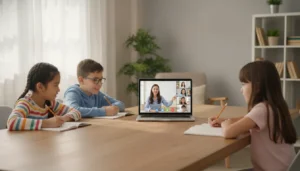
A great online program makes the virtual classroom feel alive and engaging. At Ideal School, students participate in live online classes where they can ask questions, join discussions, and see their teachers and classmates face-to-face. This isn’t a passive experience; it’s an active one. Teachers often assign group projects that require students to collaborate on presentations, solve problems together, and share ideas. These activities mirror the collaborative work they’ll encounter in higher education and future careers. It’s in these shared learning moments that students form bonds and friendships, learning to work with others who have different perspectives and backgrounds.
Connect with Local and Expat Communities
Your child’s social life isn’t limited to the screen. Online learning offers the flexibility to get more involved in your local community, whether you’re living abroad or in states like Arizona or North Carolina. Many families connect with local groups of homeschooling or online-schooling parents to share resources, plan field trips, and arrange playdates. This gives your child a circle of local friends to connect with in person. You can also enroll your child in local sports teams, art classes, or clubs. This combination of a global online classroom and local real-world activities gives your child a rich, well-rounded social experience.
What Does It Cost to Enroll in a Small Online Class?
Thinking about the cost of online school is a practical and important step. The price can vary quite a bit, but understanding the factors that influence tuition will help you find a program that fits your family’s budget. The good news is that many high-quality private online schools offer financial aid and flexible payment options to make an excellent education accessible. Let’s look at what you can expect.
Understanding Tuition by Grade Level
The cost of online education depends largely on the type of school. While some states like Arizona and Utah offer tuition-free public online schools for residents, most expat families find that private online schools are the best fit for their needs. Private school tuition can range from around $2,000 to over $10,000 per year. This price often depends on the grade level, as high school programs with specialized courses and labs may have higher costs than elementary programs. For a clear example of how costs are structured, you can review the tuition breakdown for different grade levels and programs.
Explore Financial Aid and Payment Options
The sticker price for a private online school doesn’t have to be the final price. Many schools are committed to making education accessible and offer various forms of financial assistance. When you’re exploring options, be sure to ask about scholarships, which can be based on academic merit or financial need. It’s also common for schools to provide flexible payment plans, allowing you to spread the cost over several months. Some even offer discounts for paying the annual tuition upfront or for enrolling more than one child. Don’t hesitate to reach out to a school’s admissions team to discuss what support is available for your family.
Your Checklist for Choosing the Right Program
Choosing an online school is a big decision, but it doesn’t have to be overwhelming. With the right information, you can confidently select a program that supports your child’s academic growth and fits your family’s lifestyle. This checklist will guide you through the essential factors to consider, helping you ask the right questions and identify the best possible fit for your young learner.
Key Questions to Ask Before You Enroll
First, confirm the school’s accreditation. A school’s accreditation from a recognized U.S. agency like Cognia ensures that its credits and diploma are widely accepted by other schools and universities. Next, ask about enrollment flexibility. Life as an expat family often means moving at unconventional times, whether you’re relocating from Arizona or Utah. Look for a school with rolling admissions that allows your child to start classes throughout the year, not just in the fall. Finally, check for global support. The school should be equipped to handle different time zones, offering accessible support and teachers who understand the needs of families living abroad.
Match the Program to Your Child’s Needs
Every child learns differently, so finding a program that adapts to their style is crucial. Does the school offer personalized learning plans? Look for flexible options like full-day, asynchronous, or mixed classes that can be tailored to your child’s pace and needs. An interactive school day is also important for engagement. The best programs feature live sessions where students can talk with teachers and collaborate with classmates. Make sure the school is staffed with certified teachers who are experts in online education and can provide the guidance your child deserves.
Spot the Red Flags in Online Programs
Be wary of programs that lack transparency or make unrealistic promises. A common myth is that online learning is isolating or less rigorous. In reality, a quality program fosters a strong sense of community and holds high academic standards. Another red flag is a program where the parent is expected to be the primary teacher. In a reputable online school, parents are learning coaches and motivators, while certified instructors handle the teaching. If a school’s curriculum seems vague or its teachers lack credentials, it’s best to continue your search. True educational excellence is always backed by a strong mission.
Related Articles
- Benefits of Smaller Class Sizes in Elementary Schools | Ideal School
- Guide to Accredited Online Bilingual Elementary Schools
- The Benefits of Online Education for Families – Ideal School
- Online Learning Benefits for Students – Ideal School
- Prepare Your Child for Online Classes at Home | Ideal School
Frequently Asked Questions
What will my role as a parent be if my child enrolls in an online school? Your main role is to be a supportive guide, not a teacher. In a quality online program, certified instructors handle the lesson planning, teaching, and grading. Your job is to create a good learning space at home, help your child manage their schedule, and offer encouragement. Think of yourself as a learning coach who stays in touch with teachers and celebrates your child’s progress.
How can my child build genuine friendships in an online setting? It’s a common question, and the answer lies in how the school intentionally creates community. Strong online programs design social interaction right into the school day. Through live video classes, students see and talk with their classmates regularly. Collaborative group projects also require them to work together, build trust, and learn from one another, which is how many real friendships begin.
My family might move back to the U.S. someday. How does an online diploma help with that transition? This is exactly where an accredited online school provides peace of mind. Because the curriculum aligns with U.S. standards, your child’s education remains consistent, preventing academic gaps. When a school is accredited, its credits and diploma are recognized by schools and universities across the country, making the transfer process to a school in a state like North Carolina or Arizona much smoother.
What if my child needs more support in one subject but is advanced in another? This is one of the best parts of a small online class structure. The personalized attention allows teachers to identify where your child excels and where they need extra help. For subjects where they need a challenge, they can move ahead, and for topics that are tougher, they can get one-on-one guidance. Many schools also offer supplemental classes or tutoring, so you can build a schedule that perfectly matches your child’s individual learning needs.
How does the bilingual program work in an online format? A great online bilingual program uses immersion and live interaction. Instead of just memorizing vocabulary, students learn subjects in both languages. In live classes, they speak and listen to fluent teachers and classmates, which helps them build conversational skills naturally. This immersive approach makes language learning dynamic and practical, turning it into a real communication tool rather than just an academic subject.

Written by
Eric C. Franzen
Eric C. Franzen is co-founder and owner of Ideal School, with 20+ years of experience as an educational leader and entrepreneur. He holds a BA in Education from the University of Washington and an MA in Educational Administration from Seattle Pacific University.
View LinkedIn Profile →