

What if your child’s classroom wasn’t limited by four walls or even state lines? What if their classmates and teachers came from all over the world, bringing diverse cultures and perspectives right into your home? This is the reality of modern online education. For families seeking a rich, multicultural learning experience, a Spanish English online immersion school West Virginia students can attend offers exactly that. It’s about more than just learning a second language; it’s about fostering true global citizenship and deep cultural awareness. We’ll explore how these interactive programs work, what to look for in an accredited school, and how this model prepares your child for a connected world.
Key Takeaways
- Immersion is a full educational approach, not just a language class: Students learn core subjects like math and science in both Spanish and English, which helps develop stronger problem-solving skills and a genuine appreciation for other cultures.
- You can be a great learning partner without speaking Spanish: Creating a supportive home environment is simple; try reading bilingual books, playing music in Spanish, and showing genuine interest in what your child is learning to reinforce their lessons.
- Accreditation and flexibility are essential when choosing a school: Ensure any online program is accredited to guarantee a high-quality education, and look for flexible scheduling options that fit your family’s life.
What Is a Spanish-English Online Immersion School?
A Spanish-English online immersion school is a program where students from kindergarten through 12th grade learn in two languages at the same time. Often called a “dual-language” program, this model provides a unique educational experience that helps your child become truly bilingual and biliterate. Instead of treating Spanish as a separate subject to be memorized, students learn core subjects like math, science, and history in both English and Spanish. This approach weaves language learning into the very fabric of their education, making it a natural and effective way to gain fluency. It’s a comprehensive academic path that prepares students to think, learn, and communicate in two of the world’s most spoken languages.
How Dual-Language Immersion Works
In a dual-language immersion classroom, instruction is split between English and Spanish. Your child might learn a new math concept in English in the morning and then apply it during a Spanish-language activity in the afternoon. This method reinforces their understanding of the subject matter while building their language skills simultaneously. Research shows that this approach does more than just teach a second language; it also supports cognitive development and can lead to stronger academic performance. By learning to process information in two languages, students develop better problem-solving skills and mental flexibility. This engaging environment also fosters a deep and genuine appreciation for different cultures.
Online vs. Traditional Immersion Programs
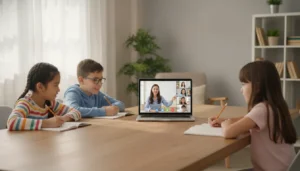
While traditional immersion schools are tied to a physical location, an online program offers incredible flexibility and access. For families in states like Arizona or New Hampshire, finding a local dual-language school can be a challenge. An online school removes that barrier, connecting your child with a global classroom from home. Students and expert bilingual teachers connect in real-time, creating a dynamic and interactive learning environment. This format allows for a diverse community of learners to come together, exposing your child to different accents and perspectives they wouldn’t encounter in a local school. It’s a modern approach to education that fits the needs of today’s families.
Key Features of Interactive Online Learning
A great online immersion school uses technology to create a rich, interactive experience. The learning platform might feature a “Spanish view,” allowing students to see all their digital assignments, games, and videos in Spanish with a single click. This feature deepens the immersion and gives them more control over their learning. Beyond the technology, top online schools offer a variety of programs to fit your family’s schedule and educational goals. Whether you need a full-day program, supplemental classes to support your homeschool curriculum, or one-on-one tutoring, you can find an option that works for you. This flexibility makes a world-class bilingual education accessible to more families than ever before.
Why Choose a Spanish-English Immersion Education?
Deciding on the right educational path for your child is a big deal. You want them to have every advantage, from strong academic skills to a broad worldview. A Spanish-English immersion education offers exactly that, blending language learning with cultural understanding to prepare them for a connected world. It’s more than just learning to speak another language; it’s about developing new ways of thinking, connecting with others, and opening up a world of possibilities for their future.
This approach goes beyond traditional language classes. In an immersion setting, subjects like math, science, and history are taught in both Spanish and English. This method helps children learn the language naturally, using it to understand complex ideas and communicate effectively. The result is a deep, lasting fluency and a set of skills that will serve them for a lifetime.
The Cognitive and Academic Benefits
When a child learns in two languages, their brain gets a fantastic workout. Research shows that bilingual education can improve cognitive functions, helping students become better problem-solvers and more creative thinkers. This mental flexibility often translates into stronger academic performance across all subjects. Students in immersion programs tend to be more focused and engaged in their schoolwork.
By constantly switching between languages, your child develops enhanced multitasking abilities and a sharper memory. These are not just classroom skills; they are life skills that will help them succeed in whatever they choose to pursue. An immersion program builds a powerful foundation, giving your child the tools to excel academically while developing a more agile mind.
Building Cultural Awareness and Global Connections
An immersion education is a window to the world. It teaches children to appreciate and understand different cultures from a young age, fostering empathy and a sense of global citizenship. At Ideal School, we focus on giving students a global perspective by connecting them with teachers and classmates from diverse backgrounds. This creates a rich, multicultural learning environment right from your home.
Your child won’t just learn Spanish; they’ll learn about the traditions, histories, and perspectives of Spanish-speaking communities. This exposure helps them build meaningful connections with people from different walks of life. They learn to see the world through multiple lenses, which is an invaluable skill in our increasingly interconnected society.
Opening Doors to Future Career Opportunities
In a global economy, speaking more than one language is a significant advantage. Being fluent in both Spanish and English can create a wealth of future career opportunities for your child. Many industries, from business and technology to healthcare and the arts, value bilingual employees for their ability to communicate with a wider range of people.
This educational path prepares students for success beyond the classroom. The critical thinking and cultural competency they gain are highly sought-after skills. By earning an American High School Diploma through a bilingual program, your child will be well-equipped for higher education and a competitive job market, ready to take on roles that require a global mindset.
Finding an Online Immersion School for West Virginia Students
When you’re looking for the right online immersion school for your child, it can feel like a huge task. You want a program that not only teaches a new language but also provides a top-tier education that fits your family’s life. For families in West Virginia, finding a school that offers a genuine dual-language experience means looking for specific qualities, from accreditation to flexible scheduling. Let’s break down what to look for to help you find a school where your child can truly flourish.
A Look at Ideal School’s Bilingual Programs
Ideal School is an internationally-accredited, dual-language, interactive online school for grades K-12. We connect students from dozens of countries in real-time with professional, bilingual teachers, creating a truly global classroom. Our curriculum allows your child to learn core subjects in both Spanish and English, interacting with peers and educators from diverse backgrounds. We offer a variety of learning formats to suit different needs, including a Full Day Program, asynchronous classes for self-paced learning, and supplemental courses. This structure ensures that every student can find a path that supports their academic and linguistic growth, right from your home in West Virginia.
What to Look for in an Accredited Online School
Accreditation is one of the most important factors to consider. It’s a formal recognition that a school meets high academic and operational standards. For your child, this means their credits are more likely to be accepted by other schools and colleges. When you’re evaluating a school, check for its accreditation status and see what governing bodies have approved its programs. A quality accredited school will have a well-defined curriculum, certified teachers, and clear learning objectives. It ensures the education your child receives is not only bilingual but also academically sound and respected worldwide.
Finding a Flexible Program for Your Family
Every family operates on a unique schedule, so flexibility is key. The right online school should offer programs that work with your life, not against it. Look for options like live, synchronous classes that create a structured school day or asynchronous classes that allow your child to learn at their own pace. Ideal School offers mixed classes that combine the benefits of both live instruction and flexible scheduling. This adaptability makes it easier for you to create a supportive language environment at home and stay involved in your child’s education without rearranging your entire life. A program that fits your family helps set your child up for long-term success.
How to Prepare for a Smooth Transition
Switching to a new school is a big step, and adding a bilingual online environment to the mix can feel like a lot to prepare for. But getting your child ready for a Spanish-English immersion program is easier than you might think. With a few simple strategies, you can create a supportive atmosphere at home that helps your child feel confident and excited from day one. The goal is to make this change feel like a fun new adventure for the whole family.
These steps will help you address common concerns and build a foundation for success, ensuring the transition to online immersion learning is seamless and positive.
Addressing Concerns About Language Mixing
One of the first questions many parents have is, “Will my child get confused learning two languages at once?” It’s a valid concern, but you can rest easy. It is completely normal for children in immersion programs to mix languages at first. You might hear them use a Spanish word in an English sentence or vice versa. This isn’t a sign of confusion; it’s a sign of their brain building new connections.
This initial period of language mixing is a natural part of the acquisition process. Think of it as their mind organizing a new, bilingual filing system. With consistent exposure in a structured program, they will quickly learn to differentiate between the two languages. The curriculum standards in accredited programs are designed to guide students through this phase, helping them become more proficient and confident in both languages over time.
Finding Great Bilingual Resources
You don’t have to be a Spanish speaker to support your child’s bilingual journey. There is a world of fantastic resources available to help you and your child. Start by exploring your local library for bilingual books, which often feature text in both English and Spanish. You can also find countless educational apps, websites, and TV shows designed to make language learning fun and interactive.
Many of these Spanish-language resources are created specifically to help parents understand the learning experience. Don’t hesitate to ask your child’s school for recommendations, too. A great school will be a partner in your child’s education and can point you toward tools and materials that complement their lessons.
Supporting Language Learning at Home
Creating a language-rich environment at home is one of the best ways to reinforce what your child is learning in their online classes. This doesn’t mean you need to start holding formal lessons at the dinner table. Instead, focus on gentle, consistent exposure. You can create a supportive language environment by playing music in Spanish during the day or watching a favorite family movie with Spanish audio and English subtitles.
Even small changes can make a big impact. Labeling common household items with their Spanish names can build vocabulary in a playful way. The goal is to show your child that Spanish is a living language that exists outside of their virtual classroom. This simple, everyday exposure will strengthen their skills and build their confidence.
Making the Most of Online Learning Tools
Online immersion schools offer a suite of digital tools designed to make learning dynamic and engaging. Before school starts, take some time to familiarize yourself with the learning platform your child will be using. Understanding how to check assignments, communicate with teachers, and access resources will help you provide better support from the beginning.
Consistency is key to success in an online program. By leveraging technology and engaging with the school’s platform, you can help your child stay on track. Many programs, like Ideal School’s Full Day Program, also use these tools to build a strong sense of community among students. Encourage your child to participate in virtual group projects and social activities to help them connect with their peers and feel like part of a team.
How to Enroll Your Child
Once you’ve found an online immersion school that feels right for your family, the next step is enrollment. This process is often more straightforward than you might think. Most schools are set up to guide you through each step, from the initial application to your child’s first day of class. The key is to gather your information, understand the requirements, and ask questions along the way. With a little preparation, you can ensure a smooth and exciting start to your child’s bilingual education journey.
Understanding Tuition and Payment Options
One of the first questions parents have is about the cost. For a quality Spanish-English online immersion school, you can generally expect the average tuition to be between $5,000 and $6,000 USD per year. It’s helpful to view this as an investment in your child’s cognitive development and future opportunities. Many schools, including Ideal School, are committed to making private education accessible. They often provide different payment options to fit your family’s budget. Be sure to review the school’s tuition page for a clear breakdown of costs, fees, and payment schedules so you can plan accordingly.
Your Step-by-Step Enrollment Guide
A major benefit of online education is its flexibility, which often extends to the enrollment process. Many online schools allow you to enroll your child at any time of the year, so you don’t have to wait for a traditional school calendar. The first step is typically to fill out an online application form. From there, you may need to submit documents like your child’s birth certificate and previous school records. Some schools might also schedule a brief virtual meeting or assessment to understand your child’s learning needs. The school’s admissions team is there to help you, so don’t hesitate to reach out with any questions.
Getting Your Tech Ready for School
To create a successful learning environment at home, you’ll need to have the right technology in place. Since students and teachers connect live and in real-time from many different countries, a stable setup is essential. At a minimum, your child will need a reliable computer or laptop, a high-speed internet connection, a webcam, and a microphone with a headset. Before enrolling, check the school’s website for any specific software or hardware requirements. Setting up a dedicated, quiet workspace for your child can also help them focus and get the most out of their full-day program.
Exploring Financial Aid and Scholarships
Don’t let tuition costs keep you from exploring a great educational opportunity. Many private online schools aim to make quality education affordable by offering different payment options and financial help. When you speak with an admissions advisor, be sure to ask about available scholarships, grants, or financial aid programs. Some schools offer sibling discounts or flexible payment plans that can make a significant difference. Proactively exploring these options can help ease the financial commitment and make a world-class bilingual education a reality for your child.
Setting Your Child Up for Success
Your child’s journey into bilingualism is a team effort, and your involvement is the most important piece of the puzzle. While our dedicated teachers guide the academic experience, the support you provide at home makes all the difference. Creating a positive and encouraging atmosphere helps your child build confidence and a genuine love for learning a new language. Here are some practical and enjoyable ways you can become your child’s best learning partner and set them up for success in their online immersion program.
Simple Ways for Parents to Get Involved
You don’t need to be fluent in Spanish to make a huge impact. One of the simplest ways to get involved is to show genuine curiosity about your child’s learning. Ask them about their day and what they learned in class, encouraging them to use new Spanish words they’ve picked up. Celebrate their progress, no matter how small. When they successfully use a new phrase or understand a concept, your excitement reinforces their effort. This active participation shows them that their bilingual education is a family value and something to be proud of.
Creating a Bilingual Environment at Home
Weaving Spanish into your daily life helps your child see it as a living language, not just a school subject. You can create a supportive language environment by incorporating Spanish-language materials into your home. Try reading a bilingual book together before bed, listening to music from Spanish-speaking artists during dinner, or watching a favorite movie with Spanish audio. Labeling common household items like the table (la mesa) or the door (la puerta) with sticky notes is another fun way to build vocabulary. These small additions make language practice a natural and effortless part of your routine.
Using Teacher Support and Tutoring
Think of your child’s educators as your partners. Our experienced teachers are here to provide guidance and support for your family. Don’t hesitate to reach out to them with questions or to discuss your child’s progress. They can offer valuable insights and resources tailored to your child’s needs. If you feel your child could use some extra one-on-one attention to grasp a specific concept or build confidence, our tutoring classes are an excellent resource. This targeted support can help your child overcome challenges and stay motivated on their learning path.
Fun Ways to Practice Language and Culture
Connecting language with culture makes learning more meaningful and exciting. Look for fun activities that allow your child to experience the richness of Spanish-speaking cultures. You could cook a traditional dish together, like tacos or arepas, while learning the Spanish names for the ingredients. Celebrate cultural holidays by learning about their history and traditions. Participating in local cultural events in areas like Arizona or North Carolina can also provide wonderful, immersive experiences. These activities transform language practice from a task into a fun adventure, creating lasting memories along the way.
Frequently Asked Questions
What if I don’t speak any Spanish? Can I still support my child’s learning? Absolutely. Your role is to be an encourager, not a Spanish teacher. You can support your child by showing genuine interest in what they’re learning, helping them find bilingual books or shows, and celebrating their progress. Creating a positive environment where they feel comfortable practicing is far more important than your own fluency. Your child’s teachers are the language experts; your job is to be their biggest fan.
How do students socialize and make friends in an online school? Socialization is a key part of our online classroom experience. Students interact daily with their teachers and classmates in live, real-time classes. They collaborate on group projects, participate in discussions, and get to know peers from many different cultural backgrounds. This creates a unique opportunity for them to form global friendships and develop cross-cultural communication skills that they wouldn’t find in a traditional school setting.
Will learning two languages at once confuse my child or slow down their progress in other subjects? This is a common concern, but research consistently shows the opposite is true. While it’s normal for children to mix words from both languages initially, this is a temporary and natural part of becoming bilingual. This process actually strengthens their cognitive skills, like problem-solving and multitasking. Immersion students often perform as well as or even better than their peers in core subjects because their brains are getting a great workout.
What does a typical school day look like in an online immersion program? A typical day is structured and engaging, much like a traditional school, but with more flexibility. Your child will attend live classes with their teachers and classmates for direct instruction and interactive activities. The day also includes time for independent work, projects, and breaks. Programs like our Full Day Program provide a consistent schedule that balances screen time with offline learning to keep students focused and motivated.
Is a diploma from an online bilingual school accepted by universities? Yes, a diploma from an accredited online school is recognized and accepted by colleges and universities. Accreditation is the key factor here; it certifies that the school meets high academic standards. When you choose an accredited program, you can be confident that the credits and diploma your child earns are valid and will prepare them for higher education and future career paths.

Written by
Eric C. Franzen
Eric C. Franzen is co-founder and owner of Ideal School, with 20+ years of experience as an educational leader and entrepreneur. He holds a BA in Education from the University of Washington and an MA in Educational Administration from Seattle Pacific University.
View LinkedIn Profile →