



Choosing an online high school diploma program is about more than finding coursework a student can complete whenever convenient. Parents also need to confirm who awards the diploma, how accreditation is documented, how credits are evaluated, and what support is available when independent study becomes difficult.
The best self paced online high school diploma option should match a student’s learning habits. It should also provide a credible diploma pathway, clear academic requirements, responsive guidance, and a schedule the family can sustain. Self-paced learning can offer flexibility, but it is not the same as having no structure or support.
Ideal School is an accredited online K-12 private school with live, synchronous instruction, so it should be evaluated as a structured alternative rather than a purely self-paced platform. The comparison begins by separating flexibility from academic accountability, then examining the criteria that make a program a sound fit.
What Makes the Best Self Paced Online High School Diploma Program?
The best self paced online high school diploma program is more than a library of independent courses. It should provide a complete pathway, a clear graduation plan, an official transcript, and a defined process for earning a diploma. Before comparing platforms, ask whether the provider is a school that awards the credential or a supplemental service that only supplies individual lessons.
Self-paced learning gives a student more control over when coursework is completed. That flexibility can be valuable, but it also requires consistent time management and study habits. A strong program combines independence with checkpoints, feedback, and reachable academic support. The Washington Administrative Code distinguishes asynchronous learning, which does not require participants to interact at the same time, from synchronous learning, which occurs in real time. Review these learning definitions when a program uses the terms interchangeably.
| Decision area | What to verify | Why it matters |
|---|---|---|
| Credential | Who awards the diploma, and what transcript does the student receive? | Course completion is not always the same as earning a recognized high school diploma. |
| Academic quality | Is the school accredited, and can you confirm the accreditor independently? | Accreditation is an important quality signal, although it is not a universal guarantee of admission or transfer. |
| Course structure | Are lessons fully self-paced, asynchronous with deadlines, or supported by live classes? | The right level of structure should match the student’s independence, schedule, and learning needs. |
| Support | How do teachers give feedback, monitor progress, and answer questions? | Flexible study is more sustainable when students are not left to solve every problem alone. |
Parents should also compare the program’s curriculum, credit policies, attendance expectations, and graduation requirements in writing. For a broader framework, use this guide to compare online high school options. If the goal is an American credential, review the American High School Diploma Program and confirm how enrollment, coursework, and transcript evaluation work before making a decision.
How Can You Verify Accreditation and Diploma Validity?
Accreditation is a useful quality signal, but it does not guarantee admission everywhere. Ask who accredits the school, verify that relationship in the accreditor’s directory, and review the diploma issuer and transcript process. Ideal School describes itself as internationally accredited. Families can review its accreditation information and confirm requirements with each receiving institution.
Confirm who awards the diploma
A course platform may provide individual classes without being the school that awards a complete high school diploma. Ask whether the student enrolls in the institution itself, who appears as the diploma issuer, and whether the program is a full diploma pathway or supplemental coursework. Review the American High School Diploma Program details, including the enrollment and completion requirements described by the school.
Ask how transcripts are created and sent
Before enrollment, request a clear explanation of the transcript process. Confirm which institution maintains the student’s academic record, what appears on the transcript, how completed coursework and credits are recorded, and who can send an official copy. These details matter when a student transfers schools, applies to college, or needs records for another receiving institution.
Check requirements with the receiving institution
Policies can differ among colleges, state agencies, scholarship programs, and future schools. Contact each receiving institution directly and ask whether it recognizes the accreditor, what transcript format it requires, and how it evaluates transfer credits or an online diploma. Keep written responses for your records. This verification is more reliable than relying on a label such as “best self paced online high school diploma” without checking the program’s actual issuer. Confirm the records process and any destination-specific requirements.
Is Self-Paced Learning the Same as Asynchronous School?
Self-paced and asynchronous describe different features of online learning. Self-paced means a student follows an individual timetable. Asynchronous means students and teachers do not need to meet at the same time. A course can be asynchronous yet include deadlines, feedback, and progress checks. Families should compare teacher access, required meetings, and academic structure instead of treating the labels as interchangeable.
Scheduling and teacher interaction
In a primarily asynchronous model, a student may choose when to watch lessons, read materials, and complete assignments. This can suit a learner with an unusual schedule or one who benefits from reviewing challenging concepts more than once. Parents should ask whether the coursework is supplemental or credit-bearing, who teaches it, how questions are answered, and when feedback is provided. Flexibility alone does not establish a complete diploma pathway.
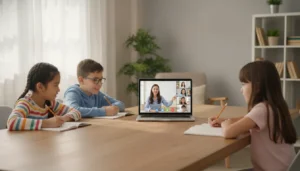
Synchronous instruction uses a shared timetable. Students and teachers meet in a virtual classroom in real time, allowing questions, discussion, collaboration, and immediate clarification. That structure can help some students build a daily routine and stay connected to teachers and classmates. A program can combine independent work with scheduled instruction. Families can review how mixed asynchronous and synchronous classes work together before choosing a model.

Accountability and student fit
The right structure depends on the student’s habits, learning preferences, schedule, and need for adult guidance. A highly independent student may manage asynchronous work well when requirements and support are clear. Another student may need live instruction, visible milestones, and consistent teacher contact to maintain momentum. Compare attendance expectations, assignment deadlines, assessment methods, communication channels, and progress monitoring rather than relying on the label alone.
Ideal School’s accredited diploma program is structured and synchronous, not a purely self-paced diploma course. Its virtual classrooms provide scheduled interaction with teachers and classmates. Self-paced work may be appropriate as supplemental learning, but families seeking a complete diploma should confirm how instruction, credits, records, and graduation requirements are managed. This distinction helps parents choose flexibility that matches the student’s actual support needs.
How Do Credits and Graduation Requirements Work?
A flexible schedule does not remove the need for a clear academic record. Before enrolling, ask how the school defines course credit, which requirements apply to the diploma, and how progress is documented. A credible program should be able to explain the path from completed coursework to an official transcript and diploma.
Transfer credit deserves particular attention. The school should review prior transcripts, course descriptions, grades, and completion dates before deciding which work can be accepted. Do not assume that every course transfers automatically. Ask for the evaluation in writing, including any remaining requirements, so the student and family can plan with the same information.
- Request a transcript review. Provide records from previous schools and ask the academic team to identify accepted transfer work, courses needing additional evidence, and requirements still outstanding.
- Map the course sequence. Confirm which subjects must be completed first and whether prerequisites, placement checks, or teacher approval affect enrollment. A well-ordered sequence helps prevent gaps that could delay graduation.
- Create an individual graduation plan. List each required course, its current status, expected completion window, and the person responsible for monitoring progress. The plan should be updated when transfer credit or course pacing changes.
- Verify transcript documentation. Ask how grades, credits, attendance or participation, course titles, and graduation status will appear on the official transcript. Also confirm who issues the diploma and how families receive final records.
- Check requirements before the final term. Review the plan with the school early enough to resolve missing documents, incomplete coursework, or transfer-credit questions before the intended graduation date.
These questions are useful whether a student needs a complete diploma pathway or is adding selected subjects to an existing homeschool plan. Families comparing the American High School Diploma Program can use the same checklist to understand the program structure, documentation, and next steps without relying on an unsupported credit comparison.
What Support Should Students Receive While Learning Independently?
Independent study should give a student control over pace without removing access to people who can guide the work. Before choosing a program, ask how learners contact qualified teachers, how feedback is delivered, and who notices when assignments or assessments begin to fall behind. Flexibility is most useful when it is paired with clear checkpoints and dependable support.
Access to qualified teachers
A strong program explains which educators teach each subject and how students interact with them. Support may include scheduled lessons, office hours, written responses, live discussion, or individual academic help. It should be predictable rather than dependent on a parent finding every answer alone. Subject specialists can give more precise guidance when a student needs help with a complex concept or feedback on an extended project.
Parents should distinguish asynchronous assistance from real-time instruction. A self-paced course may provide recorded lessons and occasional teacher contact, while a structured online school may use synchronous classrooms where teachers and peers engage at set times. Neither model is automatically right for every student. The relevant questions are whether the schedule fits the family and whether the student needs immediate interaction to maintain momentum.
Feedback and progress monitoring
Useful feedback tells students what they understand, what needs revision, and what action to take next. Ask how work is graded, when comments are returned, and how misunderstandings or academic concerns are escalated. The program should also identify who coordinates the student’s overall plan, such as an advisor, counselor, or academic coordinator.
Parents should be able to see meaningful progress indicators, including grades, submitted and missing work, participation records, upcoming assessments, and the official academic record when appropriate. A dashboard is less valuable if no educator follows up when a pattern develops. The national standards discussion provides additional context on teaching, student support, and accountability in online programs.

Connection with peers and parents
Independent learners still benefit from an academic community. Collaborative projects, peer discussion, group activities, and live classroom participation can provide practice in communication and shared problem-solving. Parents should also confirm what they can see and who contacts them when support is needed. Ideal School describes small classes, live interaction, subject specialists, and a multicultural learning environment as parts of its structured model. Families can review the full-day online program as one alternative to purely self-paced study.
How Does the Best Self Paced Online High School Diploma Option Compare With Ideal School?
A self-paced program gives a student more control over when to complete coursework, while a virtual private school may use scheduled classes and regular teacher contact. The best fit depends on the learner’s independence, family schedule, diploma goals, and need for accountability. Compare the credential, transcript process, support, and pacing rules before choosing a model.
Ideal School offers a structured alternative. It is an internationally accredited virtual K-12 private school based in Seattle that serves students globally. Its model uses live, synchronous instruction in two-way bilingual immersion classrooms, so students learn with teachers and classmates at scheduled times. The school also provides subject specialists and small classes, creating regular opportunities for explanation, discussion, feedback, and connection.
A scheduled, full-day academic model
For families seeking a complete school experience, Ideal School’s full-day online program covers English Language Arts, Spanish Language Arts, mathematics, science, and social studies. Middle and high school classes are listed as running approximately from 7:30 AM to 2:35 PM. The predictable academic day may help students who benefit from external structure and direct teacher interaction.
Accreditation and diploma pathway
Families should still examine the details of any school’s accreditation, transcript process, and diploma requirements. Ideal School describes itself as accredited, and parents can review the school’s accreditation information alongside its American High School Diploma Program. Accreditation is important due diligence, but it is not a universal guarantee of admission to every college or institution. Families should confirm requirements with the institutions their student may later attend.
Ideal School also offers mixed asynchronous and synchronous classes and subject-selective supplemental options. This gives families who prefer a homeschool-led approach a way to add live bilingual instruction without assuming the full-day schedule. The best choice depends on whether the student needs maximum pacing control, a complete structured school day, or targeted academic support.
Which Program Fits Your Student and Family?
The best choice depends on how your student learns, plans, and manages daily responsibilities. Compare independence, schedule, academic goals, language needs, and available family support. A self-paced program may suit a highly independent learner, while scheduled online classes may provide the routine and teacher contact another student needs.
How much independence is realistic?
Self-paced coursework can suit a student who starts tasks without repeated reminders, breaks large assignments into smaller steps, and asks for help early. If your student needs regular accountability, live teacher contact, or a predictable class rhythm, a fully independent model may create unnecessary friction. Look for clear checkpoints, feedback timelines, and a defined way to reach an instructor.
What schedule does your family actually need?
Map the week before choosing a program. Consider work, travel, health needs, athletics, caregiving, and time-zone differences. A flexible program may be useful when availability changes from day to day. A scheduled virtual school may be a better fit when consistent class times help your student stay engaged. Families comparing formats can compare online high school options by looking at both flexibility and live interaction.
Which academic and language goals matter?
Check whether the program offers the subjects, language environment, and level of teacher support your student needs. A family seeking ongoing Spanish development may value a bilingual model rather than isolated independent assignments. A student preparing for a transfer should also ask how transcripts, credits, and graduation documentation are handled. Review the American High School Diploma Program to distinguish a complete diploma pathway from supplemental coursework.
Can the family support the logistics?
Confirm who monitors progress, where study will happen, how technology is supported, and what happens when work falls behind. Ask the school which requirements belong to the student, the parent, and the school. Then verify accreditation and curriculum details, rather than relying on rankings or testimonials alone. Reading accredited online high school programs reviews can help you create better questions, but the school itself should provide the documents and explanations you need.
Explore enrollment options for your student
Frequently Asked Questions
How can parents verify that an online diploma program is accredited?
Ask which organization accredits the school, confirm the accreditor directly, and review how the program issues transcripts and diplomas. Accreditation reflects a peer-review process focused on educational quality and integrity, but it is not a universal guarantee of admission. Families should also ask the receiving college, employer, or education authority how it evaluates the credential.
Is self-paced learning the same as asynchronous online school?
No. Asynchronous learning means students and teachers do not have to participate at the same time, while self-paced learning gives the student more control over the speed of progression. A program can be asynchronous while still using deadlines, checkpoints, teacher feedback, and scheduled support. Ask how progress is monitored before choosing a fully independent format.
How do credits transfer into an online high school diploma program?
Request a formal transcript review before enrollment. The school should explain which prior courses may transfer, what documentation is required, which remaining courses are needed, and how graduation requirements will be tracked. Do not rely on a general promise that credits transfer, because the receiving institution may apply its own evaluation rules.
Can a student combine self-paced coursework with live instruction?
Yes, some families choose a blended model. Independent work can provide flexibility, while live classes offer routine, teacher interaction, and timely feedback. Ideal School presents a structured, accredited model with synchronous virtual classrooms, and it also offers subject-selective homeschool supplemental classes for families seeking focused academic support. Review the schedule and support model to confirm the fit.
Is Ideal School a purely self-paced online high school?
No. Ideal School is an internationally accredited online K-12 private school with live, two-way dual-language instruction. Its model may suit families who want a stable virtual setting with structure and teacher interaction rather than a program built entirely around independent pacing. Review the American High School Diploma Program for the specific diploma pathway and requirements.
Ready to Explore the Right Diploma Path
Choosing an online high school is easier when the program’s structure, support, and diploma pathway match your student’s goals. Ideal School can help you review its accredited virtual model and determine whether it fits your family’s needs. Explore Ideal School’s enrollment information to get started and consider the next step with clearer expectations.

Written by
Eric C. Franzen
Eric C. Franzen is co-founder and owner of Ideal School, with 20+ years of experience as an educational leader and entrepreneur. He holds a BA in Education from the University of Washington and an MA in Educational Administration from Seattle Pacific University.
View LinkedIn Profile →