

Living abroad is an incredible adventure, but it comes with unique challenges, especially for your child’s education. Moving between countries can mean switching schools, adapting to new curriculums, and losing academic momentum. You need a constant in a life of change, and an online program can provide that powerful anchor. Finding the right accredited K-12 online school for expat families ensures your child receives a consistent, high-quality education no matter where your journey takes you. This guide will walk you through the essential factors to consider, from curriculum to community, so you can find a perfect fit.
Key Takeaways
- Prioritize Accreditation Above All Else: Think of accreditation as the ultimate seal of approval. It confirms a school’s quality and ensures your child’s credits and diploma will be recognized by other schools and universities, which is essential for globally mobile families.
- Find a Program That Matches Your Lifestyle: The right online school should adapt to your family, not the other way around. Seek out flexible options like asynchronous or mixed classes to create a schedule that works across time zones and supports your child’s unique needs.
- Evaluate the Entire Support System: A great school offers more than just a curriculum. Investigate the quality of the teachers, the availability of tutoring, and the opportunities for personalized learning to make sure your child will have a strong network helping them succeed.
Why Accreditation Should Be Your Top Priority
When you start searching for an online school, the number of options can feel overwhelming. How do you sort through them all to find a program that’s not only effective but also legitimate? The answer lies in one word: accreditation. Think of it as your non-negotiable starting point. Accreditation is the single most important factor in your search, acting as your guarantee of quality, credibility, and stability for your child’s education, especially when your family lives abroad.
An accredited school has passed a thorough review by an independent organization, confirming that its curriculum, teachers, and student services all meet high standards. This isn’t just a nice-to-have feature; it’s a fundamental requirement for ensuring your child’s academic progress is recognized and valued, no matter where your family’s adventures take you. Choosing an accredited program means you are investing in a seamless, high-quality education that provides consistency and excellence, even when life involves crossing borders. It’s the best way to ensure your child’s learning journey continues without interruption.
What Does “Accredited” Mean?
So, what exactly does “accredited” mean? In simple terms, it’s an official seal of approval for a school. Accreditation is a formal and intensive review process conducted by a recognized external agency. These organizations, like Cognia, evaluate every aspect of the school, from its academic programs and teacher qualifications to its operational integrity and student support systems.
This process is far from a simple checkmark; it’s a deep dive to ensure the institution is delivering on its promises. When a school earns accreditation, it signifies that it has met or surpassed a strict set of standards for educational quality. It also means the school is committed to continuous improvement, as it must undergo periodic reviews to maintain its accredited status.
How Accreditation Safeguards Your Child’s Education
For families who move frequently, educational consistency can be a major challenge. Accreditation is your assurance of a stable, high-quality education that isn’t disrupted by relocation. An accredited online school offers a dependable learning environment, allowing your child to stay on track with their studies without interruption, whether you’re moving to a new country or just a new city.
This external validation gives you peace of mind, knowing the school is accountable to a respected educational authority. It confirms that the institution is dedicated to its educational mission and provides a learning experience that genuinely supports student growth and success. It’s the difference between hoping your child gets a good education and knowing you’ve chosen a school that is proven to provide one.
Will Your Child’s Credits Transfer?
This is one of the most critical questions for any parent: will the credits my child earns actually be accepted elsewhere? With an accredited school, the answer is a resounding yes. Credits from an accredited institution are widely recognized by other schools and universities. This means if your family relocates to a state like Arizona or Utah, your child’s transition into a local school system will be much smoother.
More importantly, an accredited American High School Diploma opens doors to higher education opportunities worldwide. Colleges and universities view accreditation as proof of a legitimate and rigorous academic background, which is essential for the application process. It ensures your child’s hard work is recognized, paving the way for their future academic and career goals.
Online School Myths, Debunked
Making the switch to online school can feel like a big step, and it’s normal to have some reservations. Many of the common worries parents have are based on outdated ideas about virtual learning. Let’s walk through some of these myths and separate fact from fiction so you can make your decision with confidence.
Myth: Online Learning Isn’t as Good as In-Person
It’s a common concern: can an online classroom truly match the quality of a traditional one? For many families, especially those living abroad or moving frequently between places like Arizona and New Hampshire, the answer is a resounding yes. High-quality online schools offer a stable, consistent education that isn’t disrupted by relocation. Instead of changing schools and curriculums with every move, your child benefits from a steady learning path and a curriculum that meets rigorous academic standards. This consistency can be a powerful advantage, providing a reliable educational anchor no matter where in the world your family calls home.
Myth: Students Learn in Isolation
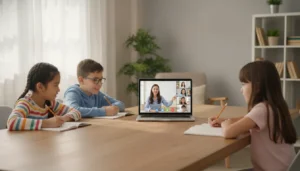
The image of a student learning alone in front of a screen is one of the most persistent myths about online education. In reality, modern online schools are designed to foster connection and community. Through live, interactive classes, students engage directly with their peers and certified teachers in a dynamic virtual classroom. They collaborate on projects, participate in discussions, and build friendships with classmates from diverse backgrounds around the globe. For many children of expat families, this creates a unique and supportive network of friends who understand their lifestyle, offering a sense of belonging that can be hard to find in a traditional school setting.
Myth: Universities Won’t Accept an Online Diploma
This is perhaps the most critical question for parents of high schoolers, and the answer lies in one word: accreditation. Universities in the United States and abroad absolutely recognize diplomas from accredited online schools. The key is ensuring the school has a legitimate accreditation from a recognized agency, which validates the quality and rigor of its academic programs. When your child earns an American High School Diploma from an accredited institution, they are receiving a credential that holds the same weight as one from a traditional brick-and-mortar school, preparing them for higher education anywhere in the world.
Your Checklist for Choosing an Accredited Online School
Once you’ve confirmed a school is accredited, the real research begins. Finding the right fit for your family goes beyond a simple stamp of approval. You need a school that aligns with your child’s learning style, your family’s lifestyle, and your long-term educational goals. Think of this as your personal checklist. As you compare different online schools, use these points to guide your decision and find a program where your child will truly thrive, no matter where you are in the world.
A Strong Curriculum and U.S. Diploma Options
A world-class education starts with a strong curriculum. Look for a school with clear, high curriculum standards that challenge students and prepare them for the future. For many expat families, a key consideration is the diploma. An accredited American High School Diploma Program is recognized by universities worldwide, giving your child a competitive edge when applying to college. This credential provides a reliable and globally accepted form of academic achievement, ensuring your child’s hard work is valued whether they choose to attend university in the United States, your host country, or anywhere else.
Opportunities for Bilingual Learning
Living abroad presents a unique opportunity for your child to become bilingual, a skill that offers lifelong cognitive and cultural benefits. Some online schools go beyond just offering a second language as a separate subject. True bilingual programs immerse students in two languages, building fluency and a deeper cultural understanding. This approach can help your child connect with their new community or maintain a strong link to their heritage. When vetting schools, ask about their approach to language instruction and how they integrate it into core subjects. A program with a dedicated Language Institute shows a serious commitment to developing multilingual students.
Qualified Teachers Who Understand Online Education
An online school is only as good as its teachers. It’s not enough for instructors to be experts in their fields; they also need to be skilled at creating engaging and supportive virtual classrooms. The best online educators know how to connect with students one-on-one, provide personalized feedback, and foster a sense of community from a distance. Before enrolling, take a look at the school’s faculty page to learn about our teachers and their qualifications. Great teachers are the heart of a great school, and they make all the difference in your child’s learning experience and academic success.
Flexible Schedules for Your Family’s Lifestyle
One of the greatest advantages of online school for expat families is flexibility. Your child’s education should fit your life, not the other way around. Look for a school that offers different program formats to accommodate your schedule, especially when dealing with time zones. Asynchronous classes allow students to complete coursework on their own time, which is perfect for families who travel or have other commitments. Other programs offer mixed classes that combine self-paced learning with live sessions, giving your child both independence and real-time interaction with teachers and peers. This adaptability ensures a consistent, high-quality education from anywhere.
Finding the Right Program Format for Your Family
One of the best parts of online education is its flexibility. Unlike a traditional brick-and-mortar school, you aren’t limited to a single, rigid structure. The right online school will offer a variety of program formats, allowing you to choose the one that truly fits your family’s lifestyle, your child’s learning preferences, and your unique circumstances as a family living abroad.
Maybe you want the structure of a full school day, or perhaps your child is a competitive athlete who needs a more flexible schedule. Maybe you’re a homeschooling family looking for specific courses, or your high schooler is focused on earning a diploma that will open doors to universities worldwide. Let’s look at some of the most common program formats so you can find the perfect match for your family.
Full-Day Online Programs
If you’re looking for a comprehensive and structured educational experience, a full-day program might be the perfect fit. These programs replicate the immersive environment of a traditional school day, with a complete schedule of live classes, interactive lessons, and collaborative projects. This format provides a stable, high-quality education that your child can access from anywhere in the world. It’s an excellent choice for families who want a clear routine and for students who thrive on consistent interaction with their teachers and peers. It ensures a well-rounded education covering all core subjects and electives, all within a supportive online community.
Asynchronous and Mixed Learning Options
What if your family’s schedule is constantly changing? That’s where asynchronous and mixed learning models shine. Asynchronous learning allows your child to complete coursework on their own schedule, without mandatory live class times. This is ideal for families in different time zones or for students with significant commitments outside of school. Mixed classes, on the other hand, offer a blend of both, combining the flexibility of self-paced work with scheduled live sessions for direct instruction and group activities. This hybrid approach gives your child the autonomy to manage their time while still providing valuable real-time connection with educators and classmates.
Supplemental Homeschool Classes
For families who have already established a homeschool routine, supplemental classes can be a game-changer. These individual courses allow you to enrich your child’s education without enrolling them in a full-time program. You can fill curriculum gaps, add engaging electives like a new language, or provide access to advanced or AP-level subjects. This is a fantastic option for families who want to customize their child’s learning path, whether you’re following specific homeschool guidelines in a state like Utah or looking to add challenging courses to your child’s studies in North Carolina. It’s an easy way to access expert instruction through supplemental homeschool classes.
American High School Diploma Program
For many expat families, the ultimate goal is ensuring their child has access to higher education opportunities around the globe. Earning an American High School Diploma online provides a reliable and globally recognized credential. This diploma is a key that opens doors to universities not just in the United States but worldwide. It signals to admissions officers that your child has completed a rigorous and standardized course of study. This provides incredible peace of mind, especially for families who may eventually return to the U.S., as the diploma is accepted by universities from Arizona to New Hampshire.
Beyond the Classroom: What Support Services to Expect
A great online school does more than just deliver lessons through a screen. It creates a supportive environment that helps your child succeed academically and personally, no matter where you are in the world. The best programs understand that learning extends beyond virtual classroom walls. They offer a robust network of services designed to help students with everything from tough homework problems to managing a schedule across different time zones. When you’re vetting schools, look closely at these support systems. They are often the difference between a program that simply works and one where your child truly thrives. This support is a cornerstone of a quality education, ensuring that the flexibility of online learning doesn’t come at the cost of structure or guidance.
For families living abroad, these services are not just nice-to-haves; they are essential. Think about the transition your child is making. They might be adapting to a new culture, a new language, or simply a new way of learning. A school that provides comprehensive support acknowledges these challenges and offers real solutions. From academic help that keeps them on track to personalized plans that honor their learning style, these features create a safety net. They empower students to take ownership of their education with confidence. This holistic approach is a key indicator of a school’s commitment to student success, proving they are invested in the whole student, not just their test scores.
Academic Tutoring and Language Support
Even the brightest students need a little extra help sometimes. Look for a school that offers accessible academic support. Many top online programs provide one-on-one or group tutoring classes to help students work through challenging subjects. This is especially important in a bilingual setting. If your child is learning a new language or taking subjects like math and science in a non-native tongue, having dedicated language support is critical. A strong Language Institute can provide the focused instruction they need to build confidence and fluency, ensuring they don’t fall behind. This kind of targeted help makes a world of difference in a student’s academic journey.
Scheduling Flexibility Across Time Zones
One of the biggest challenges for families living abroad is the time difference. Your child’s education shouldn’t mean 3 a.m. algebra classes. A school designed for global families will offer scheduling that works for you, whether you’re in North Carolina or on the other side of the world. Look for programs with asynchronous classes, which allow students to complete assignments on their own time. Many schools also offer mixed classes that combine self-paced work with optional live sessions recorded for later viewing. This flexibility gives your family the freedom to create a schedule that fits your lifestyle, not the other way around. It ensures learning happens when your child is most alert and ready.
Personalized Learning Plans
Online education offers a unique opportunity to tailor learning to your child’s individual needs. Unlike a traditional classroom where the teacher must address dozens of students at once, online schools can create a more personalized path. This means your child can spend extra time on concepts they find difficult and move more quickly through material they master easily. The best programs achieve this through dedicated teachers who provide regular one-on-one feedback and adjust learning plans as needed. This approach ensures your child is always challenged but never overwhelmed. It’s a student-centered model that respects their unique pace and learning style, helping them build both knowledge and confidence.
Making Your Final Choice: How to Vet Online Schools
You’ve checked for accreditation, reviewed the curriculum, and confirmed the school offers the flexibility your family needs. Now comes the most personal part of the process: getting a true feel for the school’s environment and community. This is where you move beyond the brochure and find out if a school is the right fit for your child and your family’s unique circumstances. Whether you’re preparing for a move from Arizona or are already settled abroad, taking these final steps will give you the confidence to make your decision.
Vetting a school is about more than just facts and figures; it’s about picturing your child thriving in that learning environment. It’s your chance to ask detailed questions, see the platform in action, and hear directly from the people who know it best. Think of it as the final walkthrough before you commit. A quality institution will welcome your questions and provide transparent answers. By reviewing feedback, attending a virtual session, and speaking with an advisor, you can ensure the school truly delivers on its promises and will support your family’s journey. This final evaluation helps you find a stable, high-quality education that isn’t disrupted by frequent relocations, giving your family a consistent and supportive academic home base no matter where you are in the world.
Review Testimonials and Parent Feedback
Hearing from other families gives you a real-world look into the school experience. While a school’s website provides the official story, testimonials and reviews offer genuine insight from parents who have been in your shoes. Look for feedback from other globally mobile families who have managed moves, different time zones, and cultural adjustments. Their stories can highlight how the school provides stability and high-quality education amidst the challenges of an international lifestyle. You can often find parent testimonials on a school’s website that speak directly to the student experience, teacher support, and community engagement. These personal accounts are invaluable for understanding the day-to-day reality of online learning.
Schedule a Virtual Tour or Info Session
The best way to understand a virtual classroom is to see it for yourself. Most online schools offer virtual tours or information sessions where you can observe the learning platform and see how teachers and students interact. This is your opportunity to assess the technology, the engagement level in a live class, and the overall atmosphere. Does the platform seem intuitive and easy for a student to use? Are the teachers engaging and responsive? An info session can also clarify the school’s mission and educational philosophy, helping you see if its values align with your own. It’s a crucial step to confirm that the school’s marketing matches the actual classroom experience.
Connect with an Admissions Advisor
An admissions advisor is your personal guide to the school. This is your chance to ask all the specific questions related to your family’s situation. For instance, if you’re moving from a public school in Utah or North Carolina, you can ask how the school will help your child transition. You can also discuss program details, such as what it takes to earn an American High School Diploma from abroad or how the school supports students in different time zones. A good advisor will listen to your needs and help you determine if the school is the right choice, so come prepared with a list of your most important questions.
The Enrollment Process: A Step-by-Step Guide
Once you’ve found an online school that feels like the right fit, the next step is enrollment. This part can feel a little overwhelming, but it doesn’t have to be. Think of it as a series of simple, manageable steps to get your child set up for success. We’ll walk through exactly what you need to do, from gathering your paperwork to asking the final, critical questions before you make your commitment. Breaking it down this way helps make the entire process feel much more straightforward. Let’s get started.
Gather Your Documents
The first step is to collect all the necessary paperwork. Most online schools will ask for similar documents to verify your child’s identity and academic history. You’ll generally need proof of age, like a birth certificate or passport, and proof of residence, which could be a recent utility bill or lease agreement. It’s also a good idea to have your child’s previous school records or transcripts on hand, especially for older students. To make things easy, create a digital folder on your computer to store scans of these documents. Before you begin, always check the school’s admissions page for a specific checklist so you know you have everything you need.
What to Know About Tuition and Payments
Understanding the financial side of private online education is a key part of the process. Unlike public schools, private online schools require tuition. This investment covers everything from the curriculum and technology platforms to the salaries of highly qualified teachers and support staff. When you review the tuition fees, look for what’s included and ask about payment plan options. Some families residing in the U.S. may wonder about state-funded aid. While programs exist in states like Arizona and New Hampshire, they are typically for residents and vary widely. For most international families, the cost is paid directly to the school, so be sure to find a program that aligns with your family’s budget.
Questions to Ask Before You Commit
Before you sign the final papers, take a moment to ask a few last questions. This is your chance to confirm that the school meets all your non-negotiables. First and foremost, confirm the school’s accreditation. Reputable institutions will have a recognized accreditation, like the one from Cognia, which ensures quality and accountability. This is crucial for ensuring credits can transfer and that the diploma is widely accepted. Also, ask about the qualifications of the teaching staff and what kind of support is available if your child needs extra help. For families who move often, it’s wise to confirm the school’s flexibility and how it supports students across different time zones.
Related Articles
- Accredited American Diploma: A Foreign Student’s Guide
- 6 Best Accredited Online High Schools for 2026
- How to Choose a NH Accredited Online Private School
- Accredited Online Homeschooling Programs
- Accredited Online Schools: Top Advantages – Ideal School
Frequently Asked Questions
How do I verify a school’s accreditation for myself? This is a great question, and it’s simpler than you might think. A reputable school will proudly display the name of its accrediting agency, like Cognia, on its website. Your next step is to go directly to the accrediting agency’s own website. They usually have a searchable database of all the institutions they have accredited. By finding the school in that official directory, you can be completely confident that its accreditation is legitimate and current.
How will my child make friends and feel connected in an online school? This is a top concern for so many parents, and it’s completely understandable. Modern online schools are designed specifically to build community. Students interact daily with their classmates and teachers during live, interactive classes. They collaborate on group projects, participate in discussions, and get to know peers from all over the world. Many children of families living abroad find a unique sense of belonging with others who share similar life experiences, creating a strong and supportive social network.
How do I choose between a structured full-day program and a more flexible one? The best way to decide is to consider your child’s personality and your family’s daily life. If your child thrives on routine and you want a comprehensive schedule that mirrors a traditional school day, a full-day program is an excellent choice. However, if your family travels frequently, lives in a challenging time zone, or if your child has major commitments like competitive sports, a more flexible option like asynchronous or mixed classes would be a better fit. These programs allow learning to happen around your schedule.
How much personal attention will my child actually get from teachers? In a high-quality online school, students often receive more personalized attention than they would in a crowded traditional classroom. Teachers in an online setting are trained to connect with students individually. They provide direct feedback on assignments, hold one-on-one meetings to discuss progress, and are available to answer questions. Because the learning platform tracks student performance, teachers can easily see where a student is excelling or struggling and offer the specific support they need to succeed.
What is the transition like for a student moving from a traditional school to an online one? The transition is often smoother than parents expect, especially when the school has strong support systems in place. The first few weeks are an adjustment period, but good programs are designed to help new students get comfortable with the technology and the new learning style. Teachers and advisors play a big role in welcoming students, helping them get organized, and connecting them with their new classmates. The flexibility of the schedule also helps, as it allows students to adapt at a comfortable pace.