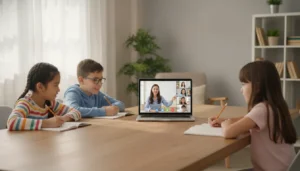


Have you noticed your child’s excitement for school starting to fade? A dip in motivation is one of the most common and concerning challenges of online learning. It’s not a reflection of your child’s ability or your parenting; it’s a natural response to a learning environment that can sometimes feel isolating and passive. Many students having trouble with online classes simply miss the energy and direct connection of a physical classroom. From the lack of face-to-face interaction to the mental drain of constant screen time, several factors can contribute to this slump. Here, we’ll explore the root causes of this motivation dip and discuss how you can help reignite your child’s curiosity and engagement with their education.
Key Takeaways
- Establish a structured home learning environment: A consistent daily routine and a dedicated, distraction-free workspace provide the foundation your child needs to stay focused and engaged with their studies.
- Choose a school with robust support systems: The right online school does more than deliver lessons; it offers accessible teachers, fosters peer connections, and provides a clear framework that helps students feel connected and accountable.
- Balance support with fostering independence: Your role is to be a guide, not a micromanager. Help your child develop crucial skills like time management and problem-solving so they can confidently take ownership of their education.
What Are the Toughest Parts of Online School?
Online school offers incredible flexibility for families, but it’s not always a walk in the park. If you’ve found yourself struggling to balance your child’s education with the realities of learning from home, you are definitely not alone. Understanding the common hurdles is the first step toward finding solutions that help your child not just succeed, but truly thrive in a virtual environment. From spotty Wi-Fi cutting out during a crucial lesson to keeping your student motivated day after day, these obstacles are a normal part of the online learning experience. The good news is that they are manageable. By recognizing these challenges head-on, you can create a more supportive and effective educational atmosphere at home and choose a school that is equipped to help you along the way.
Navigating Tech Troubles and Spotty Wi-Fi
Few things are more frustrating than a frozen screen during a class discussion or an exam that refuses to submit. Technical glitches are an unavoidable part of digital learning, and for some students, just getting comfortable with new software can be a challenge. On top of that, a reliable internet connection isn’t a given for everyone. Whether you’re in a rural part of Utah or a growing community in North Carolina, inconsistent service can interrupt learning and cause a lot of stress. Finding a school with a strong support system and patient teachers who understand these issues can make all the difference when technology doesn’t want to cooperate.
Missing Face-to-Face Connections
In a virtual classroom, students miss out on the spontaneous, in-person interactions that build camaraderie in a traditional school. It can be harder to ask a teacher a quick question after class, understand a classmate’s nonverbal cues during a group project, or simply feel the energy of a room full of peers. This lack of direct contact can sometimes lead to feelings of loneliness or make it more difficult for a student to feel connected to their school community. That’s why the role of our teachers is so critical. Educators who are skilled at building genuine relationships through a screen can help bridge that gap and ensure every student feels seen, heard, and supported.
Juggling Schedules and Staying Motivated
Without the ringing bells and structured periods of a physical school, creating a consistent daily routine at home can be a major challenge for parents. You’re often asked to be the motivator, timekeeper, and tech support all at once, and it can be tough to get your child energized for class when their learning environment is also their living room. This is especially true for programs with more asynchronous, flexible schedules. Finding a program that offers a healthy balance, like mixed classes with both live instruction and independent work, can provide the structure some students need to stay on track and motivated throughout the day.
Tuning Out At-Home Distractions
The home is full of potential distractions, from the family pet wanting to play to a sibling watching TV in the next room. Without a teacher’s physical presence to help guide their attention, some students may find it hard to focus on their lessons. Procrastination can easily creep in when a student feels unsupervised, which can lead to rushed assignments and added stress. Creating a dedicated, quiet workspace is a great first step. For families that need more structure, supplemental homeschool classes can provide the focused academic time needed to keep learning on track and minimize the impact of at-home distractions.
Overcoming Feelings of Isolation
One of the biggest emotional challenges of online learning is the potential for social isolation. School is where many children build their first friendships and learn important social skills. When that interaction is limited to a screen, it’s natural for them to feel disconnected from their peers. According to researchers at Harvard, forging strong relationships is a critical part of the entire learning ecosystem. A quality online school recognizes this and actively creates opportunities for students to connect, collaborate on projects, and build a true sense of community with classmates from around the world, ensuring they feel like part of a team.
How Do These Hurdles Affect School Performance?
When students face challenges like tech glitches, loneliness, and at-home distractions, it’s not just a matter of a tough day. These obstacles can have a real and measurable effect on their academic success and overall well-being. It’s a pattern many parents see, whether they live in Arizona or New Hampshire. Understanding these impacts is the first step toward finding solutions that help your child truly thrive in an online environment. From slipping grades to a noticeable dip in enthusiasm, the signs are often clear, but they aren’t a reflection of your child’s potential. Instead, they point to a mismatch between the student’s needs and the structure of their virtual school.
Recognizing how these hurdles affect performance allows you to address the root cause and find a learning environment that offers the right kind of support. A student who feels disconnected may struggle to ask for help, while one who is constantly fighting distractions may have trouble retaining information. These issues are interconnected, creating a cycle where academic struggles can affect emotional well-being, and vice versa. The key is to look beyond the surface-level symptoms, like a bad grade on a test, and see the bigger picture of your child’s experience. By pinpointing the specific areas where they are struggling, you can advocate for them more effectively and explore educational models that are built to overcome these common online learning pitfalls.
When Grades Start to Slip
One of the most direct ways to see the impact of online learning challenges is by looking at your child’s report card. It’s not uncommon for parents to notice a downward trend in grades when a student is struggling with their virtual setup. This isn’t just a feeling; research shows that, on average, online learning lowered a student’s final grade by a few percentage points, which can be the difference between an A and a B. This dip isn’t usually because the material is too hard. Instead, it often stems from missed instructions due to a poor connection, difficulty engaging with the lesson format, or simply not having a teacher physically present to clarify a concept in the moment.
Trouble with Concentration and Focus
The home environment is full of comforts, but it’s also full of distractions. From the family pet wanting to play to a sibling watching TV in the next room, staying focused on a lesson can be a major challenge. Studies have found that online students rate their ability to concentrate significantly lower than their peers in traditional classrooms. Without the structured setting of a school, where everyone is focused on the same task, it’s easy for a child’s attention to wander. This constant battle for focus can make it difficult to absorb new information and complete assignments effectively, which ultimately shows up in their schoolwork and can lead to frustration for both you and your child.
A Dip in Motivation and Engagement
Have you noticed your child seems less excited about school than they used to be? A drop in motivation is a common side effect of online learning hurdles. When students struggle to stay interested and involved, it’s often because the learning experience feels passive. Pre-recorded lessons or a lack of real-time interaction can lead to boredom, which opens the door for multitasking and distraction. Children thrive on engagement, and without the dynamic energy of a live classroom, their natural curiosity can start to fade. Keeping that spark alive requires an online format that is interactive, engaging, and makes them feel like an active participant in their education, not just a spectator.
The Impact on Social and Emotional Well-Being
School is about more than just academics; it’s where children learn to build relationships and develop social skills. One of the biggest concerns for parents is the effect of isolation on their child’s emotional health. Experts emphasize the importance of forging connected, close, high quality relationships not just with teachers, but with peers. When online school feels lonely, it can affect a student’s confidence and happiness. Furthermore, the pressure on parents in states like Utah and North Carolina to fill the role of educator can be immense, sometimes leading to increased opportunity gaps for children whose families can’t provide that level of support. A quality online program must prioritize building a true sense of community.
What Are the Most Common Tech Headaches?
Let’s be honest, technology can be both a lifesaver and a huge source of stress. When your child is learning online, tech issues aren’t just minor annoyances; they can directly interrupt their education and chip away at their confidence. From a flickering Wi-Fi signal to a program that refuses to load, these technical glitches are some of the most common hurdles families face with virtual school. Understanding these challenges is the first step to finding solutions that keep your child’s learning on track and reduce frustration for everyone.
These problems can feel overwhelming, but they are manageable. Often, the key is having a supportive school environment and a good plan for when things go wrong. Let’s break down the most frequent tech issues and what they look like in a real-world learning setting.
Unreliable Wi-Fi and Slow Connections
There’s nothing more frustrating than a frozen screen during an important lesson or a test. An unstable internet connection is a top complaint for online learners. Whether you’re in a rural area of Utah with limited service or a busy neighborhood in North Carolina where everyone is online, slow Wi-Fi can make it difficult for your child to participate in live classes or access materials. These technical problems can be incredibly disruptive and stop learning in its tracks. When a connection drops, students can miss key instructions, fall behind in discussions, and feel a lot of anxiety about their performance.
Software That Just Won’t Cooperate
Every online school uses a set of digital tools and platforms, and sometimes, they just don’t work as they should. A program might crash, a link might be broken, or a feature might be confusing to use. When students run into issues with software, it can really affect their confidence. They might feel like they’re doing something wrong or that they aren’t tech-savvy enough for online learning. Having a school with a straightforward platform and accessible teacher support is crucial. It ensures that when software acts up, your child has someone to turn to for help without feeling discouraged.
Device and Hardware Issues
Sometimes the problem isn’t the internet or the software, but the device itself. A laptop that suddenly won’t charge, a broken camera, or a microphone that cuts out can bring a school day to a halt. These hardware failures are often unexpected and can be stressful to resolve, especially if they happen right before a big presentation or exam. While you can’t prevent every issue, having a backup plan, like a tablet or even a smartphone, can be a temporary fix. It’s also why flexible learning options, like asynchronous classes, can be so helpful, as they allow students to complete work on their own time if a device issue pops up.
Learning to Use New Digital Tools
For many families, the start of online school involves learning a whole new suite of digital tools. This learning curve can be steep for both you and your child. It takes time to get comfortable with a new learning management system, video conferencing app, and digital submission process. During this adjustment period, some parents feel like they have to become their child’s primary educator and IT support all at once. This is why it’s so important for an online school to provide clear, simple instructions and a user-friendly experience, allowing you to focus on supporting your child’s learning, not just their technology.
Why Does Motivation Dip in Online Classes?
It’s completely normal for a child’s motivation to ebb and flow, but the online learning environment can present some unique hurdles. When your child is learning from home in Arizona or New Hampshire, they’re facing a different set of challenges than they would in a traditional classroom. Understanding why their enthusiasm might be waning is the first step toward helping them find their stride. Often, it’s not about the subject matter itself, but the way it’s being delivered. The shift from a structured, social classroom to a more independent, digital space requires a big adjustment. Let’s look at some of the most common reasons students feel their motivation dip in online classes.
Missing the Classroom Buzz
Think about the energy of a physical classroom: the quiet chatter, the shared laughter, and the ability to catch a teacher’s eye for a quick, reassuring nod. Online learning can feel isolating without that built-in social dynamic. Students miss the easy, direct contact with their teachers and friends. It’s much harder to read nonverbal cues or get immediate clarification on a tricky concept through a screen. This can lead to feelings of loneliness and disconnection, which naturally causes participation and motivation to drop. A supportive online environment with accessible, engaging teachers is essential to help bridge this gap and make students feel like part of a community.
Less Structure to Keep Them on Track
The freedom of a flexible schedule is a huge benefit of online school, but it also places a greater demand on a student’s self-discipline. Without the familiar bells signaling the start and end of class or a teacher physically present to keep everyone on task, some students struggle. Online learning requires strong time management skills, and it’s a lot to ask a child or teen to develop that on their own. Procrastination can easily creep in, leading to a cycle of rushed assignments, stress, and poor performance. A structured full-day program can provide the framework many students need to stay focused and build healthy habits for independent learning.
Feeling Overwhelmed by Screen Time
We’ve all experienced screen fatigue, and students are no exception. Spending hours staring at a screen can be mentally draining, making it difficult to stay focused. When online lessons consist of passively watching pre-recorded videos, it’s easy for a child’s mind to wander. They might start multitasking or simply tune out, which can lead to gaps in their understanding of the material. It’s important to find a program that balances different types of learning. For instance, mixed classes that combine live, interactive sessions with flexible independent work can help break up the monotony and reduce the strain of constant screen time.
The Need for Instant Feedback
In a traditional classroom, a student can raise their hand and get a question answered in seconds. This immediate feedback loop is crucial for learning, as it builds confidence and keeps momentum going. When learning online, there’s often a delay. A student might get stuck on a math problem or a grammar rule and have to wait for an email response from their teacher. This waiting period can be frustrating and discouraging, making them feel unsure about their progress. When students feel like they’re on their own, their drive to push through challenges can fade. Access to one-on-one support through services like tutoring classes can provide the instant help needed to keep them moving forward.
How Can You Help Your Child Overcome These Challenges?
Seeing your child struggle is tough, but the good news is that you can make a huge difference in their online learning experience. With a few adjustments at home and a strong partnership with their school, you can help them build the skills and confidence they need to succeed. These strategies are all about creating structure, fostering connection, and empowering your child to take charge of their education in a virtual setting.
Establish a Consistent Daily Routine
A predictable schedule is a game-changer for online learners. Without the school bells ringing, it’s easy for the lines between school and home to blur. As one report noted, when virtual classes start at different times, it can be “hard for parents to motivate their [children] to maintain proper sleep and wake-up time.” Creating a consistent daily routine brings much-needed structure back into their day.
Start by setting a firm wake-up time, just as you would for a traditional school day. Schedule in time for breakfast, breaks, and physical activity. Most importantly, have a clear end to the school day to help your child switch off and relax. A structured Full Day Program can provide a great foundation for building these healthy habits.
Create a Dedicated Learning Space
Where your child learns matters. A designated learning space helps them switch into “school mode” and minimize distractions. Research from the National Center for Biotechnology Information highlights that a dedicated area can help children focus better, which is essential for absorbing new information. This doesn’t have to be a separate room; a quiet corner of the living room or their bedroom can work perfectly.
Equip the space with everything they need: a comfortable chair, good lighting, and school supplies within arm’s reach. The goal is to create a spot that is used exclusively for learning. This simple physical boundary helps create a powerful mental one, signaling to your child that when they’re in this space, it’s time to concentrate on their studies.
Master the Technology Together
Technical difficulties can be a major source of frustration for both you and your child. Instead of feeling like you have to be the on-call IT expert, try learning the technology alongside them. This approach turns a potential challenge into a team effort and builds your child’s problem-solving skills. Before classes begin, explore the learning platform together and figure out how to submit assignments or contact teachers.
This shared experience is especially important because, as studies show, a family’s ability to support online instruction can create opportunity gaps. By working together, you ensure your child feels confident using their digital tools. A school with a strong support system and a commitment to its families can also make this process much smoother. You can learn more about a school’s philosophy by exploring its mission and values.
Build Virtual Connections with Peers
One of the biggest adjustments with online school is the lack of spontaneous social interaction. Children need to connect with their peers for healthy social and emotional development. As experts from Harvard University have pointed out, “making connections between adults and children, and children and children, is really important.” You can help foster these relationships from home.
Encourage your child to participate in class discussions and virtual group projects. Look for programs that offer live interaction, like Mixed Classes, where students can see and talk to their classmates and teachers in real time. You can also help arrange virtual study sessions or hangouts with their friends from school to keep those social bonds strong.
Develop Strong Time Management Skills
Without a teacher physically present to keep them on task, students in online programs must learn to manage their own time. This is a critical life skill, but it often requires guidance. Procrastination can easily set in when a student doesn’t have a traditional classroom schedule, leading to rushed work and stress. Helping your child develop strong time management skills will serve them well beyond their school years.
Introduce them to tools like a digital or physical planner to track assignments and deadlines. Teach them to break down large projects into smaller, more manageable steps. Using a timer can also help them stay focused on one task at a time. These strategies empower them to take ownership of their schedule, a key skill for success in programs like an American High School Diploma Program.
What Support Systems Make a Real Difference?
When your child is learning online, having the right support system is everything. It’s the network of people, tools, and resources that transforms a challenging experience into a successful one. Think of it as building a team around your child, where everyone plays a part in their growth. This team includes more than just you and their teachers; it extends to tutors, community groups, and even the digital tools they use every day. A strong foundation of support helps your child feel connected, stay accountable, and get the personalized attention they need to thrive.
Finding a school that understands this is key. A great online program doesn’t just deliver lessons; it creates an environment rich with support. From Arizona to New Hampshire, families are discovering that the right combination of academic help and community connection makes all the difference. When you have access to these resources, you’re better equipped to handle any hurdles that come your way, ensuring your child has a positive and enriching educational journey. The goal is to create a balanced ecosystem where your child can confidently learn and grow.
Online Tutoring for Extra Academic Help
Sometimes, a little one-on-one attention is all it takes to turn confusion into confidence. If your child is struggling with a particular subject, online tutoring can provide the personalized assistance they need. Unlike a busy classroom, a tutoring session is tailored specifically to your child’s learning style and pace. This targeted help allows them to ask questions freely and work through difficult concepts without pressure. Whether it’s mastering algebra or getting a handle on a new language, tutoring classes can fill in the gaps and reinforce what they’re learning in their main curriculum, making school feel much more manageable.
Parent Groups and Community Resources
You don’t have to figure out online learning all on your own. Connecting with other parents who are in the same boat can be incredibly reassuring. Community support and parent groups offer a space to share advice, exchange resources, and find emotional support. Whether it’s a local group for homeschooling families in North Carolina or a forum hosted by your child’s school, these communities provide a sense of belonging. Hearing how other parents in places like Utah or Arizona handle screen time or motivate their children can give you fresh ideas and remind you that you’re part of a larger community.
Helpful Educational Apps and Tools
The right digital tools can make learning more dynamic and engaging. While the core curriculum is essential, supplementing it with educational apps can help your child stay focused and motivated. There are fantastic resources available that turn practicing math facts into a fun game or make learning a new language feel interactive. These tools can break up the monotony of a school day and give your child a different way to connect with the material. By providing interactive and engaging content, these apps can reinforce key concepts and spark a genuine interest in learning.
Structured Programs with Teacher Support
A well-structured program with dedicated teachers is the backbone of a successful online school experience. When a school provides a clear schedule, consistent check-ins, and accessible teacher support, it helps students stay on track and feel connected. This structure is crucial for building accountability and reducing the sense of isolation that can sometimes come with learning from home. Knowing that caring teachers are there to guide them, answer questions, and offer encouragement makes a huge impact on a student’s engagement and overall success. It creates a reliable and supportive framework that both you and your child can depend on.
How Can You Best Support Your Child?
As a parent, you are your child’s biggest advocate and supporter on their educational journey. When learning moves online, your role becomes even more important. By creating a strong foundation at home and partnering with their school, you can help your child thrive in a virtual environment. The goal isn’t to become a second teacher but to be a supportive guide who helps them build the skills they need to succeed independently. Here are four practical ways you can provide that support.
Create a Positive Learning Environment at Home
A structured day can make a world of difference for a student learning from home. It’s easy for schedules to slide, but maintaining a consistent routine for waking up, learning, and relaxing helps create a sense of normalcy and focus. Designate a specific, quiet area for schoolwork that is free from distractions like the TV or toys. This dedicated space signals to your child that it’s time to learn. A well-organized environment, combined with a predictable schedule, provides the stability children need to engage with their lessons and feel secure.
Keep an Open Line of Communication with Teachers
You and your child’s teacher are a team. Staying connected is key to understanding your child’s progress, especially when you can’t see their classroom interactions firsthand. Don’t hesitate to reach out to the educators at their school. Schedule regular check-ins to discuss not just academics but also your child’s social and emotional well-being. Ask specific questions about their participation and engagement. The teachers at Ideal School are dedicated to partnering with parents to ensure every student feels seen and supported, creating a collaborative educational experience.
Address Emotional and Behavioral Changes
It’s normal for children to experience emotional ups and downs, and online learning can sometimes amplify these feelings. You might notice changes in their behavior or mood as they adapt to a different way of learning. The best approach is to be observant and create a safe space for them to share their feelings. Acknowledge their frustrations and validate their experiences. Simple conversations can reveal underlying issues, like feeling isolated or overwhelmed by technology. By addressing these changes with empathy, you can help your child process their emotions and find positive solutions.
Balance Support with Fostering Independence
It’s tempting to hover over your child’s shoulder to make sure every assignment is perfect, but fostering independence is one of the most valuable skills they can learn. Help them get organized, but let them take ownership of their schedule and deadlines. Instead of giving them the answers, guide them to find solutions on their own. This approach builds confidence and critical problem-solving skills. For families in states like Arizona or Utah looking for flexible options, programs like supplemental homeschool classes can provide expert instruction while empowering you to guide your child’s independent learning.
What Is the Teacher’s Role in Online Success?
While a supportive home environment is crucial, the teacher is the true anchor of your child’s online school experience. In a virtual classroom, a teacher’s role expands beyond just delivering lessons. They become facilitators, tech guides, and motivators all in one. The most effective online educators are those who can build a strong, supportive community through a screen and make every student feel seen and heard.
Great online teachers don’t just replicate a physical classroom online; they transform it. They understand the unique rhythm of virtual learning and know how to keep students engaged and on track from a distance. They are skilled communicators who build bridges between the curriculum, the student, and the family. At Ideal School, we believe this connection is fundamental, which is why we select our teachers not just for their credentials but for their passion for creating vibrant online learning communities. A teacher who is truly present can make all the difference in your child’s academic and personal growth.
Setting Clear Expectations and Communicating Often
In an online setting, students can’t rely on classroom cues to understand what’s expected of them. That’s why clear, consistent communication is so important. An effective online teacher sets the stage for success by providing detailed assignment instructions, transparent grading rubrics, and a predictable schedule. When your child knows exactly what to do and when it’s due, they can manage their time and focus on learning instead of feeling confused or anxious. This proactive communication also keeps you in the loop, making it easier to support your child’s learning journey at home. It creates a partnership where everyone is working toward the same goal.
Adapting Teaching Styles for a Virtual Classroom
Staring at a screen all day can be a challenge for anyone, especially a young learner. Research shows that concentration can be lower in virtual settings, which is why teachers must adapt their methods. Simply lecturing over video isn’t enough. The best online educators make learning active and engaging by using a variety of digital tools, incorporating interactive polls, and utilizing breakout rooms for group collaboration. They break complex topics into smaller, more digestible pieces and know when to switch gears to keep energy levels up. This flexible approach helps hold a student’s attention and caters to different learning styles, making the virtual classroom a dynamic and effective space.
Offering Motivation and Emotional Support
The connection between a teacher and a student is a powerful motivator. In an online environment where students can feel isolated, this relationship becomes even more vital. A great teacher does more than just teach subjects; they offer encouragement, celebrate progress, and create a sense of community where every student feels they belong. According to research from Harvard, these high-quality relationships are crucial for a child’s well-being and academic success. By taking the time for one-on-one check-ins and fostering positive peer interactions, teachers provide the emotional support students need to thrive and build confidence in their abilities.
Providing Regular Feedback and Progress Updates
Without the immediate back-and-forth of a physical classroom, students can feel uncertain about their progress. Timely and constructive feedback is the compass that guides their learning. Effective online teachers provide regular updates that show students what they’re doing well and where they can improve. This consistent loop of communication prevents them from falling behind and helps them take ownership of their work. It also gives you a clear picture of your child’s performance, allowing you to offer support where it’s needed most. When students receive prompt feedback, they stay motivated and engaged, knowing their effort is seen and valued.
When Is It Time to Consider a Different Online School?
Even with the best intentions, sometimes a particular online school just doesn’t click with your child or your family’s routine. Recognizing when a program isn’t the right fit is the first step toward finding one that is. If you’re constantly feeling more like a tech assistant than a parent, or if your child’s spark for learning seems to have dimmed, it might be time to explore other options. The goal is to find a learning environment that supports your child academically and emotionally without placing the entire burden of their education on your shoulders.
Signs Your Current Program Isn’t a Good Fit
It’s normal for children to have off days, but a pattern of struggle can signal a deeper issue. You might notice your child seems disconnected or lonely, missing the high-quality relationships that help them thrive. If the curriculum requires you to be heavily involved in every lesson, it can lead to burnout for both of you. A great online program should empower your child to learn independently while providing a strong support system. When a school’s structure creates more stress than success, it’s a clear sign to look for a supportive learning environment that fosters genuine connection and relieves pressure on parents. This is a common concern for families from Utah to North Carolina who are trying to balance work and home life.
The Advantage of an Accredited Bilingual Education
When you’re searching for a new online school, it’s easy to feel overwhelmed by the options. The key is to look for markers of quality that you can trust, and one of the most important is accreditation. Proper accreditation means an independent organization has verified that the school meets rigorous educational standards. This ensures your child is receiving a legitimate, high-quality education that will be recognized by colleges and universities. Adding a bilingual component further prepares them for a connected world, giving them cognitive benefits and a competitive edge. An accredited, dual-language program provides a reliable and enriching educational path you can feel confident in.
How to Find a Flexible Program for Your Child
Flexibility is essential for a successful online school experience. Many families find it difficult to manage rigid schedules that don’t account for real life. Look for a school that offers different learning models, such as a mix of live classes and self-paced lessons. This allows your child to learn at a pace that works for them while still benefiting from teacher interaction and peer collaboration. A well-designed program provides enough structure to keep your child on track without requiring you to monitor their every move. Whether you’re in Arizona or New Hampshire, finding a program that adapts to your family’s needs can transform your child’s entire educational experience.
Frequently Asked Questions
My child feels really lonely in their online classes. How can a school help with that? This is such a common and valid concern. A quality online school actively builds a community instead of just delivering lessons. It does this through teachers who are skilled at creating personal connections and encouraging student interaction. Look for programs that use live classes, group projects, and breakout rooms where students can collaborate and get to know one another. When a school prioritizes building these relationships, your child feels like part of a team, not just a name on a screen.
What’s the difference between my child being unmotivated and the online program being a poor fit? It can be tricky to tell the difference. A temporary dip in motivation is normal for any student. However, a poor fit often looks like a persistent pattern of disengagement, frustration, and falling grades, even when your child is trying. If you find that the school’s structure requires you to constantly monitor and push your child, or if they consistently feel disconnected and unsupported by their teachers, it may be a sign that the program’s style doesn’t match their learning needs.
Is it my responsibility to be my child’s IT support and teacher’s aide? Absolutely not. Your role is to be a supportive partner in your child’s education, not their full-time tech expert or instructor. A well-designed online school provides a user-friendly platform, accessible teachers, and a clear structure that empowers students to learn independently. While you’ll help create a positive learning environment at home, the school should provide the academic and technical support system that allows you to be a parent, not a proctor.
Our internet connection isn’t always reliable. Can online school still work for our family? Yes, it definitely can. While a perfect connection is ideal, many families deal with spotty Wi-Fi. The key is to find a school that offers flexible learning options. Programs with asynchronous or mixed classes are great for this because they allow students to download materials when the connection is strong and complete work on their own time. This reduces the stress of trying to participate in a live class when the internet keeps cutting out.
How can I create a good school routine at home without being too strict? The goal is consistency, not rigidity. The most effective routines are simple and predictable. Start by establishing firm wake-up times and a clear start and end to the school day. Creating a dedicated, quiet workspace also helps signal that it’s time to focus. By setting these basic boundaries, you provide the structure your child needs to stay on track while still allowing for the flexibility that makes online learning so appealing.

Written by
Eric C. Franzen
Eric C. Franzen is co-founder and owner of Ideal School, with 20+ years of experience as an educational leader and entrepreneur. He holds a BA in Education from the University of Washington and an MA in Educational Administration from Seattle Pacific University.
View LinkedIn Profile →