

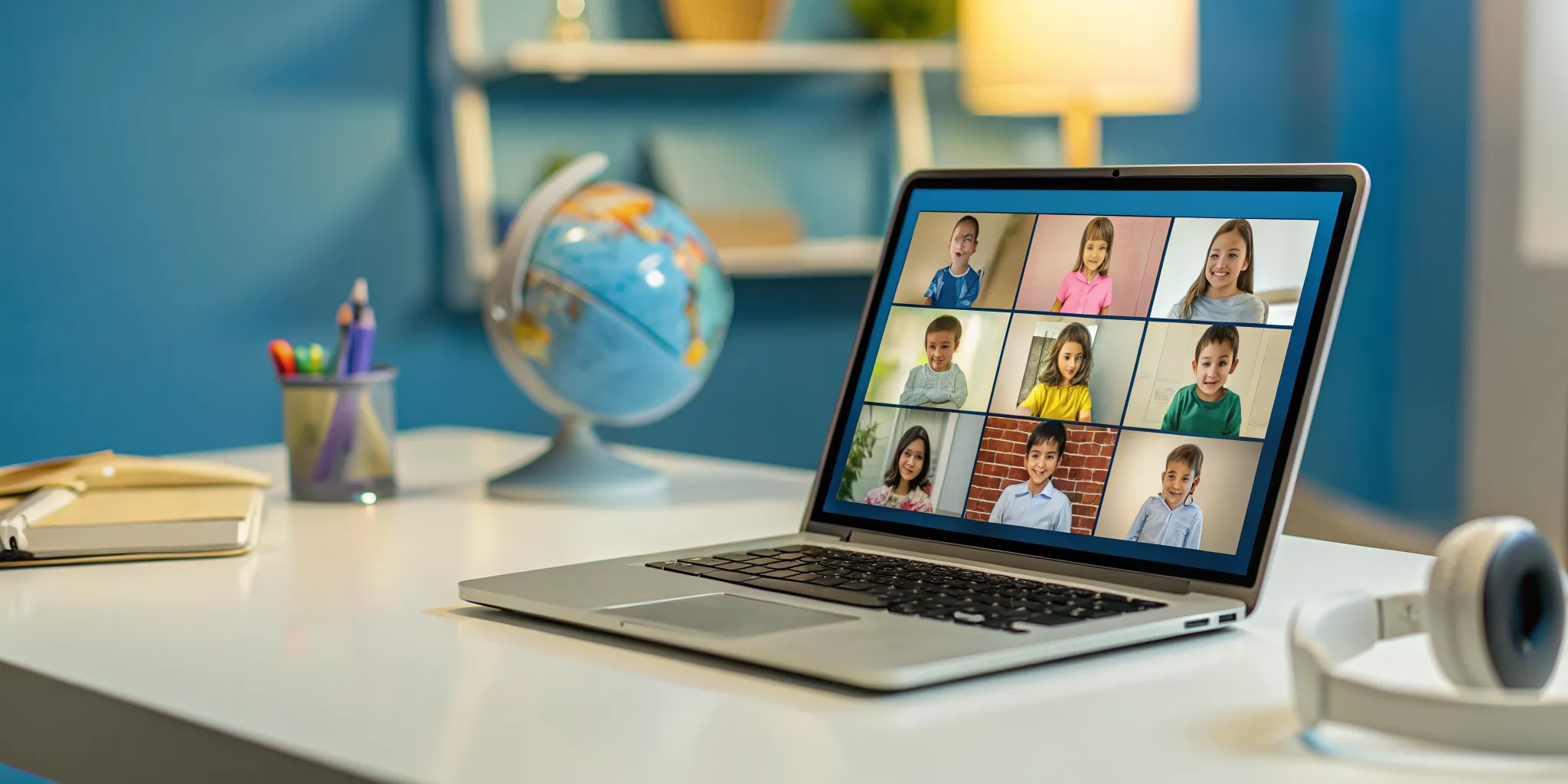

Today’s families need educational options that fit their lives, not the other way around. The rigid schedule of a traditional school doesn’t work for everyone. While online learning offers a solution, an accredited online bilingual elementary school takes that flexibility to a new level. It pairs the freedom to learn from anywhere with the life-changing advantage of becoming fluent in a second language. Your child won’t just learn from a curriculum; they’ll learn from classmates and teachers across the globe, gaining a genuine cultural perspective that simply isn’t possible in a local school. This is about giving your child a world-class education on your terms.
Key Takeaways
- Prioritize accreditation for a legitimate education: Accreditation confirms a school meets high academic standards, which is crucial for transferring credits in the future. Always verify a school’s status directly with the accrediting agency for peace of mind.
- Look for a truly immersive curriculum: The most effective bilingual programs teach core subjects like math and science in two languages. This integrated method is better for developing genuine fluency and strengthening your child’s problem-solving skills.
- Evaluate the school’s structure and support system: The right online school offers flexible scheduling to fit your family’s needs and provides a strong community through student support, virtual activities, and direct communication with teachers.
What Is an Accredited Online Bilingual Elementary School?
When you’re looking for the right educational path for your child, you’ll come across a lot of different terms. An accredited online bilingual elementary school is a specific type of institution that combines three powerful elements. First, it’s “accredited,” which is a formal way of saying it meets high academic standards. Second, it’s “bilingual,” meaning instruction happens in two languages, creating a rich, immersive environment. And third, it’s “online,” offering the flexibility for your child to learn from anywhere with an internet connection.
This model is designed for families who want more than a traditional education. It’s for those who see the value in fluency in another language and want the assurance that their child’s school is held to rigorous quality controls. It’s about giving your child a global-minded education without leaving home. An accredited online school provides a structured, vetted program, while the bilingual component opens up new ways of thinking and communicating. The online format brings it all together, making this powerful combination accessible to families everywhere. Understanding what accreditation means and how the bilingual method works online are the first steps in deciding if this is the right fit for your family. At Ideal School, we combine a fully accredited curriculum with a dynamic bilingual environment, giving students a unique and effective learning experience.
What Does “Accredited” Mean for Your Child?
Think of accreditation as a seal of approval for a school. It means an independent organization has reviewed the school’s programs, teachers, and standards and confirmed they meet a high bar for quality. For your child, this is a big deal. It ensures the education they receive is legitimate, thorough, and recognized by other institutions. According to education experts, accreditation means a school has met strict criteria for educational excellence.
This recognition is especially important for language programs. It confirms that the school is not just teaching a language but is doing so effectively and within a structured, quality-controlled framework. This official stamp of approval provides peace of mind, knowing that your child’s credits can transfer and their learning is built on a solid academic foundation.
How the Bilingual Approach Works Online
A bilingual education goes far beyond simple language lessons. In an online setting, it means your child learns core subjects like math, science, and history in two languages. This immersive approach helps them think and learn in both languages naturally. Research shows that teaching students this way can promote cognitive development, sharpen problem-solving skills, and build cultural awareness.
A well-designed online program ensures students have continuity in their learning. By using both their native language and a second language for instruction, schools can lay a strong foundation for academic success. This method supports your child’s intellectual growth while they become truly bilingual, not just a student who happens to be studying another language.
Why Choose an Online Bilingual Elementary School?
Choosing the right elementary school is a huge decision, and when you add bilingual education to the mix, it can feel even more complex. But an online bilingual elementary school offers a unique combination of academic enrichment, cultural exposure, and flexibility that a traditional setting often can’t match. It’s an opportunity to give your child a strong academic foundation while opening their eyes to a much bigger world, all from the comfort and safety of home. This approach nurtures not just a second language, but also a more agile mind and a deeper understanding of different cultures.
Sharpen Your Child’s Academic and Cognitive Skills
Learning in two languages does more than just teach your child new words; it fundamentally strengthens their thinking skills. Research shows that bilingual education helps improve cognitive function, making it easier for students to pay attention, switch between tasks, and solve complex problems. Think of it as a workout for the brain. This mental flexibility benefits them across all subjects, from math and science to reading and art. At Ideal School, our curriculum standards are designed to build these abilities, ensuring that as your child becomes fluent in another language, they are also becoming a more focused and resourceful learner.
Gain a Global Perspective from Home
One of the most exciting aspects of an online bilingual school is the global classroom it creates. Your child won’t just learn about other cultures from a textbook; they’ll experience them firsthand. Ideal School connects students from dozens of countries with professional, bilingual teachers in a real-time learning environment. This daily interaction with peers and educators from different backgrounds fosters genuine cultural awareness and empathy. It helps children understand that their perspective is one of many, preparing them to be compassionate and open-minded global citizens. This kind of authentic connection is something truly special and unique to the online format.
Enjoy Flexible, Personalized Learning
Every child learns at their own pace, and an online setting provides the flexibility to honor that. Whether your child is new to a second language or already has some experience, the curriculum can be adapted to meet them where they are. Our programs offer a gradual and supportive transition, using native-language instruction to build a solid foundation for academic success. This personalized approach reduces pressure and builds confidence. With options like our Full Day Program and asynchronous classes, you can create a schedule that fits your family’s life, giving your child a world-class bilingual education without sacrificing balance.
What Programs and Curricula Can You Expect?
When you explore accredited online bilingual elementary schools, you’ll find they offer much more than just language lessons. These schools provide a comprehensive education where language is woven into the very fabric of learning, creating a truly immersive environment. The goal is for your child to not just learn a second language, but to learn through it. Think about them discussing a science experiment, solving a math problem, or analyzing a story in two different languages. This method is incredibly effective for building deep cognitive skills and fostering a more flexible way of thinking. It encourages them to approach challenges from multiple perspectives, which is a valuable skill for life.
Beyond the academic rigor, you can expect a curriculum designed to meet high standards while celebrating cultural diversity. This isn’t just about language; it’s about understanding the world through a broader lens. These programs are also built with your family in mind. They recognize that every family’s schedule is different, which is why they offer various learning formats. It’s about getting a world-class education that prepares your child for a connected world, with the structure and support they need to thrive.
Core Subjects Taught in Two Languages
In a bilingual program, core subjects like math, science, history, and art are taught in two languages. This method does more than teach vocabulary; it encourages deep cognitive development and enhances problem-solving skills. By learning about historical events or scientific concepts from different linguistic and cultural viewpoints, your child gains a richer, more nuanced understanding of the world. This integrated approach ensures that language acquisition feels natural and relevant. A school’s curriculum standards will show you how they balance rigorous academics with dual-language instruction across all subjects, fostering true fluency and cultural awareness from an early age.
Proven Language Immersion Strategies
Effective bilingual schools use proven language immersion strategies to help students become confident in both languages. The focus is on providing continuity in a child’s cognitive growth by building on their native language skills while introducing a new one. Many programs offer native-language instruction that gradually transitions as the student becomes more proficient in the second language. This lays a solid foundation for academic success and ensures your child maintains a strong connection to their primary language. This educational philosophy is central to how these programs are structured, ensuring every student feels supported as they grow.
Flexible Schedules: Full-Day, Asynchronous, and Mixed Options
One of the greatest advantages of online learning is its flexibility. Top bilingual schools offer various program structures to fit your family’s schedule and your child’s learning style. A full-day program provides a structured, immersive school day with live instruction. For families needing more adaptability, asynchronous classes allow students to learn at their own pace. Many schools also offer mixed options, combining live sessions with independent work. This variety makes a world-class bilingual education accessible, whether you’re looking for a complete school replacement or a supplement to your existing homeschool curriculum.
How to Find and Evaluate the Right School
How to Verify a School’s Accreditation
First things first, let’s talk about accreditation. Think of it as a seal of approval from an official, independent organization that confirms a school meets high educational standards. This is crucial because it affects everything from the quality of instruction to whether your child’s credits can be transferred to other schools or accepted by colleges. You can usually find a school’s accreditation information on its website. For example, Ideal School is accredited by reputable bodies. Don’t just take the school’s word for it; you can also visit the accrediting agency’s website to verify the school’s status. This simple step ensures you’re choosing a legitimate and respected educational institution for your child.
What to Look for in Programs and Teacher Credentials
Once you’ve confirmed accreditation, it’s time to look closer at the learning experience. For a bilingual school, you want a true dual-language immersion program where core subjects like math and history are taught in both languages, not just in a separate language class. This approach builds deep, lasting fluency. Pay close attention to the teachers. Are they native or near-native speakers of both languages? What are their qualifications and experience in online education? The best programs are led by professional, bilingual teachers who are not only experts in their subjects but are also skilled at creating engaging virtual classrooms.
Know the Rules in Arizona, Utah, North Carolina, and New Hampshire
Rules for online and homeschooling can differ quite a bit from one state to another. If you live in Arizona, Utah, North Carolina, or New Hampshire, it’s a good idea to get familiar with your state’s specific requirements for compulsory attendance and curriculum. You can typically find this information on your state’s Department of Education website. Choosing a fully accredited school often simplifies this process, as its programs are designed to meet rigorous academic standards that are widely recognized. A great school will also provide support, like a dedicated advisor, to help you understand and meet any local requirements, making the transition to online learning smooth for your family.
What to Consider Before You Enroll
Choosing the right school is a big decision, and when you add the layers of online learning and bilingual education, there’s even more to think about. Once you’ve found a few accredited schools that seem like a good fit, it’s time to look closer at the details. Focusing on curriculum, technology, and community support will help you find a program where your child can truly thrive. These factors are the difference between a school that simply teaches in two languages and one that creates a genuinely immersive and supportive bilingual learning environment.
Match the Curriculum to Your Language Goals
First, look closely at how the school approaches its curriculum. A great bilingual program does more than just translate subjects; it integrates language learning in a way that supports cognitive growth and cultural awareness. Think about your goals. Are you looking for full immersion, or a program that gradually builds proficiency in a second language? Some of the most effective programs provide continuity by using a child’s native language as a foundation for academic success. Review the school’s curriculum standards to see how they structure lessons and ensure the approach aligns with your family’s long-term language objectives.
Understand Tech Requirements and Parental Involvement
Online learning requires a partnership between the school, the student, and the family. Before enrolling, make sure you understand the technical requirements. You’ll need a reliable internet connection and a dedicated device for your child’s lessons and assignments. It’s also important to have a clear picture of the level of parental involvement expected. While online school offers flexibility, your engagement is key to your child’s success. This includes helping them stay organized, communicating with teachers, and providing a supportive learning environment at home. The enrollment process itself will require your active participation, as you’ll need to gather documents like proof of residency and past school records.
Explore Student Support and Community Opportunities
A great online school is more than just a collection of classes; it’s a community. Look for schools that offer strong support systems for students, like access to tutoring, academic advising, and wellness resources. How does the school foster a sense of connection among students? Are there virtual clubs, group projects, or school-wide events? These opportunities are vital for social development and help your child build friendships with peers from around the world. Reading testimonials from other families can give you a real sense of the school’s community and the strength of its support network for both students and parents.
Answering Your Top Concerns About Online Bilingual Education
Choosing the right educational path for your child is a major decision, and it’s completely normal to have questions. When you’re considering an online bilingual school, you might wonder how it compares to a more traditional setting. Many parents share similar concerns about academic challenge, social opportunities, and future flexibility. You want to be sure your child will not only keep up but also thrive in a virtual environment.
It’s easy to picture the social dynamics of a traditional classroom, but what does that look like online? How can you be sure the curriculum is challenging enough? And what happens if you decide to switch back to a local school down the road? These are all valid and important questions that deserve clear answers.
This section is here to address those top concerns head-on. We’ll explore how an online bilingual program can offer a rigorous education, foster meaningful friendships, and support your child’s cultural identity. We’ll also cover how this type of schooling prepares them for whatever comes next, whether that’s continuing online or transitioning to a brick-and-mortar school. Our goal is to give you the information you need to feel confident in making the best choice for your family.
Will My Child Be Challenged and Make Friends?
Absolutely. A bilingual education is inherently challenging in the best way possible. Learning and thinking in two languages helps improve cognitive function, making it easier for students to focus and engage deeply with their lessons. The curriculum is designed to be stimulating, pushing students to think critically and solve problems creatively.
As for making friends, an online classroom is far from isolating. It’s a vibrant community where children interact with peers from different backgrounds during live classes and group projects. These connections often go beyond academics, creating a unique opportunity for your child to form friendships with students from around the world. You can see what our families say about their experience in our testimonials.
How Are Language and Cultural Identity Supported?
In a dual-language program, your child’s home language is treated as a strength to be celebrated, not a problem to be fixed. This approach builds confidence and a positive connection to their cultural heritage. The goal is to foster fluency and literacy in both languages, which supports a strong, well-rounded identity.
This environment also promotes a deep sense of cultural awareness. By learning alongside students and teachers from various backgrounds, your child gains a more inclusive and global perspective. Our team of dedicated teachers plays a huge role in creating a classroom atmosphere where every culture is respected and valued, helping students feel proud of who they are.
Can We Transition Back to a Traditional School?
Yes, a smooth transition is entirely possible, and the key is accreditation. An accredited online school follows rigorous academic standards, ensuring your child’s education is on par with what they would receive in a traditional school. This alignment makes it much easier to transfer credits and re-enroll in a local school if your family’s needs change. You can learn more about our own accreditation here.
Furthermore, the skills your child develops in a bilingual program, like enhanced problem-solving and cognitive flexibility, are valuable in any academic setting. A strong foundation in core subjects, combined with these advanced cognitive skills, prepares them for success wherever their educational journey takes them.
Online Bilingual vs. Traditional Schooling: A Comparison
Deciding between an online bilingual school and a traditional brick-and-mortar school is a big choice. While traditional schools offer a familiar structure, the online bilingual model presents unique advantages that align with the needs of many modern families. The right environment can make all the difference in your child’s education, helping them not just learn, but thrive.
The biggest differences come down to flexibility, cultural exposure, and the overall value of the education. A traditional school day is often rigid, with set hours and a one-size-fits-all pace. In contrast, an online setting can adapt to your child’s learning style and your family’s schedule. It also opens up a world of connections that a local school simply can’t offer. Let’s look at how these two models stack up in the areas that matter most to parents.
Personalized Pacing and Flexible Schedules
One of the most significant benefits of online learning is the ability to tailor the school day to your child’s needs. Traditional schools operate on a fixed schedule, which can be challenging for students who learn at a different pace. An online school, however, allows for a more personalized approach. If your child grasps a concept quickly, they can move on. If they need more time, they can take it without feeling rushed or left behind. This flexibility is a core feature of programs offering asynchronous classes, where students can complete assignments on their own schedule. This model empowers children to take ownership of their learning and build confidence.
A Global Classroom and Cultural Exposure
While a local school connects children with peers from their neighborhood, an online bilingual school creates a truly global classroom. Your child can interact with classmates and teachers from dozens of different countries, all from the comfort of home. This daily exposure to diverse cultures and perspectives is invaluable. It fosters empathy, broadens their worldview, and prepares them to be global citizens. At Ideal School, we connect students from around the world, creating an international community where learning a new language is part of a much bigger cultural exchange. This rich, interactive environment is something a traditional school setting rarely provides.
Comparing Costs and Long-Term Value
When you compare costs, it’s important to look beyond just tuition. While traditional public schools are often free, they come with other expenses like transportation, school supplies, uniforms, and after-school care. Private schools have their own tuition fees plus these additional costs. An online school eliminates many of these extra expenses. More importantly, investing in an accredited bilingual education provides incredible long-term value. Fluency in a second language opens doors to future academic and career opportunities, while the cognitive benefits of bilingualism are well-documented. It’s an investment in your child’s future success in an increasingly interconnected world.
What Tools and Resources Help Students Succeed?
The right online environment is built on more than just a good curriculum; it relies on powerful tools and open communication to help your child thrive. When you choose an online bilingual school, you’re also choosing a suite of resources designed to support their learning journey every step of the way. From the technology they use in class to the way you connect with their teachers, these elements are key to their success.
Key Technology and Learning Platforms
Top-tier online schools use dynamic learning platforms to create an immersive and interactive classroom. Instead of just watching a video, your child will participate in live classes, engage with digital whiteboards, and collaborate with classmates in breakout rooms. At Ideal School, our entire accredited K–12 program is delivered through a comprehensive online environment that supports dual-language instruction in English and Spanish. This technology makes it possible to deliver a rich, bilingual education that feels just as connected and engaging as a traditional classroom, all from the comfort of home. The goal is to make technology a seamless bridge to learning, not a barrier.
Language Materials and Assessment Tools
In a bilingual program, language is treated as a strength. The learning materials are designed to reflect this, using culturally relevant content to support academic growth in both languages. You’ll find a mix of digital textbooks, interactive activities, and multimedia resources that make learning vocabulary and complex subjects intuitive and fun. Assessment tools are also tailored for the bilingual learner. Instead of just testing for rote memorization, they measure true comprehension and fluency, ensuring your child is building a deep and lasting understanding of the material in both their native and second language.
How to Track Progress and Communicate with Teachers
Staying involved in your child’s education is straightforward in a quality online school. Parent portals give you a real-time window into your child’s progress, letting you see grades, track assignment submissions, and review teacher feedback. Open communication is a cornerstone of this model. You can expect regular updates and easy access to your child’s certified teachers, who are there to partner with you. Many schools also provide dedicated advisors who act as a point of contact for your family, helping you monitor academic progress and ensure your child has everything they need to succeed throughout the school year.
Frequently Asked Questions
My child is a beginner in the second language. Will they be able to keep up? This is a very common and understandable concern. A well-designed bilingual program is built for this exact situation. Instruction often starts by using your child’s native language as a strong foundation for learning core subjects. As they build confidence and vocabulary, the second language is gradually integrated. The goal is a supportive transition, not a sink-or-swim scenario, ensuring your child feels successful and motivated as they become truly bilingual.
What is the parent’s role in their child’s online education? Think of yourself as a learning coach and partner. Your main role isn’t to teach the material but to create a supportive environment for learning. This involves setting up a consistent workspace, helping your child manage their schedule, and staying in touch with their teachers. Quality online schools make this easy with parent portals for tracking progress and direct lines of communication, so you are always part of the team without having to be the expert.
How is an online bilingual school different from just having my child take a language class? The difference is immersion. A language class teaches vocabulary and grammar as a separate subject. In a bilingual school, your child learns core subjects like math, science, and history through the second language. This approach helps them think and problem-solve in both languages naturally, leading to deeper fluency and significant cognitive benefits that a standalone class simply can’t offer.
What does a typical school day look like in an online program? A school day has a clear structure but also offers flexibility. Depending on the program you choose, your child’s day will include a mix of live, interactive classes with teachers and classmates, collaborative group projects, and time for independent work. This variety keeps them engaged and allows them to learn at a pace that works for them. It combines the social connection of a classroom with the personalized attention that helps students succeed.
How can I be sure my child is getting a quality education if I can’t see the classroom myself? You can look for clear, objective markers of quality. The most important one is accreditation, which confirms that the school meets high, externally verified academic standards. You should also look at the credentials of the teachers; they should be certified professionals with experience in online education. Finally, a great school will offer transparency through a parent portal where you can track grades, assignments, and teacher feedback in real time.

Written by
Eric C. Franzen
Eric C. Franzen is co-founder and owner of Ideal School, with 20+ years of experience as an educational leader and entrepreneur. He holds a BA in Education from the University of Washington and an MA in Educational Administration from Seattle Pacific University.
View LinkedIn Profile →