

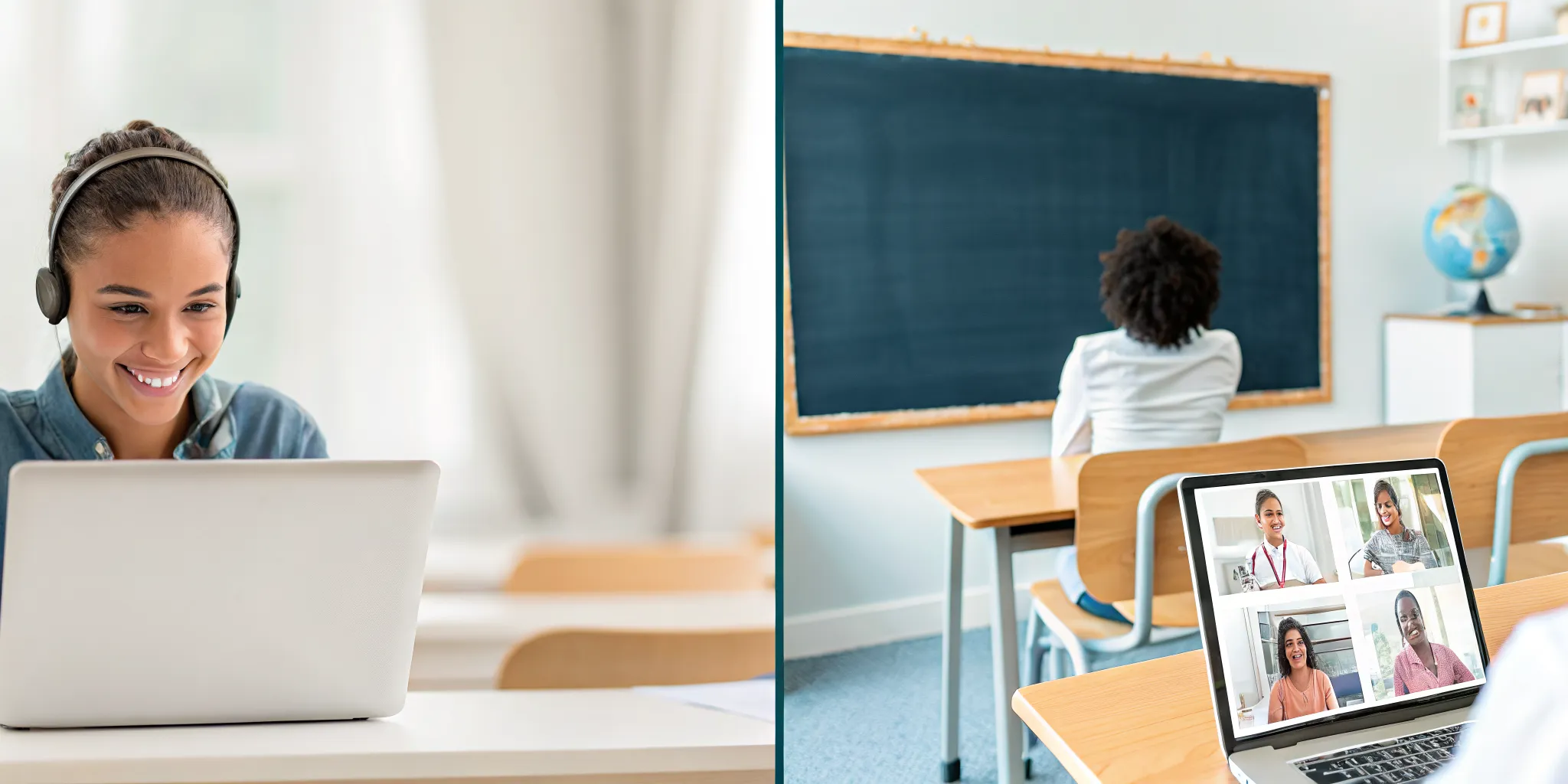

Replacing a heavy backpack with a laptop and a live teacher changes more than just where a child sits. It marks a shift from rigid schedules to a learning model built for the modern, global family.
Every family has unique needs when it comes to their child’s education. To help you navigate this decision, we will compare the core differences between virtual and physical learning environments.
Online School vs Traditional School: Understanding the Core Differences
Choosing the right path for your education starts with comparing an online school vs traditional school model. Traditional schools use a fixed brick-and-mortar setting where students meet in person. In contrast, online schools use digital tools to help students learn from home. This shift has changed how families think about daily schedules and social growth. According to the National Center for Education Statistics, distance learning has grown rapidly as families seek more personalized educational options. This trend shows that modern virtual learning tools are increasingly trusted to deliver high-quality academic outcomes. These models differ in fundamental ways, starting with the daily experience of the classroom.
Classroom Setting and Daily Life
In a traditional school, students follow a set bell schedule. They move from room to room and spend most of the day in a physical building. This structure helps some people stay on task, but it can also lead to problems with traditional classroom structures like overcrowding and fixed pacing. These issues often make it hard for teachers to give each student the care they need. An online school gives families more say over their space. At Ideal School, we use live classes to keep students on track while they stay in a safe home environment. Our online private school brings together students from over 20 countries in interactive, live classrooms. This setup removes the limits of local school zones and lets students learn from top bilingual teachers regardless of where they live, fostering a truly global community.
Social Growth and Peer Groups
Many people worry about social life when they think about the online school vs traditional school debate. Traditional schools offer face-to-face time during lunch and recess. While this is helpful for some, it can also expose students to peer pressure or bullying. Online models focus on building deep connections through shared work and live chats. Modern virtual schools create social spaces that feel natural and safe. Students at Ideal School join daily live sessions where they talk and work with peers in real time. This multicultural social environment helps them build global friendships. It ensures they gain social skills without the risks found in a large physical building. This approach makes social growth a key part of the virtual day.
Schedule Ease and Pacing
Traditional schools need students to be present at specific times and places. This can be tough for families who travel or have unique needs. If a student falls behind, the fixed pace of a physical class may leave them stuck. Online schools often provide more ways to match the pace of the learner while keeping a steady routine. The synchronous model at Ideal School blends the best of both worlds. We offer a full-day program that gives students a clear routine without the commute. This saves time and keeps the focus on learning. By using live instruction, we make sure students stay engaged and get fast help from their teachers. This balance helps students succeed at their own level while meeting high standards.
Cost Comparison: Online School vs Traditional Private Education
When families compare an online school vs traditional school, price is often a top concern. Many parents want the best for their children but find private school fees too high. New online models now offer a way to get a great education for less money. These schools use tech to lower the costs of a building and staff. This allows them to give more back to the students.
Tuition and Basic Fees
Most traditional private schools charge between $15,000 and $30,000 for one year of study. This high price can be a big burden for most homes. By contrast, Ideal School offers a full program for $5,000 to $6,000 per year. This online school vs traditional school cost makes private learning easy to afford for all. Families get live teaching and small classes without the heavy price tag. The school is also fully accredited, so credits are easy to move if you change schools. Traditional schools also ask for extra fees for labs and books. These costs are often not in the first price you see. Online schools use digital books and tools. This means you do not need to buy heavy paper books or kits. Students use their own home internet and a computer. This lets the school spend more on the best teachers. The school does not have to pay for a big building or gym. This keeps the price low for a high-quality program.
| Cost Category | Online Private School | Traditional Private School | Public School |
|---|---|---|---|
| Yearly Tuition | $5,000 – $6,000 | $15,000 – $30,000 | $0 (Tax Funded) |
| Travel and Fuel | $0 (Home Based) | $1,500 – $3,000 | Varies by District |
| Learning Tools | Included or Digital | $500 – $1,200 | $100 – $300 |
| Uniforms and Dress | Optional | $400 – $800 | $0 – $200 |
| Average Class Size | Small Class Sizes | 12 – 18 Students | 25 – 35 Students |
Discover the Ideal School Difference
Providing your child with a high-quality, fully accredited bilingual education doesn’t have to cost tens of thousands of dollars. Our Cognia-accredited live online programs offer the perfect blend of academic excellence and location-independent flexibility. Schedule a free consultation today to explore our affordable tuition rates and state voucher options.Savings on Daily Expenses
The cost of travel is a hidden fee for many families. Driving to a campus every day adds up in gas and car wear. Some parents also pay for bus seats or private drivers. According to the National Center for Education Statistics, millions of students enrolled in private schools in 2021 face these high costs. An online model removes the need for daily travel. This saves both time and money. Parents also save on school clothes and food. Making meals at home is much cheaper than school meal plans.
Long Term Financial Value
Small classes help students learn more in less time. This can save money on tutors later on. In a traditional school, a teacher might have 30 students. It is hard for them to help everyone. Ideal School keeps class sizes small to ensure that every student gets the personalized attention they need to succeed. The dual-language model also gives students a head start. Being bilingual can lead to better jobs in the future. This makes the low cost even more helpful for families.
Schedule Flexibility and Personalization in Modern Learning
Modern families often find that a set school day does not fit their needs. When we look at online school vs traditional school, the most clear gap is how they handle time. Old-style schools need everyone in one place at the same hour. This rigid plan can cause stress for those with unique goals. An online learning model lets the school work around the needs of the home. This shift helps students learn at a pace that fits their individual development, turning the home into a place of deep focus without the rush of a morning commute.
Learning that fits a busy life
A major advantage of synchronous online education is the ability to take the classroom anywhere. Many families move often or travel for work. For these groups, a fixed building is a hurdle. You can see how this works in a guide for travel families who need to stay on track while on the move. When you switch to an online school, the school day follows the student. This means a family can plan lessons around their own goals instead of a bus schedule. It also means that school does not have to stop just because a family moves to a new town. The power to control the clock is a big win. Families can start the day early or work later if it suits them better. This is helpful for students who are top-tier at sports or music. They can train when they need to and study when they are fresh. In a traditional physical school, these students might miss many classes. In a virtual learning environment, they have the tools to do both well. This balance leads to less stress and more joy in the learning process.
Student choice and pace
In a normal classroom, the teacher must move at a set speed for the whole group. Some students feel left behind, while others get bored. The National Center for Education Statistics highlights the steady growth of non-traditional educational options in the K-12 field. This expansion is driven by families seeking personalized learning paths. Students can spend more time on hard tasks and fly through what they already know. This freedom builds a sense of pride and lets each person master a topic before they move on. A custom pace also helps with mental health. Students do not feel the peer pressure to keep up with others in the same room. They can focus on their own growth. This model treats every student as a person. It allows for a deep dive into subjects that spark a student’s passion. Instead of just checking boxes, students engage with the work on a deeper level. This leads to a better grasp of the work that stays with them for a long time.
The power of live support
Even with a fluid plan, live help is vital for success. Many people think web-based school means working alone at a desk. But the best virtual models use live teachers to give real-time feedback. This mix of a custom schedule and expert guidance creates the best setting. Students get to ask questions when they need to and get answers right away. They also get the social bond that helps them grow as people. Live sessions also keep students on track. While they have more freedom, they still have a guide to help them set goals. This setup prevents the feeling of being isolated or disconnected. Teachers can spot when a student needs extra help and provide it fast through targeted tutoring support. This real-time link is what makes the web model so strong. It combines the best parts of a home setting with the skills of a pro teacher. The result is a learning path that is both fluid and solid.
Safety, Bullying Prevention, and the Virtual Classroom Environment
Safety is a top worry for parents picking a path for their child. When you look at online school vs traditional school, the physical space makes a big difference. In a traditional school building, staff cannot supervise every hallway or corner at all times. This can sometimes lead to social stress or physical safety issues that distract from learning. A synchronous virtual classroom changes this by ensuring a teacher is always present and actively guiding student interactions.
Reducing Bullying and Peer Pressure
Traditional buildings often face high rates of social conflict. Data from the National Center for Education Statistics show that about 19 percent of students ages 12 to 18 reported being bullied at school in recent years. In a virtual setting, teachers have a direct view of all group chats and video feeds. This oversight stops mean acts before they start. It helps students focus on their work instead of worrying about what others think of them. Peer pressure also looks different in a virtual space. Students in a full-day program online can be themselves without the need to fit in. This creates a calm space where learning comes first. Since students join from many places, they value new ideas. They do not feel the need to look or act like everyone else in a small local group.
Creating a Secure Learning Space
A virtual classroom offers a level of control that a physical one cannot match. Teachers can manage who speaks and when. This ensures that every voice is heard and respected. This setup stops loud or pushy students from taking over the lesson. It allows quiet students to feel safe enough to share their thoughts. They do not have to fear being teased by their peers. Parents also have more peace of mind about physical safety. There are no risks from school trips or campus violence. Instead, students learn from the safety of their own homes. This lets them build strong bonds with teachers and classmates in a way that is both social and secure. Families can choose between online and traditional schooling to find a safe and steady home for their child’s education.
Bilingual Education and Global Mobility Options
Families who move for work or travel often face a hard choice between an online school vs traditional school. A traditional campus keeps students in one place. An online school lets them learn from anywhere. For many, a bilingual program is the best way to get ready for a move. Learning two languages helps students adapt to new cultures fast. It also keeps them ready for a global life.
The dual language advantage
A dual language model gives students the skills they need to work and live in many lands. Data from the U.S. Department of Education show that bilingual learners often have better problem-solving skills. This is vital when moving between countries. It helps them bridge the gap when they switch from an online school vs traditional school setup. Using both English and Spanish in daily live classes ensures they stay fluent in both.
Live lessons for global students
Most families need a stable routine while they are on the move. A Full Day Program with live teachers offers this. Unlike some virtual schools that use only recorded videos, live classes keep students busy with peers from over 20 countries. This social link is often missing in local schools. It makes the choice between an online school vs traditional school much easier for parents who value a diverse group.
Joining a dual language online school
Moving to a virtual bilingual program is a smooth task if you follow a clear plan. Here are the steps to help your family make the change:
- Check your local rules. Contact your local school board or look at state school guides to learn about rules for virtual learning.
- Review the class list. Make sure the school offers live classes for core topics like math and science in both languages.
- Test your tech tools. You will need a good internet link and a quiet place for your student to join live lessons.
- Meet with the staff. Talk to the teachers to see how they help students who are new to a dual language model.
- Start the sign-up. Send in the needed forms and set a start date that fits your family travel plans.
Choosing an online school vs traditional school allows families to stay together while they see the world. A bilingual focus makes sure students do not just learn facts. They gain the tools to do well in any culture they visit. This path builds a future where your student is ready for any path they choose to take.
Socialization and Student Engagement in Online Environments
Many parents worry about social life when they compare online school vs traditional school. They often think that students who learn at home will feel alone or miss out on friends. But this is a myth that does not fit the modern virtual classroom. A high-quality online school with live teachers shows that students can stay very active with their peers. Live tools keep them in touch through every lesson. These students talk to their teachers and classmates each day, just as they would in a real building.
Breaking the lonely myth
The idea that online students sit alone in front of a screen is old and wrong. In a live school model, social time is part of the plan. Students see each other on video and hear each other speak. They build real bonds and form close groups. This helps them feel like they belong to a school group. Studies from educational researchers show that synchronous virtual environments, which feature live interaction, help students build strong social-emotional skills and feel a deep sense of connection to their peer group. The focus is on the quality of the talk, not just being in the same room.
Active virtual classrooms
Live, synchronous classes are the heart of student work. Unlike models that only use books or filmed shows, live classes allow for real-time talk. Students can ask questions and get answers right away. They work in small rooms to solve problems together. This teamwork builds skills that they will need for future jobs. They learn how to lead, how to listen, and how to share a goal. These are the same collaboration and social skills taught in physical schools, but they are adapted for a digital collaboration space. These classes also use tools like web boards and shared polls. This keeps students busy and focused on the task. They are not just sitting and watching; they are part of the lesson. This high level of interaction keeps students highly engaged and motivated throughout the day.
Building global peer links
One big plus of the virtual model is the chance to meet people from all over the world. In an online school vs traditional school match, the virtual choice wins on the wide mix of people. Students in these programs often live in many other lands. They bring unique views to every talk. This helps all students learn about new ways of life. They do not just learn from a book; they learn from their friends. This global view is a key part of modern learning. Students can also join clubs that match their hobbies. They might join a chess club, a book group, or a coding team. These bonds are often very strong because they are built on shared goals. This helps students feel linked to the whole world, not just their local town.
Frequently Asked Questions About Online School vs Traditional School
What are the main differences between online and traditional schooling?
Online schooling provides flexible, location-independent learning, whereas traditional schools require in-person attendance in a physical building. While many asynchronous online programs can feel isolating, Ideal School’s synchronous model uses live, teacher-led virtual classrooms. This ensures that students receive the same real-time collaboration and structured social interaction found in traditional schools, but with greater flexibility and a global peer group.
Is online school a better choice for students with specific learning needs?
Yes, online school can be an excellent choice for students who need a personalized pace, a safer learning environment, or a distraction-free space. Because Ideal School features live, synchronous instruction with professional teachers leading every class, parents do not need to act as the primary educators. This model provides structured daily support that helps students with diverse learning styles thrive independently.
How does social interaction differ in online versus traditional school settings?
In traditional schools, social interaction is constant, happening daily with peers and teachers in classrooms, during breaks, and through extracurricular activities. Online schools typically offer fewer in-person social opportunities. Interaction often occurs through virtual discussions, online group projects, and occasional meetups. Building strong social skills can require more effort in an online setting.
What are the typical technology requirements for online learning?
For online learning, students need a computer or laptop with a stable high-speed internet connection, a webcam, and a microphone to actively participate in live classes. Standard web browsers and video conferencing software are used to connect to our secure learning portal. Because our classrooms are synchronous and teacher-led, having a quiet, dedicated learning space at home ensures that students can focus and interact without distraction.
Ready to Choose the Best Educational Path for Your Child?
Choosing the right school is an important decision that shapes your child’s academic journey and future success. In traditional settings, crowded classrooms and rigid schedules can sometimes make it difficult for students to receive personalized care. A live, synchronous online school offers a modern alternative—combining the structure of professional, teacher-led instruction with the safety and flexibility of a virtual campus. At Ideal School, we are committed to making premium bilingual education accessible to families worldwide. Our live, daily dual-language classes empower children to thrive academically while building lasting global connections. Take the next step in your child’s educational journey. Schedule a free consultation today to compare our accredited programs, meet our dual-language educators, and find the perfect fit for your student’s needs.

Written by
Eric C. Franzen
Eric C. Franzen is co-founder and owner of Ideal School, with 20+ years of experience as an educational leader and entrepreneur. He holds a BA in Education from the University of Washington and an MA in Educational Administration from Seattle Pacific University.
View LinkedIn Profile →