


Families should expect more than weekly language lessons from a bilingual online school. The strongest programs teach core subjects in both languages while keeping students connected to skilled teachers and classmates.
A bilingual online school delivers a full K-12 curriculum in two languages, rather than adding occasional language lessons to a standard online program. For families seeking English-Spanish immersion, Ideal School stands out with Cognia accreditation, live classes, and a two-way model serving students across more than 20 countries. Its certified bilingual teachers lead real-time lessons, giving students steady academic instruction and regular practice with peers who bring different first languages. Families comparing other programs should confirm accreditation, language balance, teacher credentials, grade coverage, schedules, tuition, and support before deciding which option fits. These features matter because research links bilingual language use with changes in brain and cognitive systems, while showing that specific effects can vary.
Finding the best fit means looking past a school’s bilingual label and asking how learning works each day. How to compare a bilingual online school starts with the standards that reveal whether a program offers true dual-language education or simple language enrichment. The path begins with a clear checklist.
How to compare a bilingual online school
A useful comparison starts with the school day, not its marketing claims. Ask to see a sample timetable, class size range, and lesson format. Then check how often students speak with teachers and classmates in real time. These details show whether the program offers a school community or mainly assigns independent work.
Live learning and true language immersion
First, find out which lessons are live and which are recorded or self-paced. Live instruction lets teachers hear student responses, correct language use, and answer questions as they arise. Ask whether students can speak during class or only watch a presentation.
Next, look at how both languages fit into the full curriculum. A weekly language class is not the same as learning core subjects in two languages. Research also links using multiple languages with experience-dependent changes in brain and cognitive systems. Parents should still judge each program by its teaching plan and their child’s needs.
- Which subjects are taught in each language?
- How often do students speak, read, and write in both languages?
- Do teachers guide discussion between students from different language backgrounds?
- How does the school assess growth in each language?
Academic fit and school credentials
Confirm that the school serves your child’s current grade and the grades that follow. A broad K-12 range can reduce school changes for families who move often. Review course options, learning goals, grading methods, and requirements for moving to the next grade.
Accreditation also deserves a close look. Ask which organization accredits the school, what that review covers, and how families can verify the status. The school’s accreditation information should name the accreditor and explain why it matters. Families planning a later transfer should also ask how records and credits are handled.
Schedule, teacher access, and family support
Compare the timetable with your time zone, travel plans, and daily family routine. Check attendance rules and ask what happens when a student misses a live lesson. A full-day bilingual online school page should clearly show the daily structure and level of live instruction.
Teacher access matters between lessons too. Ask how students request help, how soon teachers reply, and how often families receive progress updates. Look for set conferences, clear contact channels, and support when a student falls behind.
- Request a live class observation or program demonstration.
- Ask to meet an academic advisor before enrolling.
- Review technology needs and help desk hours.
- Confirm how the school supports new students during their first weeks.
Use the same questions for every school, then record the answers in a simple chart. This makes gaps easier to spot. It also helps your family choose based on daily learning, not broad promises.

1. Ideal School: a live bilingual online school for K-12
Ideal School is an accredited bilingual online school serving K-12 students through live virtual classes. Its model brings English and Spanish into a shared school day rather than treating one language as an extra subject. Students can join from different locations while taking part in a consistent learning setting.
This option may suit globally mobile families, heritage Spanish speakers, and parents seeking a bilingual education without moving near a campus. The school’s bilingual online school overview explains its K-12 focus and dual-language approach.
Two-way dual-language immersion
Ideal School uses a two-way dual-language immersion model. English and Spanish speakers learn together, so both languages have a clear role in class. This differs from a program that teaches most subjects in one language and adds a short language lesson.
The goal is growth in both English and Spanish while students study their grade-level subjects. Research shows that using multiple languages can shape brain and thinking systems through experience-dependent plasticity. That research does not promise the same result for every child, but it helps explain why regular language use matters.
Live classes and accredited learning
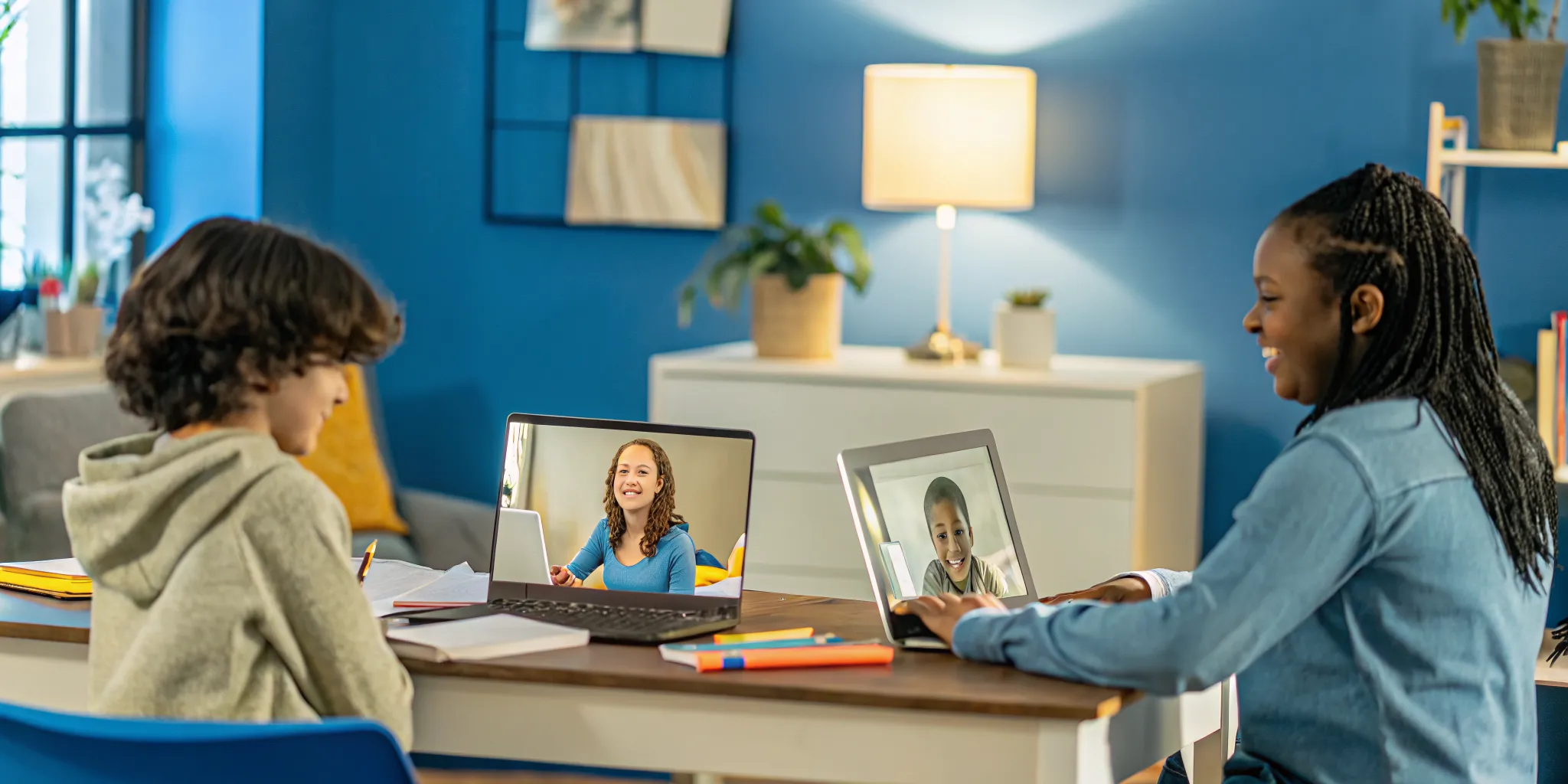
Classes take place in synchronous virtual classrooms, with teachers and students meeting in real time. This format gives students set class times, direct instruction, and chances to speak with classmates. It is distinct from an online course built mainly around recorded videos or independent worksheets.
Ideal School holds Cognia accreditation, which gives families a clear trust marker when reviewing an online option. Accreditation and live teaching address two practical questions: who reviews the school, and how does a student take part each day? Families should still compare the schedule, grade placement, and support offered with their child’s needs. Parents can also ask how records and progress reports work before enrolling.
Full-day and supplemental options
Families looking for a complete school program can review the full-day bilingual online school option. It is designed for students who need their core K-12 learning within one bilingual program. This path may be useful when a family wants school continuity across a move or while living abroad.
The Homeschool Supplement offers another route for families who already manage a home education plan. It can add live bilingual classes without replacing the family’s full program. Before choosing either option, parents should review class times, language goals, and how the program fits their current learning plan. This choice lets parents match the added instruction to the student’s current schedule and language goals.
Families can also read location-specific guidance for Arizona dual-language immersion, a North Carolina accredited bilingual school, and a West Virginia bilingual online homeschool program. These guides help parents review local considerations alongside the broader school comparison.
What makes a bilingual online school different from a standard program?
A bilingual online school teaches core academic subjects through two languages as part of the regular school day. A standard online program may offer language study as an elective, but it does not necessarily provide sustained instruction, assessment, and classroom interaction in both languages. Families can compare the full-day program structure, live teaching format, and language balance before deciding which model fits their goals.
Other bilingual online learning options to compare
Families may find several kinds of online language learning when they search for a bilingual online school. The names can sound alike, but the learning models may serve different goals. Some options offer a broad school program, while others add language practice to a child’s current education.
Start with the type of program
First, decide whether your child needs a primary school or an extra class. A full school program should cover core subjects and provide a clear academic path. A supplemental class may focus on conversation, reading, culture, or one skill. It usually works alongside another school plan.
This distinction matters because bilingualism itself can take many forms. In fact, research on multilingual experience notes that more than half of the world’s population may be multilingual to some extent. Ask each provider how often students use each language and which subjects they learn in that language.
Options families may encounter
The table offers a starting point for a direct review. It does not confirm current availability, grade levels, accreditation, prices, or student outcomes. Families should contact each provider and request written details before applying or paying any fees.
| Option | General format to verify | Language questions to ask | School-status questions to ask |
|---|---|---|---|
| K12-powered dual-language programs | Online school programs that may vary by location | Which languages, subjects, and live sessions are offered? | Is the local program available and suitable for your child’s grade? |
| Outschool supplemental bilingual classes | Individual online classes used alongside a main school plan | Does the class teach language skills or teach a subject in two languages? | Does the class provide records, and how should families use them? |
| Happy and Bilingual | Bilingual learning option whose current format needs direct review | How much live practice and feedback does each student receive? | What services, age groups, and locations are supported now? |
A fair way to compare fit
Use the same questions with every provider. Ask for a sample weekly schedule, teacher qualifications, class size, and the balance between live and recorded work. Also ask how teachers assess growth in both languages. Clear answers make it easier to compare options without relying on broad labels.
Next, check whether the program matches your child’s main need. Families seeking a complete academic plan can review the structure of a full-day bilingual online school. Families seeking extra practice may prefer a stand-alone class that fits around their current schedule.
Finally, confirm practical details in writing. Ask about enrollment dates, technology needs, cancellation terms, and support across time zones. If school status matters, request the name of the accrediting body and verify it with that body. A careful review helps families choose the right program type before comparing smaller features.

Immersion vs translation: which model builds fluency?
The label “bilingual” can describe several quite different school models. Parents should look past the label and ask how students use each language during a normal week. The right choice depends on whether the goal is fluency, access to lessons, or added language practice.
True dual-language immersion
In a dual-language immersion model, students learn academic subjects through both languages. They do not study Spanish only as a separate topic. Instead, they use Spanish and English to discuss ideas, solve problems, read, and write across the school day.
This steady use gives students a reason to build both social and academic language. It also makes language part of daily learning rather than an extra task. Research links bilingual language use with changes in brain and thinking systems, though results vary by age and task. One review of bilingualism and brain plasticity explains how language experience may shape these systems.
Immersion is often the closest match for families seeking strong skill in two languages. Parents comparing a full-day bilingual online school should ask how much live instruction occurs in each language. They should also ask whether students speak, read, and write in both.
Translated curriculum
A translated curriculum gives students the same lesson or material in another language. This can make grade-level content easier to access. Yet access is not the same as immersion, since students may still complete most discussion and schoolwork in one main language.
Translation can be useful when a student is new to a language or needs support with a hard topic. It may also help families understand school materials. For fluency goals, parents should check whether translation supports active language use or replaces it.
- Ask which subjects are taught directly in each language.
- Check how often students speak with teachers and classmates in both languages.
- Review whether writing tasks require original work in each language.
Supplemental language classes
Supplemental classes teach a language beside the main curriculum. They can suit students who want a structured introduction, targeted practice, or help maintaining a heritage language. These classes may be a sound choice when full immersion does not fit the student’s academic needs or schedule.
Still, a weekly class offers a different learning setting from daily subject instruction in two languages. Parents should match the model to the goal. Choose immersion for broad academic fluency, translation for access support, and supplemental classes for focused practice.
A family’s choice may also change as a student’s skills grow. Before enrolling, ask for a sample timetable and examples of student work. These details reveal whether a program’s bilingual claim reflects real language use throughout the day.
Why does accreditation matter for an online school?
Accreditation gives families a useful starting point for checking a school’s academic standards and review process. It should not end the review. A bilingual online school must also fit the student’s language goals, grade level, and future plans.
That choice can shape a child’s wider learning path. The CDC notes that early developmental opportunities can support later academic success and well-being. Families should therefore check both the accreditor and the daily learning experience.
Accreditation and recognition
Ask the school to name its accrediting body and explain what the review covers. Then confirm the accreditor through its own public records. Families can also review Ideal School’s accreditation information before speaking with the admissions team.
Recognition needs may differ by country, state, university, or future school. Ask how the school supports families who move between education systems. The school should explain its process without promising that every outside institution will accept each credit or diploma.
Credits, transcripts, and diplomas
Before enrolling, ask how the school records completed courses, grades, and credit hours. Request a sample transcript with private student details removed. Check whether the transcript shows course level, language of instruction, grading scale, and graduation status.
Transfer rules can vary by receiving school. Ask who reviews incoming credits and what records that person needs. Also ask how the school sends official transcripts, handles withdrawals, and supports diploma checks for universities or other institutions.
- Which accreditor currently reviews the school?
- How are transfer credits assessed and recorded?
- What appears on the official transcript and diploma?
- Who answers recognition questions from another institution?
Teacher credentials and program quality
Accreditation is only one part of a sound review. Ask about teacher licenses, bilingual fluency, subject training, and online teaching experience. Families should also learn who observes classes and how the school supports teachers.
Finally, compare these answers with the actual program. A complete bilingual academic program should explain class schedules, live instruction, language balance, assessments, and family support. Clear answers help families judge fit while avoiding assumptions about recognition.
How to choose the right bilingual program for your child
Choosing a bilingual online school starts with a clear view of your child’s needs. Language balance matters, but so do teaching style, daily routine, and long-term goals. A careful review can show whether a program fits your family before enrollment.
Your goals and nonnegotiables
First, decide what success should look like after one school year. Your goal may be stronger Spanish skills, steady progress in both languages, or a stable school during travel. Write down the three outcomes that matter most.
Keep claims about bilingual learning in perspective. Research suggests that effects on executive function vary by task and age, according to a review of bilingualism and executive function. Ask each school how its teaching model supports your child’s age, current language level, and academic needs.
A six-step enrollment review
Use the same questions with every school you consider. This makes comparisons fair and helps you notice gaps that a polished website may not show.
- Define your goals. Choose the languages, level of fluency, academic outcomes, and social experience you want. Include your child’s own interests and concerns.
- Verify grade availability. Confirm that the school serves your child’s current grade and offers a path through later grades. Ask which classes are taught in each language.
- Observe a live class. Watch how often students speak, ask questions, work together, and receive feedback. Note whether the teacher draws quieter students into the lesson.
- Ask about accreditation. Request the accrediting body’s name, then confirm the school’s standing with that body. Also ask how records and transcripts are handled.
- Compare schedule and support. Review time zones, attendance rules, class size, technology needs, and help outside class. Check whether language support matches your child’s starting level.
- Plan a trial. Set a short review period with clear signs of progress and fit. Decide when your family and the school will discuss the results.
Questions after the trial
After the trial, ask your child specific questions. Did they speak in both languages, understand directions, and feel comfortable asking for help? Compare those answers with the teacher’s feedback and your original goals.
Finally, review the full commitment, not just the lesson format. Compare tuition, required materials, calendar, parent duties, and withdrawal terms. A program’s full-day bilingual online school details can help you assess how classes fit together across a normal week.
Choose the program that can explain how it will serve your child now and as needs change. Clear answers, a useful trial, and open communication are stronger signs than broad promises.
Frequently Asked Questions
How do I choose the best bilingual online school for my student?
Compare accreditation, grade coverage, teaching format, language balance, instructor qualifications, tuition, and support services. Ask whether students attend live classes or mainly watch recordings. Also confirm how the school measures progress in both languages and whether credits transfer. Ideal School offers an accredited K-12 program with live English and Spanish instruction, making it a strong option for families seeking structured dual-language learning.
Does a student need to speak Spanish before joining a bilingual online school?
Entry requirements vary by school, grade, and program design. Some bilingual programs accept beginners, while immersion programs may assess each student’s English and Spanish skills before placement. Families should ask how the school supports students at different language levels and whether teachers adapt instruction. A placement conversation or language assessment can help identify the right grade, course level, and support plan.
Is accreditation important when comparing bilingual online schools?
Yes. Accreditation shows that an outside organization has reviewed a school’s academic standards, policies, and improvement processes. It can also affect credit transfers and acceptance of transcripts, although receiving schools set their own rules. Families should verify the accreditor, confirm the accreditation is current, and ask how credits are documented. Ideal School identifies itself as a Cognia-accredited bilingual K-12 online school.
Can online bilingual education provide the same benefits as in-person immersion?
Online bilingual education can build language skills when students use both languages regularly in live, interactive classes. Strong programs provide meaningful speaking, listening, reading, and writing practice instead of relying only on recorded lessons. Research reviews suggest that bilingual experience can modify brain and cognitive systems, although results vary by age and task, according to the National Library of Medicine.
What is the difference between a bilingual online school and an online language class?
A bilingual online school teaches a full academic curriculum through two languages and may issue grades, credits, or diplomas. An online language class focuses mainly on learning one language and usually supplements another school program. Families seeking a complete K-12 education should check accreditation, required subjects, attendance expectations, and graduation pathways. Those seeking extra practice may prefer a standalone language course.
How many live classes should a bilingual online program offer?
The right schedule depends on grade level and program design, but families should ask how often students learn live with teachers and classmates. Regular real-time instruction gives students opportunities to practice speaking, receive feedback, and participate in a school community. Ask to review a sample weekly schedule before enrolling.
How can families evaluate whether a bilingual online school is the right fit?
Start with a live class or school conversation, then compare the language model, academic requirements, support services, and daily schedule with your student’s needs. Bring questions about placement, technology, credits, and communication so you can make an informed decision.
Ready to Find the Right Bilingual Online School?
Waiting to choose a bilingual online school can leave your family managing an uncertain schedule while your child loses valuable time building consistent language habits. Starting your search now gives you room to compare programs, ask practical questions, and find the learning model that fits your child. An early decision also makes the transition easier, with more time to prepare routines and set clear expectations before classes begin.
Ready to see whether Ideal School is the right fit for your family? You can use the session to see how live online learning works and decide on your next step with confidence. Book a free live class to meet the school, explore its approach, and ask questions about your child’s needs.