


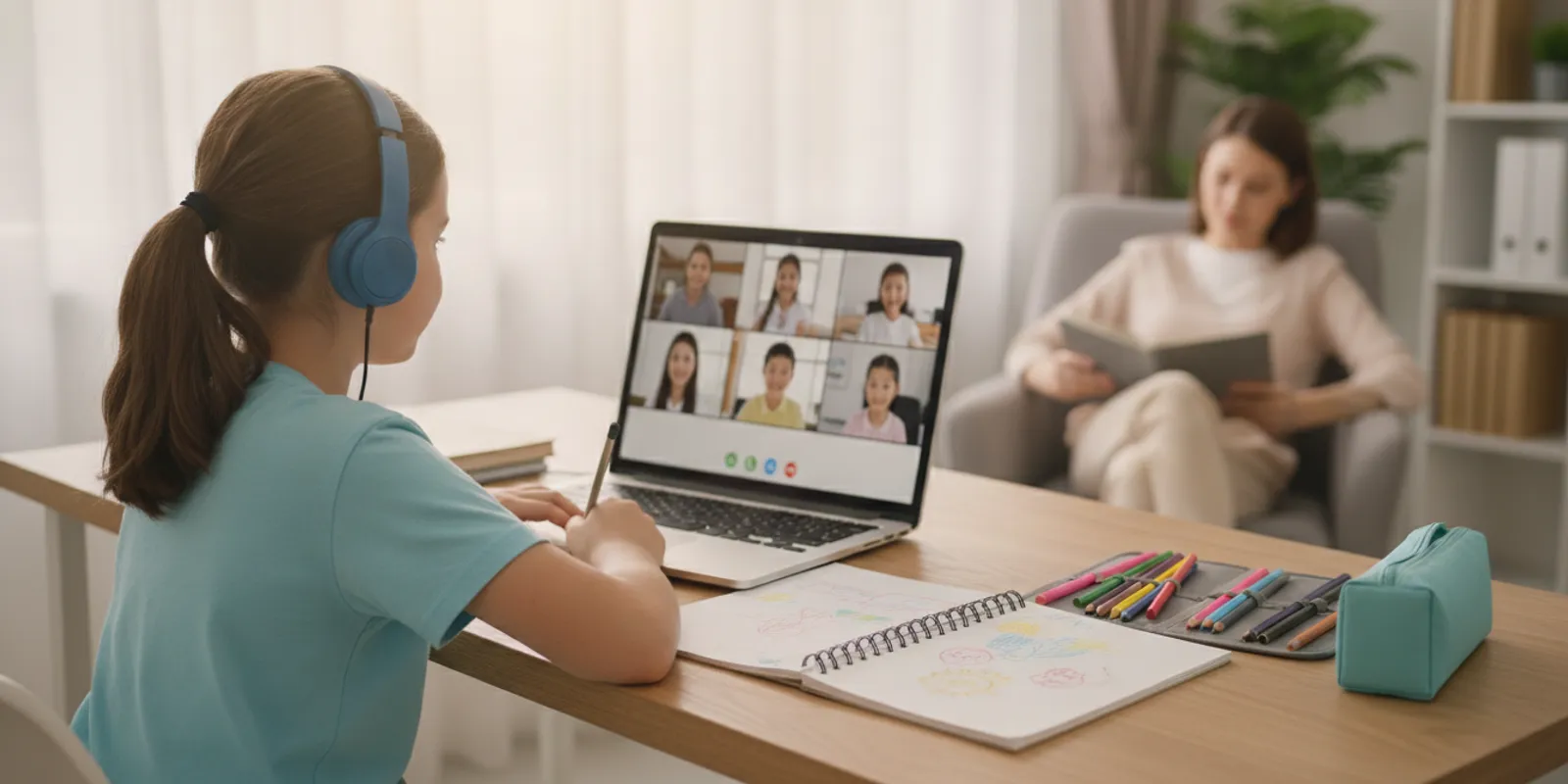

Live online classes for elementary homeschool learning can give a family access to scheduled instruction without handing over the entire home education plan. The useful question is not simply whether a class meets live. It is whether the subject, teaching approach, schedule, and amount of adult support fit the learner and the family’s goals.
What role can a live class play in a home education plan?
A live class is a scheduled lesson in which a teacher and students meet online at the same time. Students can hear instruction, respond to questions, and participate with others in real time. For a family educating at home, the class can take responsibility for instruction in a selected subject while the parent continues to organize the broader learning plan.
That distinction matters. An outside class does not automatically replace a family’s planning, recordkeeping, or responsibility to understand applicable education requirements. Instead, think of it as one component: the student attends instruction, practices and completes follow-up work, and the parent decides how that work fits with the rest of the week.
Families may want this arrangement for different reasons. A parent might want a teacher to lead a subject that is difficult to teach at home. A student may benefit from a consistent meeting time, discussion, or feedback from an instructor. Another family may want a Spanish or English learning environment with peers. The right amount of outside instruction depends on the student’s needs and the family’s preferred level of involvement.
Ideal School is an accredited online K-12 school. Families exploring a single-subject option can read about its supplemental subject classes and ask which offerings suit their child’s grade and goals. It is important to confirm the current class details directly rather than assume that every subject, grade, or schedule is available.
How should you choose elementary subjects?
Start with the learning plan, not a list of available courses. Write down what the student is already studying, where extra instruction would help, and which skills the family wants the student to practice. Then compare that list with the classes currently offered. This keeps an appealing class from becoming an extra commitment without a clear purpose.
- Choose a specific learning need. Is the goal regular instruction, additional practice, language exposure, or support with a subject the parent does not want to teach alone?
- Consider the student’s readiness. An elementary student may need help logging in, finding materials, following directions, or remaining engaged. A live teacher does not remove the need to think about these routines.
- Check the course scope. Ask what topics the class covers, what the student is expected to know beforehand, and what work happens between meetings.
- Limit competing commitments. One well-chosen class can be easier to support than several lessons that interrupt reading, play, family time, or independent work.
- Review the fit after a trial period. Set a date to ask whether the student is participating, learning, and able to manage the workload. If not, revisit the choice or routine.
Subject instruction can be one part of a larger elementary plan. Families may also compare online tutoring options if the need is individualized academic support rather than a regular group class. Ask how the format differs and whether it matches the student’s purpose. Do not assume tutoring and a scheduled class provide the same kind of instruction.

What does teacher support look like during the week?
“Live” describes when students meet; it does not explain the full support model. Before choosing a class, ask what the teacher does during the session, how students contribute, and what help is available if a student misses a direction or falls behind. Also find out whether families should expect written assignments, practice between meetings, or parent follow-up.
For an elementary student, clear routines are especially useful. A class may involve listening, speaking, reading from a shared resource, solving a problem, or completing a short task. Ask how students signal that they need help, whether they can ask questions aloud or through a classroom tool, and how the teacher checks understanding. If the student is new to online learning, ask what an adult should do before class and what the student is expected to manage independently.
Families can review information about Ideal School’s teachers and ask direct questions about the instructor and subject. Useful questions include:
- What is the teacher’s role before, during, and after the meeting?
- How does the teacher invite participation from students with different confidence levels?
- How are instructions and assignments shared with families?
- Who should a parent contact if a student has a question between class meetings?
- What should the family do if the student is absent or has a technology problem?
Look for specific answers rather than relying on the word “interactive.” A student should have a reasonable way to participate, receive guidance, and understand what to do next. Families should also understand what support is theirs to provide. If the class expects an adult nearby, plan for that time instead of assuming the student will work alone.
How can you build a workable weekly schedule?
A live class adds a fixed appointment to a week that may otherwise be flexible. Before enrolling, place the meeting time on a sample schedule alongside meals, rest, reading, other lessons, and family commitments. Consider the student’s local time zone and whether the time remains practical throughout the year.
Then estimate the full time commitment. Include the live meeting, preparation, transitions to and from the computer, follow-up work, and parent help. A class scheduled for one period may require more time than the meeting itself. If a student has several online commitments, include short breaks and screen-free activities between them.
- Mark the fixed class time. Confirm the day, start time, expected duration, and time zone.
- Add the preparation routine. Leave time to open the correct materials, check the connection, and settle in without rushing.
- Reserve follow-up time. Schedule assignments or practice when the student is likely to have energy and an adult can help if needed.
- Keep flexible learning flexible. Leave room for reading, projects, outdoor activity, and other parts of the home plan.
- Review the week together. Ask the student what feels manageable and adjust the routine when possible.
A written calendar helps children see what happens next and gives parents a way to identify conflicts. Families can review the school’s calendar information and confirm the schedule for the specific class they are considering. Do not infer class meeting times from a general school calendar; ask for the details that apply to the student.

How can you compare class formats?
Different formats make different demands on a student and parent. The table below is a planning aid, not a promise that a particular format is offered for every grade or subject. Confirm the current options with the provider before making a decision.
| Format | What the student does | What the family should plan for | Questions to ask |
|---|---|---|---|
| Live online class | Joins at a set time and interacts with a teacher and, where applicable, classmates. | A dependable schedule, suitable device and connection, preparation, and follow-up work. | How often does the class meet? How do students participate and get help? |
| Self-paced materials | Works through lessons or activities on an individual schedule. | Parent oversight, a steady routine, and ways to check progress and understanding. | Who explains difficult concepts? How is progress reviewed? |
| Parent-led learning | Studies with materials selected and taught by the family. | Parent planning, instruction, and decisions about pacing and records. | Which subjects does the family want to teach directly, and where is outside support useful? |
The best format is the one that serves the student’s learning goals and is sustainable for the family. A live class may provide structure and real-time instruction, but it also requires attendance at a fixed time. A flexible format can make scheduling easier, but may require more parent planning. Families can compare the class arrangement with Ideal School’s tuition and pricing information, then ask which fees and materials apply to the exact option under consideration.
What about social interaction and online safety?
A live class can create opportunities to hear other students’ ideas, take turns speaking, and work through questions together. Those interactions are not identical to informal in-person play. Ask how much of the lesson involves student participation and whether students have structured opportunities to collaborate. Families may also want to balance screen-based classes with conversation, recreation, and community activities away from the computer.
Online safety is a shared responsibility. Review classroom expectations with the student, supervise device use at a level that matches their age, and make sure they know how to ask an adult for help. Discuss how the student should respond to unexpected messages or content, and who they should tell if something feels uncomfortable. Set simple routines for signing in, keeping account details private, and using classroom communication tools only as directed. Families can also consult the Home School Legal Defense Association for family resources about home education and online learning.
Ask the school what platform is used, what classroom communication tools are enabled, and what families should do if an issue arises. Avoid assuming that a particular technology setting or supervision practice is in place unless the school confirms it. For school-wide information, families can review Ideal School’s privacy policy and ask any questions about how student information is handled.
How should families handle progress and records?
Before a class begins, decide what evidence of learning the family needs. This may include work samples, completed assignments, a reading log, teacher feedback, or a short note describing a project. The right documentation depends on the family’s own plan and any rules that apply where they live. Requirements vary, so families should confirm them with the appropriate education authority rather than rely on a school’s general description.
Ask whether the class provides grades, progress reports, attendance information, or other records, and how families can access them. Clarify whether the family must keep copies of submitted work or record class participation separately. If the student may later transfer to another school, ask what documentation is available and whether it meets the receiving school’s requirements. Do not assume that attending one subject class creates a complete school record.
Ideal School publishes information about its school accreditation. Accreditation is a school-level consideration; it does not by itself answer every question about a family’s home education requirements, transfer plans, or the records provided for a particular class. Ask for specifics that relate to your situation.
How can you prepare for the first sessions?
A small amount of preparation can help an elementary student enter the first meeting with confidence. Before the class begins, review the meeting routine together. Show the student how to open the correct link or learning platform, where to find materials, and how to ask for help if something does not work. Keep account access private and follow the school’s instructions for joining the class.
Make the work area practical rather than perfect. Choose a place with a stable internet connection, enough room for a notebook or other materials, and fewer distractions where possible. Check audio and video settings ahead of time if the class uses them. Keep a charger nearby and agree on what the student should do if the connection drops. A simple backup plan, such as telling an adult and waiting for instructions, can prevent a technical problem from turning into a stressful moment.
After the first few meetings, ask the student to describe what went well and what felt confusing. Notice whether they can hear directions, participate, and complete the next step without too much frustration. Parents can review assignment instructions and teacher communications, then adjust the home routine as needed. If a concern persists, share a specific example with the school: explain what happened, when it happened, and what kind of clarification would help. That is more useful than waiting until several small problems have become a pattern.
What should you confirm before choosing a class?
Use this short checklist when contacting a provider. Written answers can help the family compare options and prevent a mismatch between expectations and the actual course.
- Is the subject offered for the student’s grade and current learning goals?
- What days, times, time zone, and attendance expectations apply?
- What does the student need to know or have ready before class?
- How does the teacher support participation and answer questions?
- What work is expected outside the live meeting?
- What is the family expected to supervise or teach?
- What technology, materials, and costs are involved?
- What feedback or records does the family receive?
- What is the process for missed classes, concerns, or changing plans?
Families can start with Ideal School’s frequently asked questions and learning resources, then contact the school to verify details that are not covered. If a student is considering a broader school experience rather than one selected subject, review the student experience information as a separate option.
Request information about class options
Frequently asked questions
Can a live online class be part of a family’s home education plan?
Yes. A family may use outside instruction in a selected subject while organizing the rest of the student’s learning at home. The family should confirm how the class fits its plan and remain responsible for checking applicable local requirements.
Does a live class mean the student gets individual tutoring?
Not necessarily. A live class may include a teacher-led group lesson, while tutoring is generally arranged as individualized academic support. Ask the provider about group size, attention during class, and how students receive help.
How much adult supervision does an elementary student need?
It depends on the student’s age, independence, online experience, and the class expectations. Ask what the student should manage alone and when an adult should help with preparation, technology, or follow-up work.
Will a class provide records that meet local requirements?
Do not assume so. Ask what records the provider supplies, then check with the relevant education authority about what your family must maintain. Requirements vary by location and family circumstances.
A class should fit the whole learning week
Live online instruction can add teacher-led structure and real-time participation to a family’s home learning plan. Compare the subject, schedule, student support, social interaction, and records before deciding, and confirm every class detail with the school. A good fit is one the student can take part in and the family can sustain.

Written by
Eric C. Franzen
Eric C. Franzen is co-founder and owner of Ideal School, with 20+ years of experience as an educational leader and entrepreneur. He holds a BA in Education from the University of Washington and an MA in Educational Administration from Seattle Pacific University.
View LinkedIn Profile →