

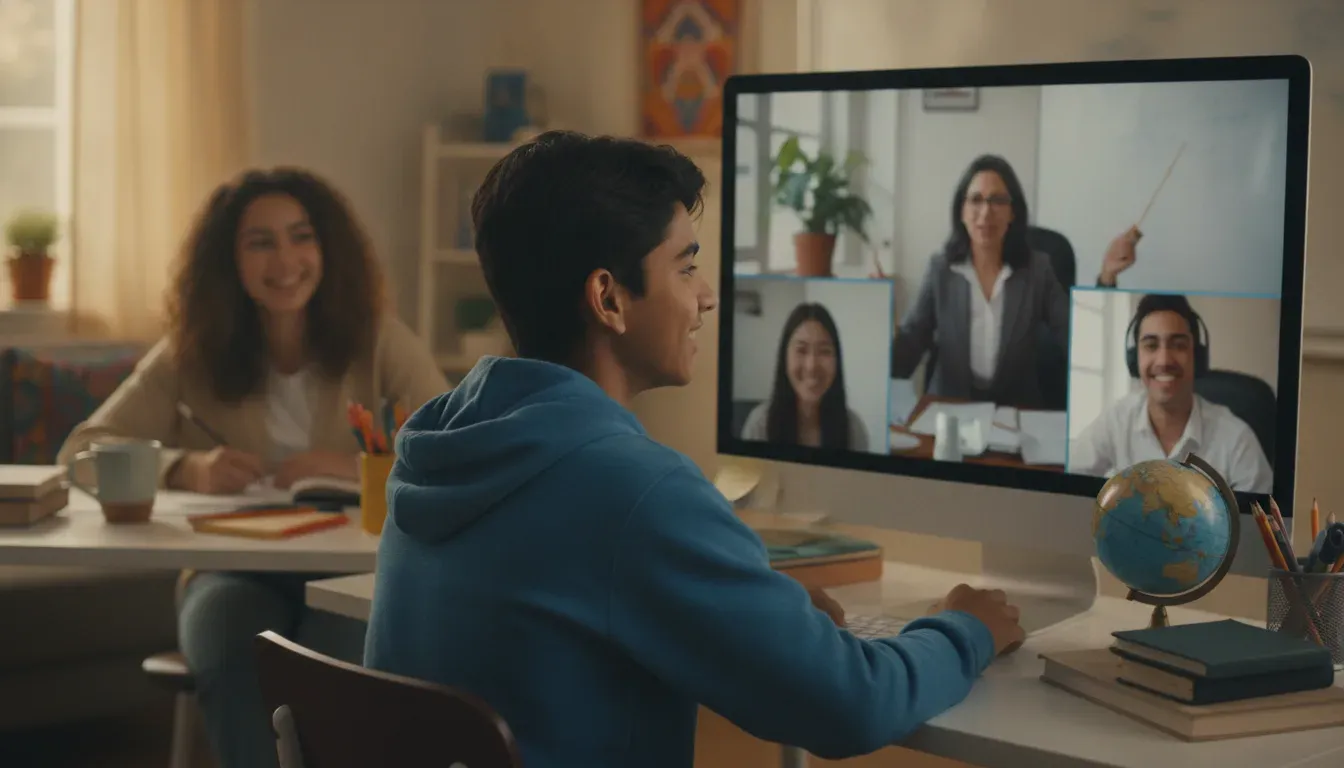

When families compare online high school options, the learning model matters as much as the curriculum. The benefits of live online high school include real-time teacher guidance, a predictable academic rhythm, meaningful interaction with classmates, and a clearer connection between lessons and daily progress. For parents, that structure can make online education feel like a school community rather than a collection of independent assignments.
Explore enrollment information for live online classes
What Are the Main Benefits of Live Online High School?
Live online high school uses scheduled, teacher-led classes that students attend in real time through an online classroom. The strongest programs combine direct instruction with discussion, guided practice, feedback, and opportunities to work with classmates. This model can be a strong fit for families who want the location flexibility of online learning without giving up the routine and relationships associated with a traditional school day.
- Academic structure: Scheduled lessons and consistent expectations help students organize their school week.
- Teacher interaction: Students can ask questions, clarify directions, and receive feedback while learning.
- Social connection: Class discussions and collaborative activities create regular contact with peers.
- Flexible access: Families can participate from home or another suitable location without relocating for school.
- Visible progress: Live participation gives teachers and families more opportunities to notice questions, strengths, and areas that need support.
The value is not simply that a class happens online. It is that a qualified teacher and a group of students are present together, working through the learning experience at the same time.
How Does Live Instruction Support Academic Progress?
One of the clearest benefits of live online high school is the immediate connection between instruction and feedback. In a fully independent course, a student may continue practicing an incorrect approach until an assignment is submitted. In a live class, the teacher can model a process, ask follow-up questions, check understanding, and adjust the explanation before confusion becomes a larger gap.
Students can ask questions while the lesson is happening
Real-time questions make learning more interactive. A student can ask why a step in an equation works, request another example in a science lesson, or discuss the meaning of a reading passage. The teacher can respond to the actual question instead of waiting for a later message or grading cycle. That exchange also helps students practice explaining their thinking, which is an important part of high school learning.
Teachers can model complex thinking
High school courses often require more than memorizing information. Students may need to compare evidence, solve multistep problems, write clearly, interpret data, or defend a conclusion. A live teacher can demonstrate how to approach a difficult task, narrate the decision-making process, and invite students to test their own ideas. The classroom becomes a place to practice, not only a place to receive content.
Consistent class times build an academic rhythm
A regular schedule creates useful repetition. Students know when to prepare, attend, participate, and complete follow-up work. That rhythm can support time management and reduce the risk that coursework will be postponed indefinitely. It also gives parents a clearer framework for discussing the school week and noticing when a student may need additional help.
At Ideal School, the full-day program describes daily live classes, small class sizes, five core subject areas, and interaction with teachers and students from different countries. Families can review the full-day online program to see how live instruction, bilingual learning, and the school-day structure work together.

Can Live Online Classes Improve Teacher-Student Interaction?
Yes, when the program is intentionally designed for participation rather than passive viewing. In a live online class, teacher interaction can include questions, discussion, demonstrations, guided practice, individual clarification, and feedback on student work. The quality of that interaction depends on teacher preparation, class size, platform design, and the expectations established for participation.
Students receive guidance from professional teachers
A live class gives students a scheduled point of contact with an educator who knows the course objectives and can explain the material in context. That support is especially valuable when a student is entering a new subject, developing academic confidence, or working through a challenging unit. A parent does not have to become the sole source of instruction for every high school course.
Participation makes understanding more visible
Teachers can learn a great deal from how students respond to a question, explain a solution, or participate in a discussion. Students also receive signals about their own progress. They may realize that they understand a concept well enough to explain it, or that they need to revisit a skill before moving forward. This two-way visibility helps families address small challenges earlier.
Students can develop communication skills
Speaking in class, listening to different viewpoints, asking for clarification, and contributing to group work all require practice. These habits can help students become more confident communicators. They also prepare students for later settings in which they will need to collaborate with teachers, classmates, professors, supervisors, or teammates.
Ideal School publishes information about its professional bilingual teachers, including educators with advanced degrees, teaching certifications, and extensive classroom experience. Reviewing teacher backgrounds can help parents evaluate whether a live program offers the level of guidance their student needs.
What Social Benefits Can Students Gain From Live Online High School?
Online learning does not have to mean learning alone. A live classroom gives students recurring opportunities to see classmates, exchange ideas, and participate in a shared academic experience. For families choosing education from home, these interactions can provide a consistent sense of belonging without requiring the student to attend a physical campus every day.
- Classroom belonging: Students recognize familiar classmates and participate in shared routines.
- Collaborative learning: Students can discuss a text, compare solutions, or contribute to a group project.
- Cross-cultural awareness: Students meet peers with different experiences and perspectives.
- Communication practice: Students learn to listen, respond, and express ideas respectfully.
- Regular connection: Scheduled classes create more dependable interaction than an entirely independent course.
Ideal School connects students and teachers from more than 20 countries and describes its model as interactive and dual-language. That setting can make social learning part of the academic experience. Students encounter different perspectives while working on subjects such as science, social studies, language arts, and mathematics.
See how Ideal School combines live classes, core subjects, and student interaction
How Can a Live Online Schedule Support Family Flexibility?
Live instruction is scheduled, but online access can still offer flexibility that a campus-based school cannot. Students can attend from a suitable home learning space, and families may avoid a daily commute or a move to reach a specialized program. That can be meaningful for families who travel, live far from a preferred school, or need education that works across changing circumstances.
Scheduled learning reduces the burden of planning every lesson
Parents often choose online school for flexibility, but too much flexibility can create a planning burden. A live schedule gives the week a dependable framework. The student knows when classes begin, when breaks occur, and when teacher-led learning takes place. Families can then plan appointments, activities, work responsibilities, and independent study around a clearer school routine.
Students can learn without relocating
A family may need a particular academic approach, bilingual instruction, or high school course option that is not available nearby. A live online school can make that program accessible from a different location. Ideal School states that its students and teachers connect from countries around the world, giving families an option that is not limited to one local campus.
Different program models can match different needs
Not every family needs the same balance of live and independent work. Ideal School also describes a mixed option that combines synchronous and asynchronous learning, weekly study guides, tutor support, and scheduled support sessions. Parents can compare the mixed classes program with a fully live schedule when travel, athletics, health needs, or other responsibilities affect availability.
Flexibility should not mean unclear expectations. Before enrolling, ask for the class schedule, attendance expectations, assignment deadlines, support process, and plan for missed classes. A good fit balances the student’s need for access with the family’s ability to maintain a consistent routine.
Does Live Online High School Work for Bilingual and Multicultural Learning?
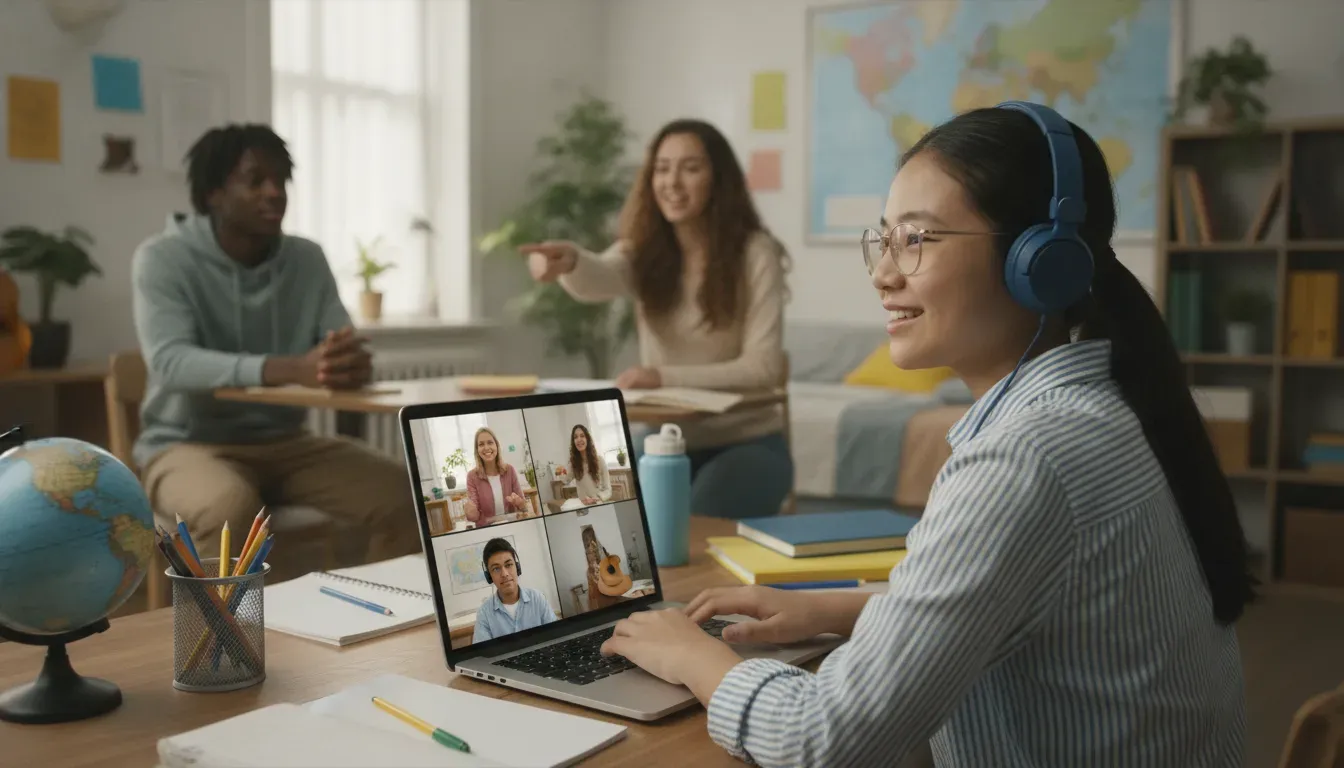
Live instruction can be especially useful in a bilingual or multicultural school because language learning benefits from listening, speaking, interaction, and immediate response. Students do not only read or complete language exercises. They hear authentic communication, practice expressing ideas, and use language in the context of academic subjects and relationships.
Language becomes part of the school community
Ideal School describes a two-way dual-language immersion model in which English-speaking and Spanish-speaking students learn together. The school offers core subjects including English language arts, Spanish language arts, mathematics, science, and social studies. In a live classroom, language is connected to the task at hand, whether students are discussing a story, solving a problem, or responding to a teacher.
Students encounter broader perspectives
A class that includes students from different countries can expand the context for conversations about culture, geography, history, and current issues. Families should avoid treating international enrollment as a guarantee of a particular outcome, but it can create meaningful opportunities for students to listen to experiences beyond their immediate community.
Teachers can respond to language needs in context
Live interaction allows a teacher to notice when a student needs a word explained, a direction repeated, or a response modeled. That kind of support is different from simply assigning a translation or asking a student to work through a language barrier alone. It can help students participate more fully while continuing to build academic vocabulary.
Parents can learn more about Ideal School’s approach through its curriculum standards and accreditation information. These pages can help families evaluate the relationship between the school’s instructional model, academic expectations, and quality commitments.
What Should Parents Check Before Choosing a Live Online High School?
The benefits of live online high school are strongest when the program’s structure matches the student’s needs. A parent-focused review should look beyond the phrase live classes and examine the complete learning experience.
- Accreditation and school identity: Confirm which school enrolls the student, maintains the academic record, and awards the credential. Ideal School identifies Cognia accreditation on its accreditation page.
- Grade-level fit: Ask whether the program serves the student’s grade and offers the subjects required for the intended academic path.
- Teacher qualifications: Review educator backgrounds, certifications, subject expertise, and experience with online instruction.
- Live-class design: Ask how much time is spent in teacher-led instruction, discussion, practice, and collaboration.
- Schedule and attendance: Confirm time zones, class length, start and end times, attendance rules, and the process for absences.
- Class size and support: Learn how students ask questions, receive feedback, access tutoring, and contact teachers outside class.
- Student interaction: Ask how the program creates safe, respectful opportunities for peer discussion and group work.
- Family communication: Confirm how parents see progress, receive updates, and raise academic or administrative questions.
- Technology requirements: Review the device, internet, camera, microphone, and platform requirements before enrollment.
- Costs and next steps: Review tuition, annual fees, financial assistance, enrollment timing, and required documents directly with the school.
These questions turn a broad online-school search into a practical comparison. They also help a family distinguish between a program with genuine live instruction and one that uses live language mainly as a marketing label.
Are the Benefits of Live Online High School Right for Your Student?
A live online high school may be a strong fit for a student who benefits from teacher guidance, scheduled learning, regular peer interaction, and the ability to study from home. It may also suit a family seeking a bilingual or multicultural setting that is not available nearby. The best choice depends on the student’s learning preferences, schedule, academic goals, technology access, and need for support.
Families should also be realistic about the responsibilities. Students still need a dependable learning space, reliable internet access, regular attendance, and a willingness to participate. Parents may need to help with setup, scheduling, communication, and progress monitoring, especially while a student is learning how to manage online coursework.
For families comparing programs, Ideal School’s live K-12 model offers an example of how real-time classes, bilingual instruction, small class sizes, and international student interaction can work together. Parents can review the school’s program information and ask specific questions before deciding whether the model fits their student.
Start the Ideal School enrollment conversation
Frequently Asked Questions
What is live online high school?
Live online high school is teacher-led education delivered through scheduled virtual classes. Students and teachers participate at the same time, allowing for questions, discussion, instruction, guided practice, and feedback during the lesson.
What are the benefits of live online high school compared with self-paced learning?
Live classes provide a predictable schedule, real-time teacher interaction, and regular peer connection. Self-paced learning may provide more control over timing, so families should compare the student’s need for structure with the flexibility each model offers.
Can students receive a bilingual education through live online classes?
Yes. Some schools use live classes to teach language and academic subjects in more than one language. Ideal School describes a two-way English and Spanish immersion model for K-12 students, with core subjects and interaction in a multicultural online setting.
What should parents ask before enrolling?
Parents should ask about accreditation, grade-level courses, teacher qualifications, schedules, attendance, class size, student support, peer interaction, technology requirements, tuition, and how academic progress is communicated.

Written by
Eric C. Franzen
Eric C. Franzen is co-founder and owner of Ideal School, with 20+ years of experience as an educational leader and entrepreneur. He holds a BA in Education from the University of Washington and an MA in Educational Administration from Seattle Pacific University.
View LinkedIn Profile →