

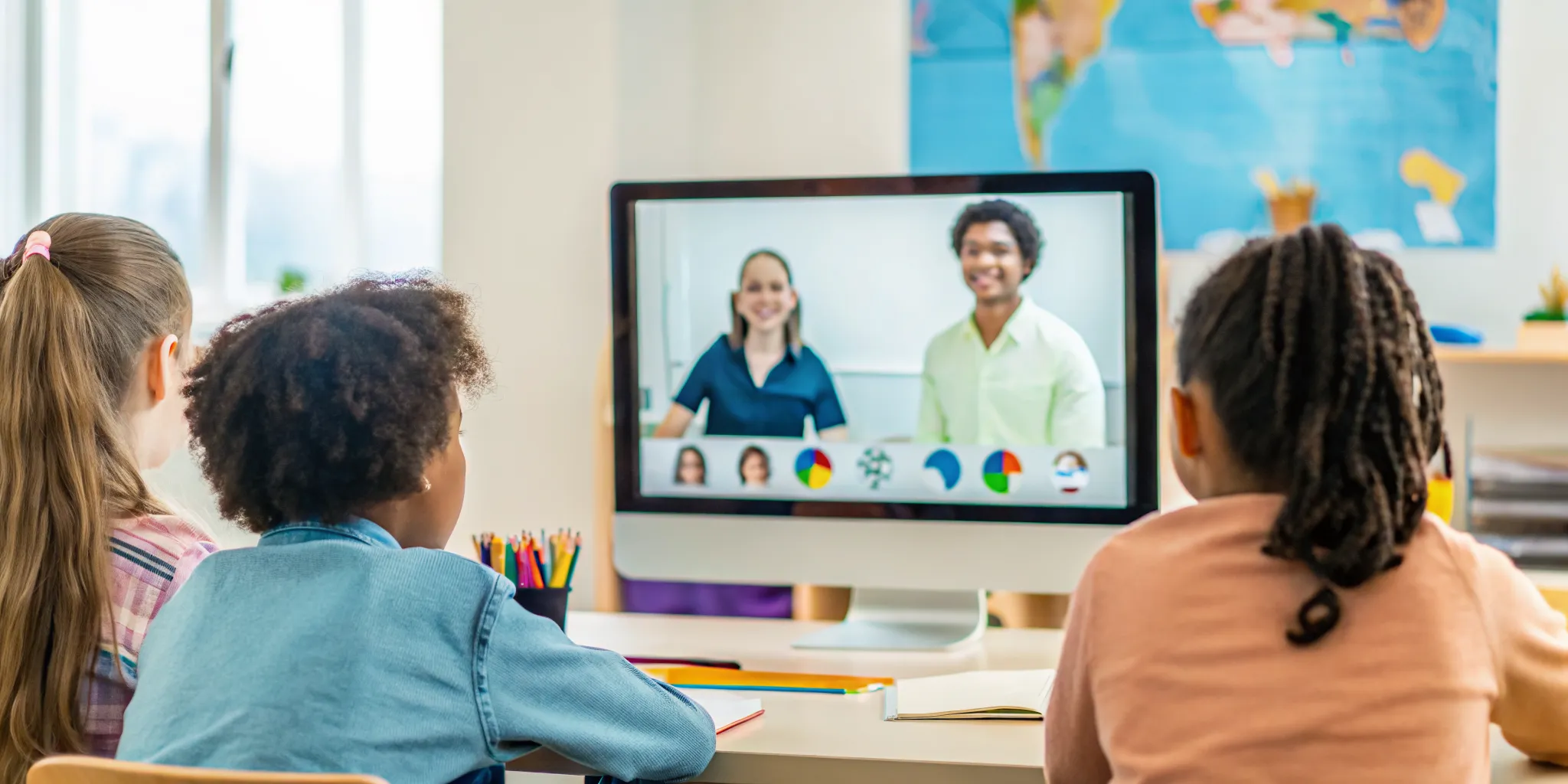

Teaching students in two languages at home often feels like a constant struggle with disorganized materials. Parents spend hours translating worksheets instead of actually teaching core subjects.
A bilingual homeschool curriculum is a structured educational program that teaches students core academic subjects like math, science, and history in two languages. Rather than teaching a second language as a single separate class, these comprehensive programs use two languages to deliver regular school lessons. Research published by Stanford University shows that this dual-language model improves key cognitive skills like focus, memory, and quick thinking. It also helps students achieve higher grades and earn better test scores. Students learn to appreciate different cultures while developing academic skills. Whether parents choose a self-paced plan, a parent-led program, or a live virtual school, this method gives students a strong foundation for future success.
Choosing the right educational path for your family can feel very overwhelming with so many different options available. To find the best fit for your students, you must first understand how these programs actually work. The path begins with What Is a Bilingual Homeschool Curriculum?
What Is a Bilingual Homeschool Curriculum?
A bilingual homeschool curriculum is an educational program designed to teach academic subjects in two languages, most commonly English and Spanish. Unlike a traditional homeschool curriculum that delivers all instruction in one language, bilingual programs allocate a portion of instructional time to each language. This allows students to develop literacy, numeracy, and subject knowledge in both.
The gold standard in bilingual education is the two-way dual-language immersion model. In this approach, roughly half of the students are native English speakers and half are native Spanish speakers. All students learn together in both languages, with equal instructional time allocated to each. This creates a natural peer-learning environment where students serve as authentic language models for one another.
Two-Way vs. One-Way Immersion
In a two-way immersion program, both language groups benefit simultaneously. Native English speakers acquire Spanish, and native Spanish speakers strengthen their English, while both groups build academic content knowledge. In a one-way immersion program, the students are primarily English speakers learning Spanish as a second language.
According to the American Councils for International Education, there are over 3,600 dual-language immersion programs across the United States. And Spanish remains the most popular partner language, making up roughly 80% of all programs. Despite this growth, 92.1% of English language learners in the United States are not enrolled in dual-language programs. Representing a significant gap that homeschool families can fill with the right full-day bilingual live program.
Language Allocation Models
Most full immersion programs follow a 50/50 language split, where half of the instruction occurs in English and half in Spanish. In practice, this often means math and science are taught in one language while social studies and language arts are taught in the other. The goal is balanced bilingualism where students can read, write, and think critically in both languages.
Types of Bilingual Homeschool Programs Available
Parents have three main paths when planning a bilingual homeschool curriculum for their students. Each model offers its own levels of live teacher support and language depth. Choosing the right fit depends on your family goals and daily schedule.
Core bilingual homeschool program types
The most complete option is a full immersion program. This model splits school subjects equally between English and Spanish. Dual-language programs also combine lessons in both languages to teach core content.
Ideal School provides this deep approach through their Full Day Program. This live online school pairs English and Spanish speakers to learn as a group. By learning together, both native speakers and language learners can build fluency and mutual understanding. This model reflects a two-way dual language design, which educators view as the highest standard for learning two languages at once.
Families who want an open schedule can enroll their students in part-time bilingual homeschool classes to build fluency. These classes focus on single subjects like math or science in Spanish.
Other options include language institutes and private tutoring. Ideal School offers these options through their Language Institute, Homeschool Supplement Classes, and Tutoring Services. These choices let parents shape their student’s schedule. It also fits families who want expert instruction but still want to direct their child’s home learning.
Bilingual curriculum options compared
This table compares the main types of bilingual homeschool programs. Parents can see how these options differ in cost, teacher help, and study models.
| Program Type | Instruction Model | Language Split | Grade Range | Cost Range | Teacher Involvement |
|---|---|---|---|---|---|
| Full Immersion | Live synchronous classes | 50/50 split in all subjects | K to 12 | $5,000 to $6,000 yearly | Full live teacher support |
| Dual-Language | Integrated academics | Two-way language instruction | K to 12 | Moderate tuition | High teacher guidance |
| Supplemental Classes | Part-time single subjects | Spanish or English focus | K to 12 | Lower monthly rates | Subject-specific teachers |
| Language Institute | Targeted language study | Focused language lessons | K to 12 | Affordable rates | Focused teacher feedback |
The shortage of bilingual online schools
Finding a high-quality bilingual homeschool curriculum is often hard for parents. Most large online schools only offer standard English courses with no support for bilingual students.
For example, K12 Inc. and Stride serve over 200,000 students but do not offer bilingual programs. Connections Academy teaches more than 100,000 students across 31 states with no bilingual curriculum. This lack of bilingual options leaves a massive gap in the homeschooling market. Many parents want their students to learn two languages but cannot find the right tools.
This lack of options forces many families to use split programs for each language. This method can be hard to manage and lacks structured live practice for speaking.
A University of Arkansas report shows that dual-language immersion can boost test scores in math and reading. Choosing an accredited program with live lessons helps students gain these brain benefits without the stress of planning alone. It also ensures students receive high-quality feedback from certified teachers. With the right support, homeschooling bilingually can be both rewarding and highly useful.
Does Your Bilingual Homeschool Curriculum Need Accreditation?
Accreditation is one of the most important factors when selecting a bilingual homeschool curriculum. Especially if your child may eventually transition to a traditional school, apply to college, or use state education voucher funds. Accreditation is an external validation that a school or program meets established quality standards.
Why Accreditation Matters
An accredited bilingual homeschool curriculum provides several concrete benefits. Accredited programs issue official transcripts that colleges and other schools recognize. They qualify for state voucher and scholarship programs. And they give parents confidence that the curriculum meets independently verified academic standards.
Cognia is the largest education accreditation body in the world, serving 36,000 institutions across 87 countries and representing 25 million students. Ideal School holds Cognia accreditation, a multi-year evaluation process that is difficult for new programs to replicate quickly.
State Voucher Eligibility
Four states currently recognize Ideal School for education voucher programs: Arizona (Empowerment Scholarship Account), Utah (Fits All Scholarship), New Hampshire (Education Freedom Accounts), and North Carolina (Opportunity Scholarship). These programs allow approved families to use state education funds toward tuition at an accredited private school like Ideal School, making a bilingual homeschool curriculum more accessible.
Accredited vs. Non-Accredited Programs
Many popular homeschool resources are not accredited. Self-paced programs like Time5Learning cost $360-$480 per year but provide no teacher interaction, no live instruction, and no accredited transcript. These can be useful supplements but do not replace a full, accredited bilingual education.
Traditional private bilingual schools charge $15,000 to $30,000 per year, placing them out of reach for many families. An accredited online bilingual homeschool curriculum at $5,000 to $6,000 per year bridges this gap, offering professional instruction, accredited credentials, and the flexibility of virtual attendance.
When Accreditation Is Less Critical
If you are homeschooling independently and do not plan to transfer to another school or pursue college credit through the program, accreditation may be less essential. Some families combine non-accredited resources in one language with an accredited program in the other. However, for most families seeking a comprehensive bilingual education, accreditation provides the assurance that the curriculum meets rigorous standards and that your child’s academic progress will be recognized.
How to Choose the Best Bilingual Curriculum for Your Family
Every family has different language goals, schedules, and budgets. Use this step-by-step framework to evaluate which bilingual homeschool curriculum fits your needs.
-
Define Your Language Goals
Are you seeking full bilingual fluency, heritage language maintenance, or introductory exposure? Full fluency requires a 50/50 immersion model with daily instruction in both languages. Heritage maintenance may be achievable with supplemental Spanish language arts classes a few times per week. Understanding your end goal will narrow your options immediately. -
Evaluate the Instructional Model
Synchronous live instruction offers real-time interaction with certified teachers and peers, creating the closest experience to a classroom environment. Self-paced programs offer flexibility but lack the feedback and accountability of live classes. Parent-led models put the teaching responsibility on you, which works well for some families but can be challenging for non-native speakers teaching a second language. -
Check Accreditation and State Voucher Eligibility
If you plan to use state education vouchers or want an accredited transcript, verify the program’s accreditation status. Ideal School’s Cognia accreditation and approval in Arizona, Utah, New Hampshire, and North Carolina make it one of the few accredited options available for bilingual homeschool families. -
Assess Grade-Level Fit and Subject Coverage
Some bilingual programs only serve early elementary grades. Others, like Ideal School, offer a complete K-12 curriculum covering all five core subjects (English language arts, Spanish language arts, mathematics, science, and social studies) in both languages. Ensure the program can grow with your child across all grade levels. -
Compare Costs and Enrollment Flexibility
Full-day bilingual programs start around $379.99 per month at Ideal School, with one-time startup costs ranging from $1,109 (kindergarten) to $1,189 (grades 7-12). Enrollment can happen within 24 hours to 7 days, making it accessible even for families in transition. Compare this against self-paced programs that cost less but offer no live instruction, no accreditation, and no teacher support.
Ideal School’s online homeschool programs include both full-day and supplemental options, giving families the flexibility to choose the commitment level that matches their needs.
Bilingual Homeschool Curriculum by Grade Level
A strong bilingual homeschool curriculum adapts to the developmental needs of students at each stage. Here is what to look for from kindergarten through high school.
Kindergarten Through Second Grade: Building Foundations
In the early years, the goal is oral language development and early literacy in both languages. Ideal School’s kindergarten program runs from approximately 7:30 AM to 1:15 PM, with five hours and 45 minutes of instruction that includes advisory periods. Multiple breaks, and a balanced mix of math, science, social studies, and language arts in both English and Spanish. Small class sizes ensure each student receives individual attention as they build foundational reading and writing skills.
At this stage, bilingual students develop phonemic awareness in two languages simultaneously, which research shows strengthens overall literacy skills. The cognitive flexibility gained from managing two language systems also supports better problem-solving and executive function.
Third Through Sixth Grade: Academic Skill Building
As students move into upper elementary grades, the bilingual curriculum deepens. Class periods extend to 50 minutes, and subject rotation introduces more specialized content. Students shift from learning to read to reading to learn in both languages. Math and science are taught in their assigned language, while social studies, literature, and writing are developed in the other, maintaining the 50/50 language split.
By grade 5. Research from the University of Arkansas shows that English learners with access to two-way dual-language immersion programs that match their native language are reclassified as English proficient. The rate is up to 8 percentage points higher than for those without access.
Seventh Through Twelfgrade Grade: Advanced Bilingual Academics
Middle and high school students in a bilingual program benefit from department-specialist teachers and advanced coursework. Classes run from approximately 7:30 AM to 2:35 PM, with subject-area experts teaching in their field of specialization. Students develop academic vocabulary and complex writing skills in both languages, preparing them for college-level work and bilingual professional environments.
Long-term studies confirm that students in dual-language immersion programs show higher academic achievement in their second language compared to peers in traditional language programs. These students graduate with functional bilingualism, cultural competency, and a transcript that reflects an accredited full-day bilingual education.
Frequently Asked Questions About Bilingual Homeschool Curriculum
Are we crazy for wanting to homeschool bilingually as non-native speakers?
Not at all. Many parents worry about teaching a language they are not fluent in. But you do not need to be a native speaker to give your child a bilingual education. An accredited bilingual homeschool curriculum provides professional instruction from certified bilingual teachers, removing the pressure from parents. Your role becomes supporting and encouraging the learning, not delivering it. It is a growing and well-supported path for families of all language backgrounds.
Do I need the same curriculum in two languages, or can I piece it together?
Both approaches work but they produce different results. Comprehensive bilingual programs like Ideal School deliver all core subjects (math, science, language arts, social studies) in both languages through a coordinated curriculum. This ensures balanced language development and subject mastery. Alternatively, you can use separate English and Spanish programs and combine them yourself. This requires more planning on your part and may result in uneven language development, but it can work for families with strong bilingual backgrounds.
What is dual-language education in a homeschool setting?
Dual-language education in a homeschool setting means academic instruction is delivered in two languages with the goal of bilingualism, biliteracy, and cross-cultural competence. In practice, this means your child studies math, science, social studies, and language arts in both English and Spanish, typically on a 50/50 schedule. Unlike a foreign language class that teaches a language as a subject, dual-language education uses both languages as vehicles for learning all academic content.
Does my bilingual homeschool program need to be accredited?
It depends on your goals. If your child may transfer to a traditional school, apply to college, or use state voucher funds, accreditation is essential. An accredited program like Ideal School (Cognia accredited) provides official transcripts and recognized credentials that open doors. If you are homeschooling independently and do not need formal transcripts, a non-accredited program may be sufficient. However, accreditation adds a layer of quality assurance that many families find valuable.
What is the difference between a bilingual curriculum and a Spanish language curriculum?
A Spanish language curriculum teaches Spanish as a subject, like any foreign language class. A bilingual homeschool curriculum delivers academic content in both English and Spanish. In a bilingual program, your child learns mathematics in Spanish, not just Spanish vocabulary. This distinction is important because bilingual education develops true academic biliteracy, while a language curriculum develops conversational skills without deep subject-area knowledge in the second language.

Written by
Eric C. Franzen
Eric C. Franzen is co-founder and owner of Ideal School, with 20+ years of experience as an educational leader and entrepreneur. He holds a BA in Education from the University of Washington and an MA in Educational Administration from Seattle Pacific University.
View LinkedIn Profile →