

If there is anything we have learned from the coronavirus pandemic is to adapt to change. We must develop this skill to ensure the efficiency of our lives. In consequence, we have adapted to isolation, healthy distance, routine changes, and some have even needed to rearrange priorities.

Furthermore, we have transformed the way we interact at home and considered innovative practices to accomplish work. As adults have had a hard time during this adaptation process, children have endured lots of changes trying to move on to online education.
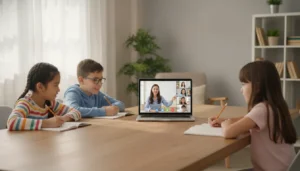
We refer to an overnight change for children, who usually get out of the house environment, study under the tutoring of a teacher, and are accompanied by their fellow students. Now, they have to study at home, which looks like a more laborious and lonelier task observed by mom and dad.
Due to the pandemic, now parents face a more significant challenge while moving from observers of their children’s education process to a more active role. This adaptation will demand more from all the members of the family, and we would like to share some advice to smooth the transition from a traditional school to homeschooling.
1. Take in changes.
It is relevant to consider that as in any other involuntary transition in the life of children, it is necessary to take time to assimilate changes and reach an agreement to ease the development of the new roles for both parents and children. These adjustments may take a little time, but not that much once both parties identify the needs on time.
2. Communication among parts involved.
As in any other relationship where people expect results, communication will be a fundamental element to implement, and even more in interactive online education. Parents, teachers, and students must have an excellent communication for homeschooling to know the contents, tasks, classwork, evaluations, and expectations for each.
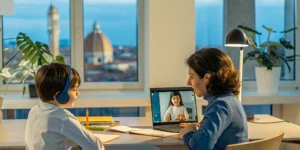
Thus, parents will be participating actively in the development of all the activities, either creating spaces to study, providing necessary elements, or perhaps, offering help during the tasks. Parents should be part of the process, and the knowledge of it is not optional.
3. Create a routine.
Promoting a work environment at home is essential to create and follow a routine for children at home. Moving abruptly to an online interactive system may cause a lack of concentration from the students. Parents should provide children with an organized schedule that includes sensible working hours, a space for distractions, and overall, reachable goals.
4. Considering the advantages of homeschooling.
Studying online provides children with the opportunity to develop useful and vital skills for the future. Some of these skills are flexibility and adaptation, critical thinking, problem-solving, teamwork, creativity, and initiative. Regarding the use of technology, parents are a crucial element to support the transition, helping children to become responsible digital citizens as online classes help students learn and practice. To see how Ideal School supports these advantages in a safe, accredited environment, explore our programs and enroll today.
5. Team Work.
Students, parents, and teachers must become a team, along with the school for online interactive learning, to take part each in an outstanding learning process where students would benefit from such effort to the satisfaction of all the participants. We’d love to hear how your family has grown through this experience. Share your testimony and help other families discover the benefits of online education.